

When asking the question “How do I start a business?”, foreign investors are entering the stage of clarifying their business ideas and moving toward building a legally compliant and operational business model in Vietnam.
Based on over 20 years of experience in business consulting and supporting the establishment and operation of hundreds of FDI enterprises in Vietnam, this article will guide investors through each step, from preparation to registration and operation, while highlighting key considerations to ensure efficiency and minimize risks.
1. How can foreign investors start a business in Vietnam?
1.1. Requirements for foreign investors to establish a company in Vietnam
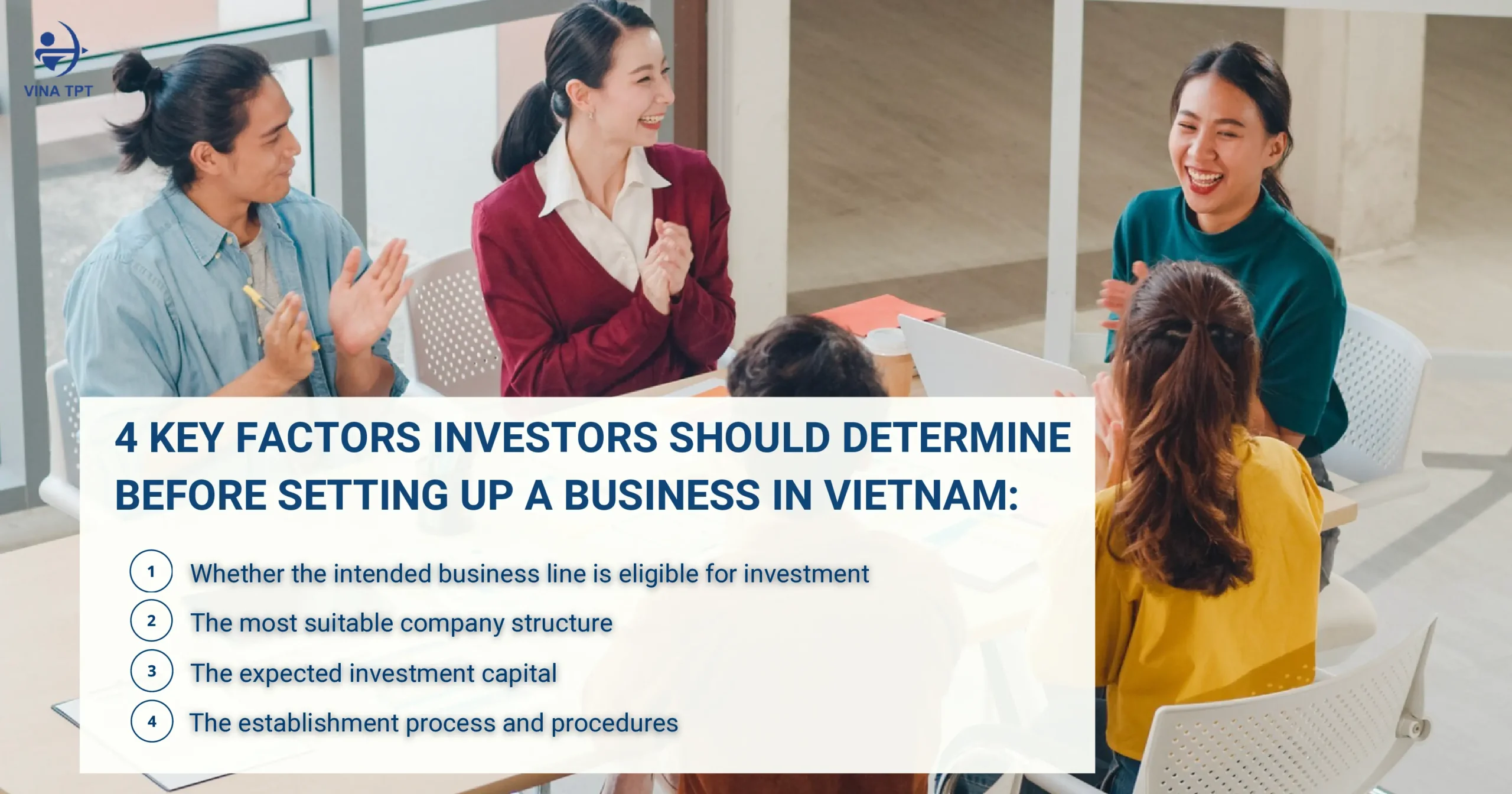
Before answering the question “How do I start a business?”, foreign investors need to determine whether their intended business line is eligible for investment. Under the Investment Law, business sectors in Vietnam are classified based on market access levels and regulatory conditions.
In practice, business sectors can be grouped into five main categories:
- Unconditional business sectors (accounting for approximately 80%): These are sectors that are not subject to specific investment conditions or foreign ownership restrictions. Investors can proceed with standard business registration and comply with general regulations (tax, accounting, labor, etc.).
Examples: manufacturing, wholesale trading, software development, consulting services, F&B. - Investment incentive sectors: These sectors are encouraged by the government and may benefit from incentives such as Corporate Income Tax (CIT) reductions, land rental incentives, or other support policies depending on the project.
Examples: high technology, R&D, renewable energy, high-tech agriculture, digital transformation. - Conditional business sectors: These sectors are allowed to operate but require additional conditions such as sub-licenses, legal capital, technical standards, or professional certifications.
Examples: education, healthcare, real estate, logistics, food services. - Market access restricted sectors for foreign investors: Foreign investors may face limitations on ownership ratio, investment structure, or scope of operations in these sectors.
Examples: retail distribution, telecommunications, aviation, advertising, financial services. - Prohibited business sectors: These activities are strictly prohibited under Vietnamese law due to national security, social ethics, or public health concerns.
Examples: drug trafficking, human trafficking, prostitution, explosives.
Note:
In practice, the majority of business sectors in Vietnam fall under unconditional categories (around 80%), meaning investors can enter the market relatively easily. However, some industries may overlap across categories (for example, renewable energy can be both incentivized and conditional).
To avoid confusion and streamline the licensing process, investors are advised to check the relevant business codes and applicable conditions on the Business Line Code Lookup page before submitting their applications.
1.2. What company types are suitable?
According to the Investment Law 2020, when exploring how to start a business in Vietnam, foreign investors can choose from several common business structures:
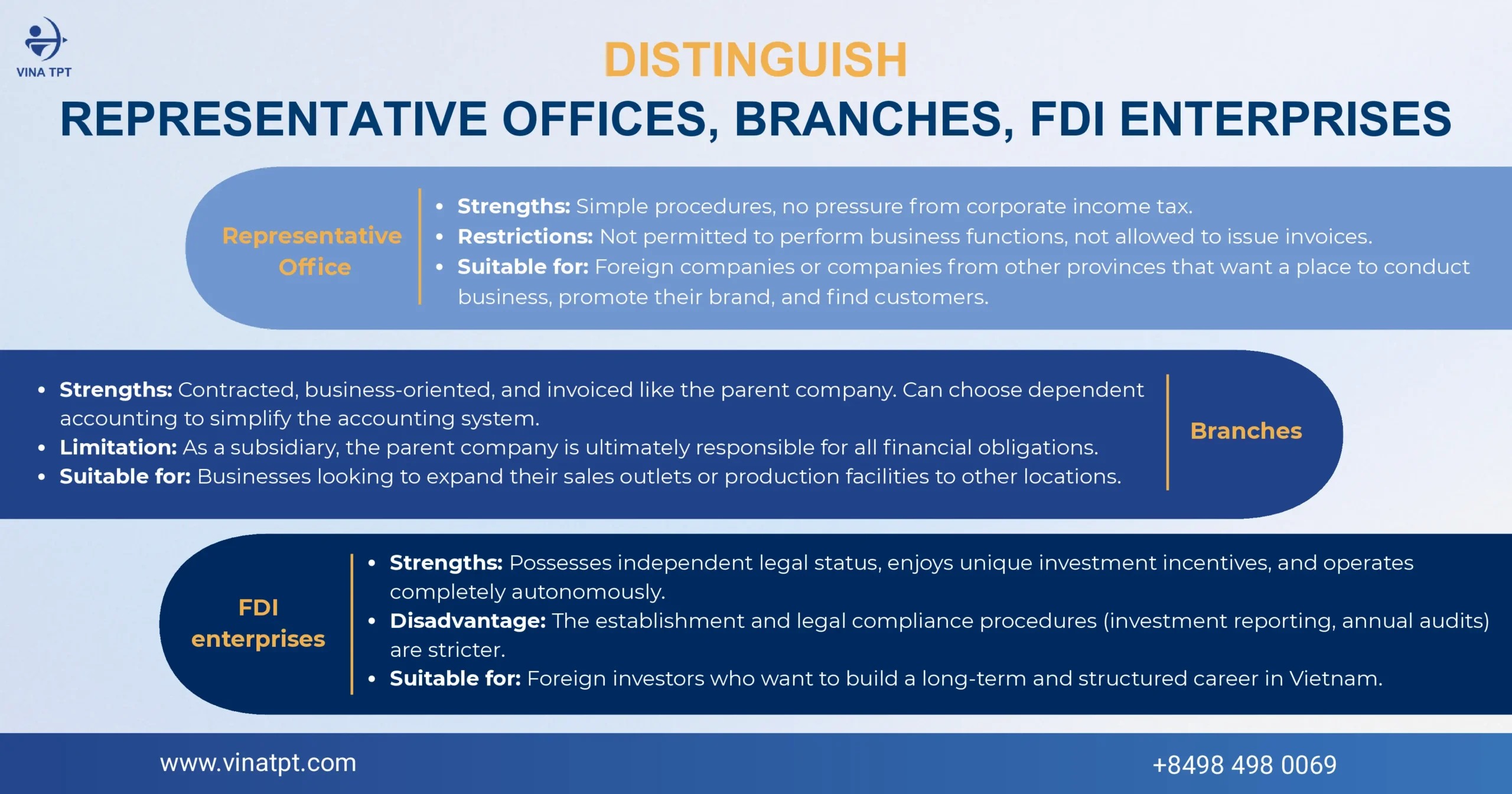
- Limited Liability Company (LLC): This includes single-member LLCs or multi-member LLCs (with up to 50 capital contributors). This is the most commonly chosen structure by foreign investors due to its simple governance, strong control over operations, and flexibility in either 100% foreign ownership or joint ventures with local partners.
- Joint Stock Company (JSC): Requires at least three shareholders with no maximum limit. This structure is suitable for businesses planning to raise capital, expand operations, or pursue long-term growth strategies.
- Representative Office: This entity does not have a commercial function and is primarily used for market research, trade promotion, and liaison activities with partners in Vietnam.
In practice, most foreign investors prefer an LLC when they want full ownership and simplified management, while a JSC is generally more suitable for projects with long-term expansion and capital mobilization plans.
1.3. How much investment capital is required?
One of the key questions when exploring how do I start a business is the required capital. Vietnamese law does not impose a universal minimum charter capital across all sectors. However, in practice, capital must align with project scale, industry, and financial capacity.
Reference capital levels by industry:
- Trading & distribution: Typically USD 10,000 – 50,000 (USD 10,000 is often considered a minimum reference level).
- Fintech: Some models may require around USD 2 million depending on licensing conditions.
- Commercial banking: Minimum capital requirement of approximately USD 120 million.
- Real estate: No fixed capital requirement, but requires minimum equity of 20% (projects under 20 ha) or 15% (projects over 20 ha).
The above capital levels are for reference only and may vary depending on the investor’s specific business plan and the requirements of the licensing authority.
In practice, charter capital is not merely a formal requirement but directly impacts the application review process and the feasibility of project implementation. If the registered capital does not align with the scale of operations, the business may be required to provide explanations or make adjustments during the licensing process.
1.4. Business registration process in Vietnam
The process of setting up a business in Vietnam typically includes 6 steps, taking around 8-10 weeks depending on the industry:
- Step 1: Prepare and submit the IRC application
- Step 2: Obtain the Investment Registration Certificate (IRC)
- Step 3: Obtain the Enterprise Registration Certificate (ERC)
- Step 4: Open a capital account and contribute capital (within 90 days)
- Step 5: Complete post-licensing procedures (tax, e-invoices, labor registration)
- Step 6: Apply for sub-licenses (if applicable)
In practice, many companies underestimate post-licensing procedures and capital contribution obligations, leading to delays or compliance issues. Proper preparation from the beginning helps shorten timelines and avoid revisions.
After answering “How do I start a business?”, companies move into the operational stage, focusing on financial reporting, tax compliance, hiring, and payroll management.
2. Legal and tax considerations investors should note from the beginning
2.1. What taxes must businesses declare?
After establishment, companies in Vietnam must comply with several taxes, including:
Value-Added Tax (VAT): VAT is one of the most frequently arising taxes during business operations, especially for companies engaged in trading goods, services, or import-export activities.
Corporate Income Tax (Corporate Income Tax – CIT): CIT is calculated based on the company’s profits. This obligation not only includes annual finalization but also requires quarterly provisional payments and ongoing monitoring of business performance to ensure compliance with regulations.
Personal Income Tax (Personal Income Tax – PIT): Businesses are responsible for withholding, declaring, and paying PIT on behalf of employees for salaries, wages, and other taxable income. Proper compliance is essential to avoid risks such as tax reassessment and administrative penalties.
In practice, many businesses encounter issues from the early stages due to a lack of understanding of filing cycles, tax-specific obligations, or inconsistencies between reports. Having a clear understanding of each tax type helps companies establish an effective accounting and tax system from the beginning.
>>> For more details, refer to: Tax Tips for Small Business in Vietnam: Avoid Common Compliance Mistakes
2.2. Key considerations for hiring and payroll management
Managing payroll in Vietnam can be challenging for FDI companies, especially in the early stages:
- Labor and insurance regulations (social, health, unemployment insurance) frequently change
- Salary structures and PIT calculations are complex
- Language barriers and legal differences create additional challenges
In reality, knowing how do I start a business is not enough without understanding local practices, many FDI companies choose payroll outsourcing services to ensure compliance and reduce internal workload.
>>> See more: Payroll Outsourcing Services in Vietnam: Benefits and Choosing the Right Provider
3. Important considerations when starting a business in Vietnam
Even after understanding how do I start a business, many investors still face challenges due to frequently changing regulations and local administrative practices.
For example, similar applications may require different procedures depending on the authority or location. Tax and labor policies are also regularly updated.
Without proper knowledge, businesses may face repeated revisions, delays, and unnecessary costs.
Therefore, many FDI companies choose to work with consulting firms for partial or full-service support to ensure compliance and efficiency.
4. When should investors work with a consulting firm?
Outsourcing business setup services is especially recommended when:
- Entering Vietnam for the first time
- Operating in conditional business sectors
- Needing fast project implementation
- Wanting to optimize tax, accounting, and HR from the beginning
For many investors, outsourcing support is the most effective way to answer how do I start a business in Vietnam. Professional consulting firms act as long-term partners, helping businesses minimize risks and operate effectively in Vietnam.
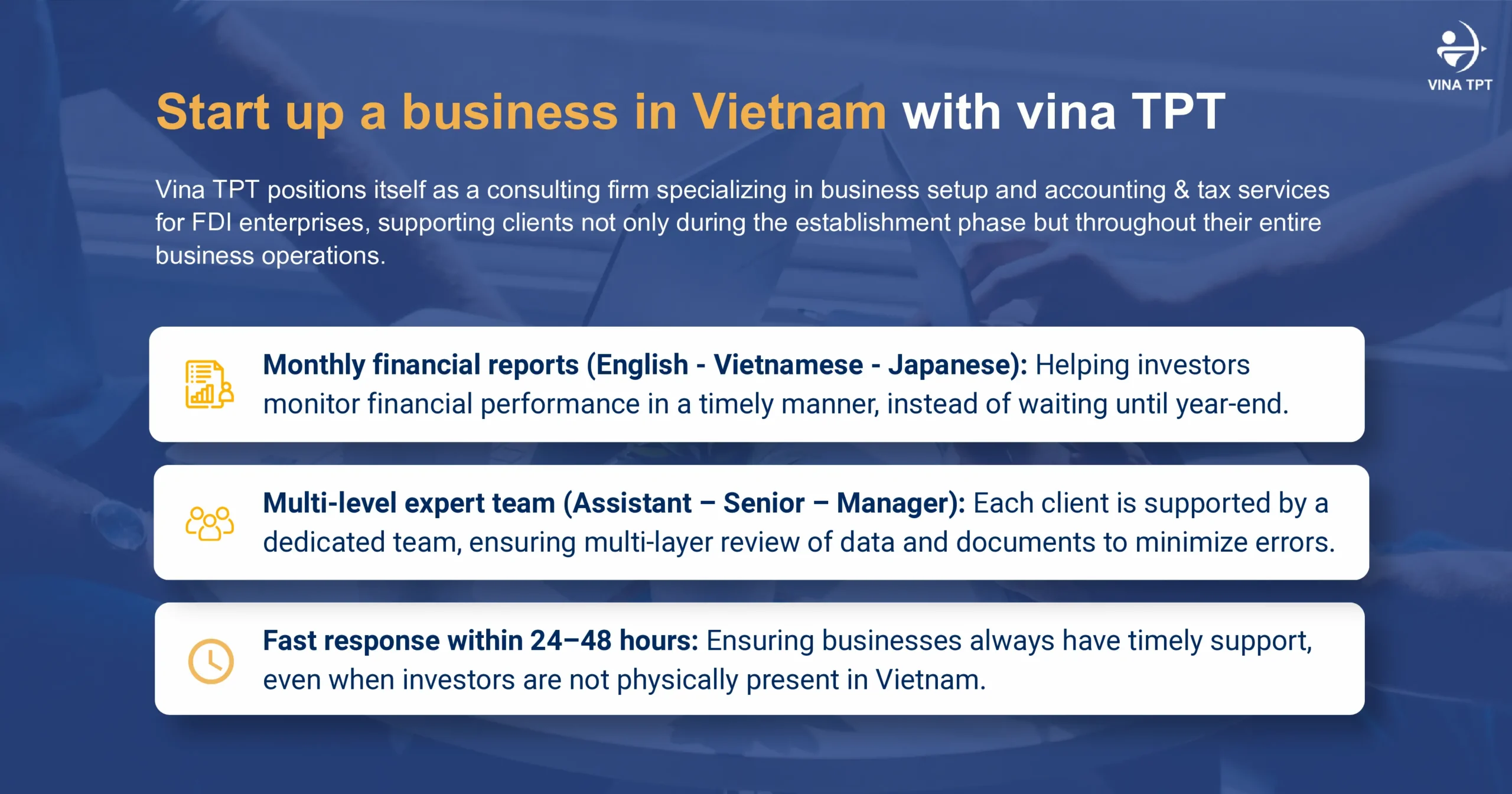
If you are planning how do I start a business in Vietnam, working with an experienced consulting firm is highly recommended. Learn more about Vina TPT’s services to receive tailored consultation for your investment plan.