


Many foreign investors are currently asking how to invest in Vietnam effectively and optimize capital flows during the 2026–2030 period. Vietnam continues to maintain its position as a bright spot for attracting foreign direct investment (FDI) in Southeast Asia, thanks to a stable macroeconomic environment, an abundant young workforce, a strategic geo-economic location within global supply chains, and strong institutional reform efforts.
However, the global economic context for 2026-2030 also presents a number of complex challenges. Business opportunities always come with challenges related to legal compliance, tax risk management, and operating cost optimization. A clear understanding of current incentive policies, early identification of practical risks, and a well-prepared prevention strategy will help investors minimize mistakes, shorten market-entry time, and protect capital safely.
The article below provides an in-depth analysis of the market, incentive policies, core risk groups, and practical implementation roadmap to help investors prepare thoroughly before deciding to invest in Vietnam 2026.
1. Current Investment Incentives and Priority Sectors
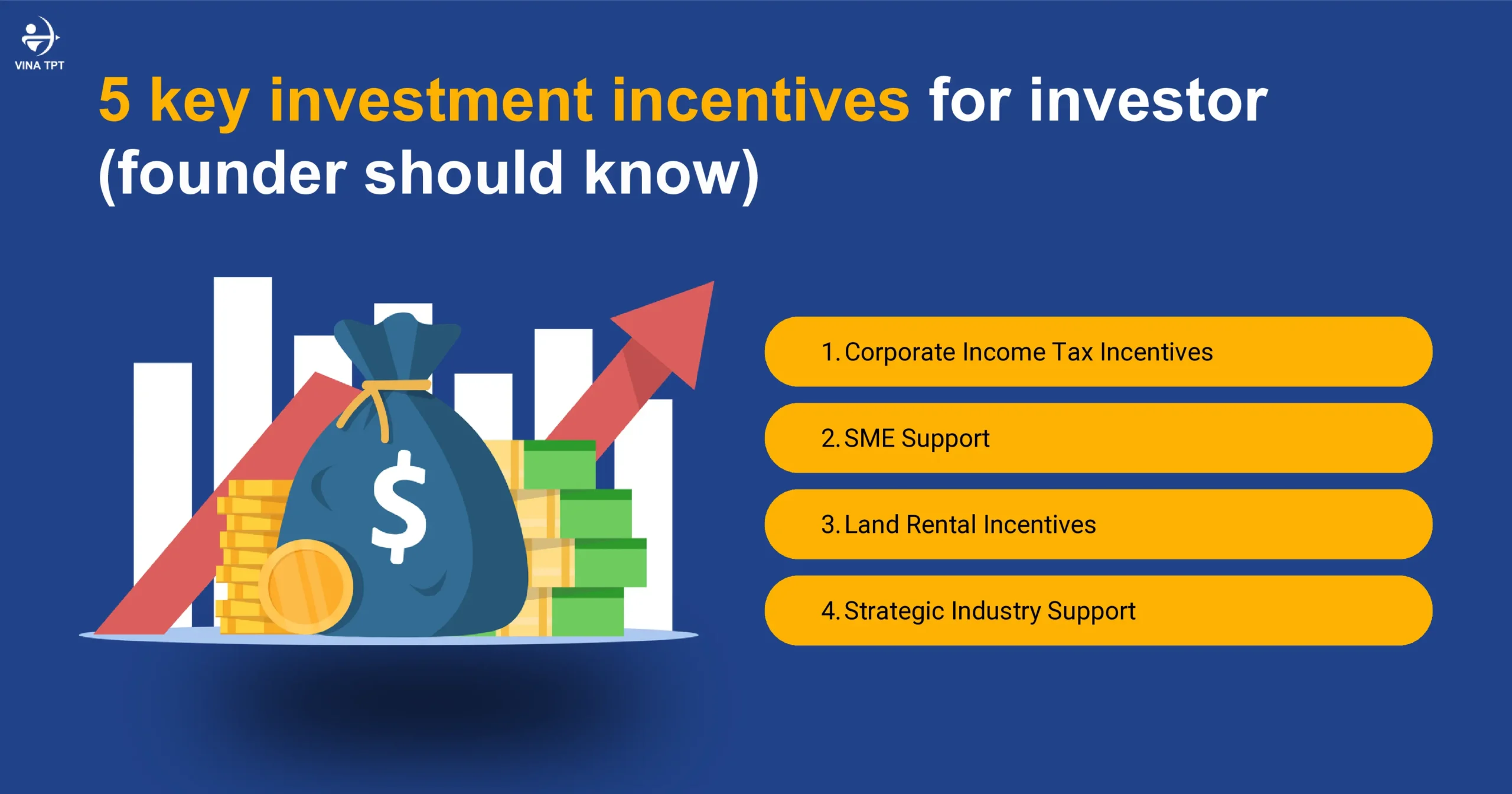
The Vietnamese Government is actively implementing many outstanding incentive mechanisms to attract high-quality FDI capital, focusing on projects with high technology content, significant added value, and sustainable development. Investors planning to invest in Vietnam can access the following key groups of preferential policies:
- Corporate Income Tax (CIT) Incentives: Preferential tax rate of 10% for a period of 15 years (which may be extended up to 30 years for particularly important projects) applicable to high-tech sectors, research & development (R&D), renewable energy, semiconductor manufacturing, artificial intelligence (AI), and data centers.
- CIT Exemption / Reduction Regime: 100% tax exemption for up to 4 years and a 50% reduction of payable tax for the following 9 years for projects implemented in industrial parks, economic zones, or localities with difficult socio-economic conditions.
- Support for Small and Medium-sized Enterprises (SMEs): Preferential CIT rates ranging from 15% to 17% based on the enterprise’s total revenue scale.
- Land Rental Fee Exemption and Reduction: Exemption of land rental fees during the basic construction period, followed by further exemption or reduction for 3 to 15 years (or the entire lease term) depending on the preferential investment sector and the project location.
- Breakthrough Mechanisms for Strategic Industries: Application of special investment support packages for supporting industries, green manufacturing, carbon emission reduction, and digital transformation of enterprises.
Breakthrough Sectors for the 2026-2030 Period
The fields with the greatest Vietnam investment opportunities include: electronic components & semiconductor manufacturing, clean energy, cold-chain logistics & seaports, high-quality F&B, cross-border e-commerce, healthcare – pharmaceuticals, and technology education.
If you are in the stage of preparing legal dossiers, you can refer to the article Starting a Business in Vietnam: 12 Frequently Asked Questions by Foreign Investors for comprehensive answers to practical concerns.
2. Key Risks When Investing in Vietnam
Although the business environment continues to improve, the process of implementing projects to invest in Vietnam still involves certain legal and operational bottlenecks that foreign investors need to pay special attention to:
2.1. Legal and Administrative Procedure Risks
Procedures for establishing FDI enterprises and obtaining business licenses (sub-licenses) for conditional business lines can sometimes be prolonged due to complex inter-departmental appraisal processes. Opaque capital source explanations or project objectives that are not aligned with local planning can cause project disruptions lasting from 2 to 6 months.
2.2. Tax and Accounting Compliance Risks
Vietnam’s tax legal system is frequently updated (especially regulations on Value-Added Tax – VAT, Corporate Income Tax – CIT, Personal Income Tax – PIT, electronic invoices, and transfer pricing). Differences in the interpretation and application of tax policies between enterprises and management authorities, or minor errors in the storage of accounting documents, can lead to administrative penalties, tax reassessments, and prolonged inspections.
2.3. Human Resources and Labor Cost Risks
Competition to attract high-quality labor (particularly engineers, mid-level managers, and technical specialists) is becoming increasingly intense. Salary costs, wages, and mandatory insurance contributions tend to rise rapidly in major cities such as Ho Chi Minh City and Hanoi, creating significant pressure on fixed operating costs.
2.4. Supply Chain and Logistics Infrastructure Risks
Although transportation infrastructure is being strongly invested in, fluctuations in sea freight costs, localized congestion at major ports during peak seasons, and dependence on certain imported raw materials remain potential risks to production and export schedules.
3. How to Mitigate These Risks Effectively
To proactively control risks and ensure projects operate on schedule when deciding to invest in Vietnam, investors need to implement the following solutions in a coordinated manner:
- Standardize Legal Dossiers from the Outset: Develop a detailed investment plan with clear explanations of financial capacity and the project’s socio-economic effectiveness. Collaborating with law and investment consulting firms specialized in FDI helps enterprises optimize the process of obtaining the Investment Registration Certificate (IRC), Enterprise Registration Certificate (ERC), and sub-licenses.
- Establish a Standard Tax & Accounting Compliance System: Apply the Vietnamese Accounting Standards (VAS) from the very first month of operation, set up strict input–output invoice control processes, and use professional accounting-tax services to minimize tax inspection risks to the greatest extent.
- Human Resources Strategy and Labor Law Compliance: Build competitive salary and benefit policies, issue Internal Labor Regulations and Collective Labor Agreements in accordance with regulations, and standardize the payroll process to ensure employee rights and avoid labor disputes.
- Optimize the Supply Chain: Diversify the portfolio of domestic suppliers, prioritize factory locations in industrial parks with convenient transportation infrastructure, and maintain reasonable safety stock levels.
In addition, investors should allocate time for on-site surveys, build a risk contingency budget of approximately 15%-20% of the total investment amount, and establish official, transparent communication channels with local authorities.
Explore Company Formation Services
4. How Vina TPT Supports Foreign Investors
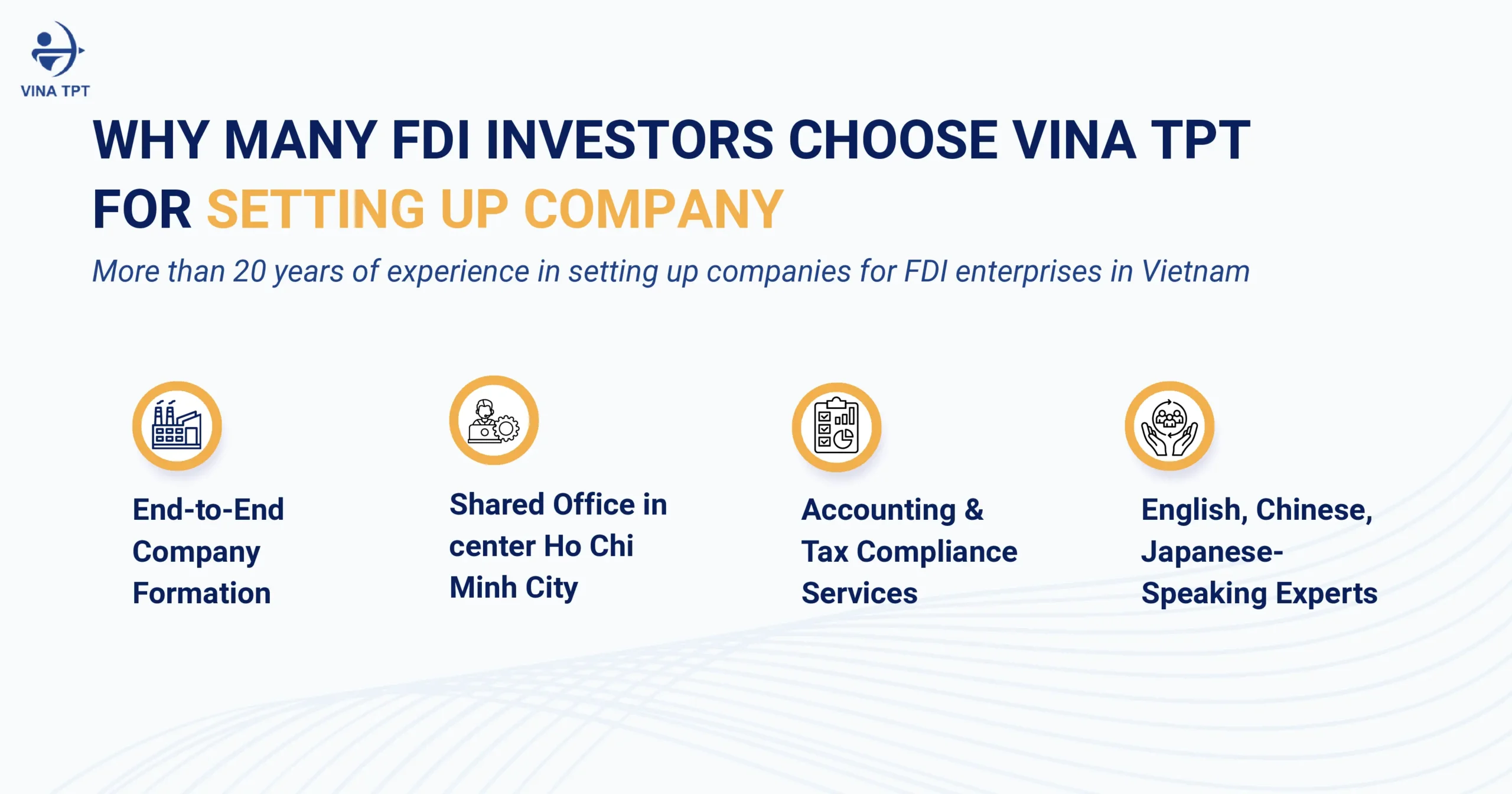
With more than 20 years of experience accompanying thousands of FDI projects in Vietnam, Vina TPT provides end-to-end consulting and support solutions from the pre-investment stage through the entire enterprise operation process:
- Investment Strategy Consulting: Assessment of market-entry conditions, location selection, and design of tax-optimized investment structures.
- Full-Package Legal Procedures: Representation of investors in obtaining the Investment Registration Certificate (IRC), Enterprise Registration Certificate (ERC), company seal engraving, capital account registration, and sector-specific business licenses.
- Accounting, Tax & Payroll Services: Assumption of all chief accountant responsibilities, periodic tax declarations, preparation of financial statements, tax finalization, and payroll management with 100% legal compliance.
- Compliance Risk Management (Compliance Review): Regular review of accounting books, assessment of legal risks, and timely adjustment advice before inspection periods.
- Multilingual Expert Team: A consulting team with deep knowledge of Vietnamese law, proficient in English, Japanese, and Chinese, helping eliminate language and corporate culture barriers.
Conclusion
To successfully invest in Vietnam and achieve high investment efficiency in the 2026–2030 period, foreign enterprises need to combine maximizing the Government’s preferential policies with proactive control of operational risks. Vietnam continues to be a top strategic destination in Asia for investors who prepare thoroughly and choose the right consulting partner to accompany them.
Are you considering a plan to invest in Vietnam? Contact Vina TPT’s experts today for an in-depth 1-on-1 consultation and comprehensive support solutions for your project.