Can Foreign Companies Use a Shared Office Address for Company Registration?
Expanding a business into a new foreign market is an ambitious milestone, but establishing a physical presence abroad often presents immediate administrative and financial friction. One of the most critical decisions during market entry is selecting a registered legal address. For many foreign entrepreneurs, startups, and expanding multinational enterprises, committing to a traditional, long-term commercial lease before validating local operations presents unnecessary financial risk.
This brings up a fundamental compliance question: Can foreign companies legally use a shared office address for company registration?
In most major business jurisdictions in Vietnam, the short answer is yes—foreign companies can use a shared office address for corporate registration. However, full regulatory compliance depends heavily on jurisdiction-specific corporate laws, physical verification standards, and your specific line of business.
Benefits of Shared Offices for Foreign Companies Entering Vietnam
Market entry strategies require agility. Securing a traditional commercial lease typically involves multi-year commitments, substantial security deposits (often 3 to 6 months of rent), and lengthy legal reviews.
Foreign companies leverage shared office arrangements to achieve three strategic goals:
- Market Validation: Testing local demand and securing business licenses with minimal upfront capital exposure.
- Rapid Deployment: Incorporating an entity within days or weeks rather than waiting months for commercial build-outs.
- Capital Efficiency: Allocating preserved capital toward talent acquisition, marketing, and localized product development rather than fixed overhead.
Why Foreign Companies Use a Shared Office Address for Company Registration?
An address for company registration is one of the first legal requirements when establishing a business in Vietnam. Beyond fulfilling a regulatory obligation, a compliant registered address provides a company with an official location for government correspondence, tax administration, and business licensing procedures. For many foreign investors, using a shared office as their address for company registration offers a practical balance between legal compliance and cost efficiency, allowing them to enter the Vietnamese market without committing to a long-term office lease. Choosing the right address for company registration also helps ensure a smoother incorporation process and supports future business operations.
Legal Requirements for an FDI Company’s Business Location
For foreign-invested companies (FDI), the registered office is a mandatory legal requirement under Vietnamese law. Pursuant to Article 42 of the Law on Enterprises 2020, every enterprise must have a head office located in Vietnam with a clear and identifiable address. In addition, the registered office and project location of an FDI company must comply with the Law on Investment 2025 and other sector-specific regulations where applicable. Before selecting a shared office, foreign investors should ensure that the location satisfies the following requirements:
Key legal requirements include:
- A valid business address: The office must have a complete and verifiable address and be located in a property legally permitted for commercial or office use.
- Lawful right to use the premises: Companies should have a valid lease agreement or other legal documentation proving their right to occupy the office. Authorities may also request documents confirming the landlord’s ownership or leasing rights.
- Compliance with industry-specific regulations: Certain sectors, such as manufacturing, education, healthcare, logistics, and food services, require premises that meet additional standards relating to fire safety, environmental protection, or operational licensing.
- Consistency with the Investment Registration Certificate (IRC): For FDI companies, the registered office or project location should align with the information stated in the IRC. Any change to the project location may require an amendment to the investment registration before updating the Enterprise Registration Certificate (ERC).
Many foreign investors choose a shared office during the initial market entry stage because it offers a legally compliant business address, lower operating costs, and the flexibility to scale as the business grows. However, businesses should ensure that the shared office provider is authorized to lease commercial office space and that the chosen location satisfies any additional requirements applicable to their investment project or business activities.
How Shared Offices Satisfy Statutory Address Compliance
To satisfy statutory requirements, a shared office address must meet specific legal baselines:
- Commercial Zoning: The facility must be zoned for commercial enterprise, not residential use.
- Right of Occupancy: The shared office provider must possess valid legal title or a master lease granting clear sub-leasing rights for corporate registration.
- Physical Capability to Receive Service of Process: The location must have physical personnel available during business hours to accept legal documents and official government communication.
Key Benefits of Using a Shared Office at Vina TPT
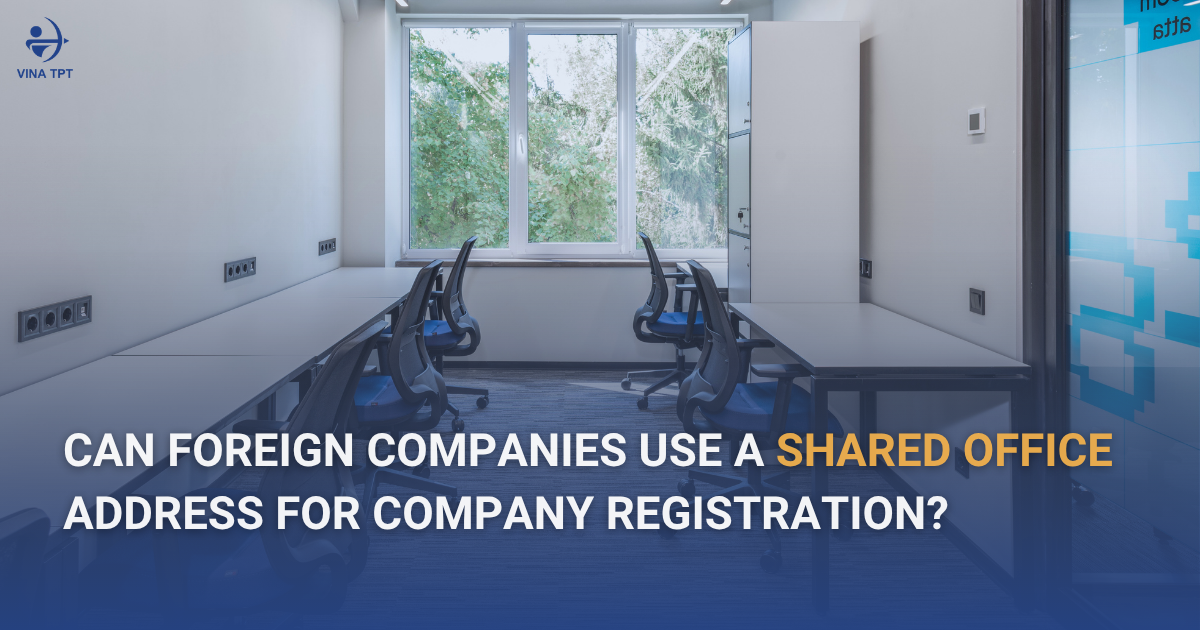
Choosing a shared office at Vina TPT means more than renting a workstation—it means establishing your business within a professional ecosystem designed to support foreign investors and growing companies in Vietnam. Combining a fully equipped workspace with expert business advisory services, Vina TPT enables businesses to launch operations quickly while maintaining full legal compliance and operational efficiency. With over 20 years of experience supporting local and foreign enterprises, Vina TPT understands the practical challenges companies face during market entry and business expansion.
- Cost-Effective Business Setup: Avoid the high upfront costs associated with traditional office leasing, furniture, utilities, and administrative staffing. A predictable monthly fee allows your business to operate professionally while preserving capital for growth.
- Legally Compliant Business Presence: Operate from a commercial office suitable for business registration, providing your company with a credible address that supports legal compliance and enhances corporate credibility.
- Fully Equipped Workspace: Enjoy a modern office environment with dedicated workstations, high-speed internet, meeting rooms, pantry facilities, reception support, and daily office services—everything your team needs to work productively from day one.
- Integrated Business Support: Unlike conventional shared office providers, Vina TPT combines workspace solutions with professional Accounting, Tax, HR, and Corporate Advisory services. As your business grows, you can seamlessly access expert support without coordinating multiple service providers.
- Ideal for Foreign Investors: Whether you are establishing a new company, testing the Vietnamese market, or expanding your regional presence, our shared office provides a flexible, professional base backed by specialists experienced in supporting FDI businesses throughout their investment journey.
- Flexible and Scalable: As your business expands, you can easily upgrade from a single dedicated desk to a larger private office without changing your business ecosystem, ensuring continuity and minimal operational disruption.
Final Verdict & Actionable Recommendations
Using a shared office as an address for company registration is a cost-effective, legally compliant, and strategically flexible solution for foreign companies entering the Vietnamese market. However, businesses should ensure the chosen address for company registration fully complies with applicable legal and regulatory requirements.
Success requires balancing upfront cost savings with rigorous compliance checks.
Expert Advisory & Next Steps for Smooth Market Entry
- Audit Your Business Line: Confirm that your planned business activity does not require dedicated physical zoning or special environmental/operational licenses.
- Vet the Provider: Ensure the shared office is eligible for business registration. Confirm that the provider can support legal address requirements, provide the lease agreement and landlord consent documents, and assist with tax authority inspections if requested.
- Consult Local Counsel: Engage a localized corporate legal or tax adviser to confirm that regional tax authorities permit shared address registrations for foreign-invested enterprises.
By pairing a reputable shared office provider with thorough compliance preparation, foreign enterprises can establish a legitimate, flexible, and scalable international footprint positioned for long-term growth.
Need a compliant shared office for your business in Vietnam?
Contact Vina TPT today for expert advice on shared office solutions and company incorporation services. Our team will help you secure a legally compliant address for company registration, ensuring a smooth business setup process with ongoing accounting, tax, and corporate support.