


Vietnam has become an ideal destination to start an import-export business thanks to its strategic logistics location, competitive costs, young and abundant workforce, and a robust network of free trade agreements (EVFTA, CPTPP, RCEP, and others).
With the Law on Investment 2025 taking effect from March 1, 2026, establishing an FDI company in the import-export sector has never been easier. Foreign investors can now own 100% of the capital in most trading activities and do not require a general import-export license – only the appropriate business line registration is needed.
This article provides a detailed, step-by-step guide on how to start import export business in Vietnam in 2026, covering everything from product selection and company structure to legal procedures and actual operations. Understanding how to start import export business correctly from the beginning will help investors avoid unnecessary risks.
Potential import and export products in Vietnam when learning how to start import export business
Before diving deeper into how to start import export business, choosing the right product is a critical first step. Vietnam enjoys strong advantages in both exports and imports. Here are the most promising product categories for 2026:
|
Strong Export products |
Promising Import products |
|
|
To choose the right products when starting your own business, you should:
- Prioritize items where Vietnam has a competitive edge or enjoys preferential treatment under FTAs
- Evaluate profit margins, market demand, logistics risks, and legal requirements
- Start with products you already have experience in or an established supply chain to minimize initial risks
Advice: Conduct thorough market research when learning how to start import export business to reduce risks.
One important note is that although import-export activities in Vietnam do not require a general license, certain products may still be subject to specific business conditions or require specialized permits. Therefore, in addition to selecting high-potential products, investors should carefully review the relevant legal requirements to avoid operational risks.
Once you have a clear overview, you can begin implementing the specific steps to start an import export business in Vietnam.
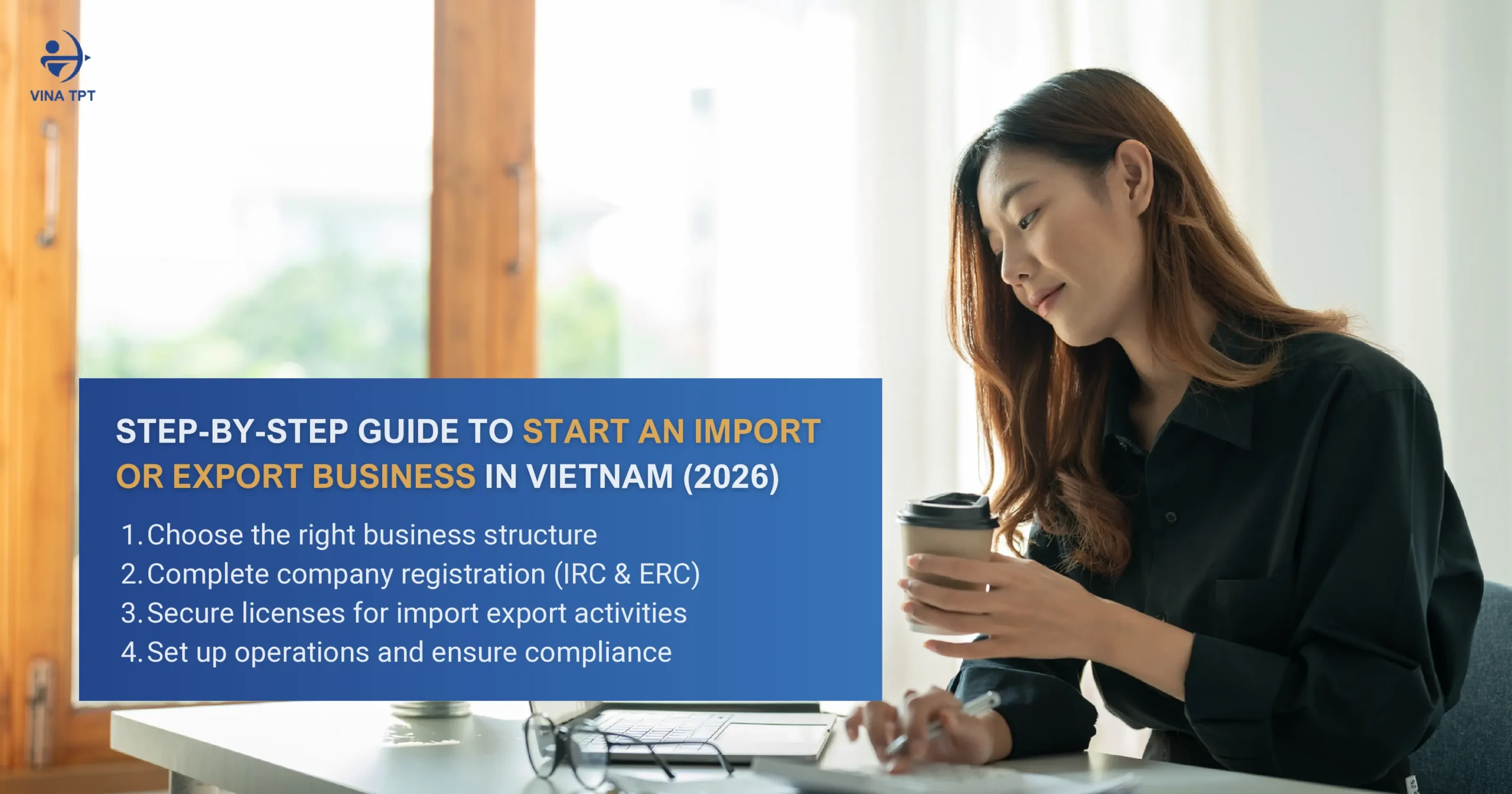
Step 1 – Choose the right business structure
Choosing the correct business structure is the first critical step when starting an import export business in Vietnam. The type of company directly affects governance, capital raising ability, control, and long-term development plans.
The two most popular structures for foreign investors are:
- Limited Liability Company (LLC): The most common choice for foreign investors due to its simple, flexible management structure. It is ideal for startups and small-to-medium enterprises, allowing full control and quick decision-making.
- Joint Stock Company (JSC): More suitable for businesses planning to raise capital from multiple investors or aiming for future listing on the stock exchange.
Recommendation: This is especially important for investors who are new to how to start import export business in Vietnam, a 100% foreign-owned LLC is strongly recommended. This structure offers absolute control, simpler procedures, and easier management. Later, when the company grows and needs additional capital, you can flexibly convert it into a Joint Stock Company.
Selecting the right structure from the beginning helps save time, reduce costs, and avoid unnecessary risks. This decision plays a key role in how to start import export business efficiently in Vietnam.
Step 2 – Company registration process (IRC & ERC)
This is the most important step when starting an import export business in Vietnam. Under the Law on Investment 2025, the registration process has become more flexible. In many non-restricted sectors, foreign investors can now register the Enterprise Registration Certificate (ERC) before completing the Investment Registration Certificate (IRC).
Step 2.1: Prepare investment documents
A clear understanding of how to start import export business will help you prepare the correct documents from the beginning. This is the foundational step. The dossier must meet all requirements under the Law on Investment 2025, including:
- Application for investment project implementation
- Proof of the investor’s legal status (passport or Certificate of Incorporation)
- Detailed investment project proposal (objectives, scale, capital, location, timeline, and socio-economic impact)
- Proof of financial capacity (bank statements, audited financial reports, or parent company support letter)
- Documents proving the business address (office lease agreement)
- Technology explanation (if required)
Step 2.2: Apply for the Investment Registration Certificate (IRC)
The IRC approves the investment project and specifies capital, business lines, location, and incentives. Processing time usually ranges from 30 – 45 working days.
Step 2.3: Obtain the Enterprise Registration Certificate (ERC)
After receiving the IRC (or in permitted cases, before it), you apply for the ERC – the document that officially establishes the company’s legal entity. This step typically takes 7–14 working days.
Explore FDI Company Formation Services
Step 3 – Setup Operations (Bank Account, Office, HR & Compliance)
Once licenses are obtained, you should promptly complete the following:
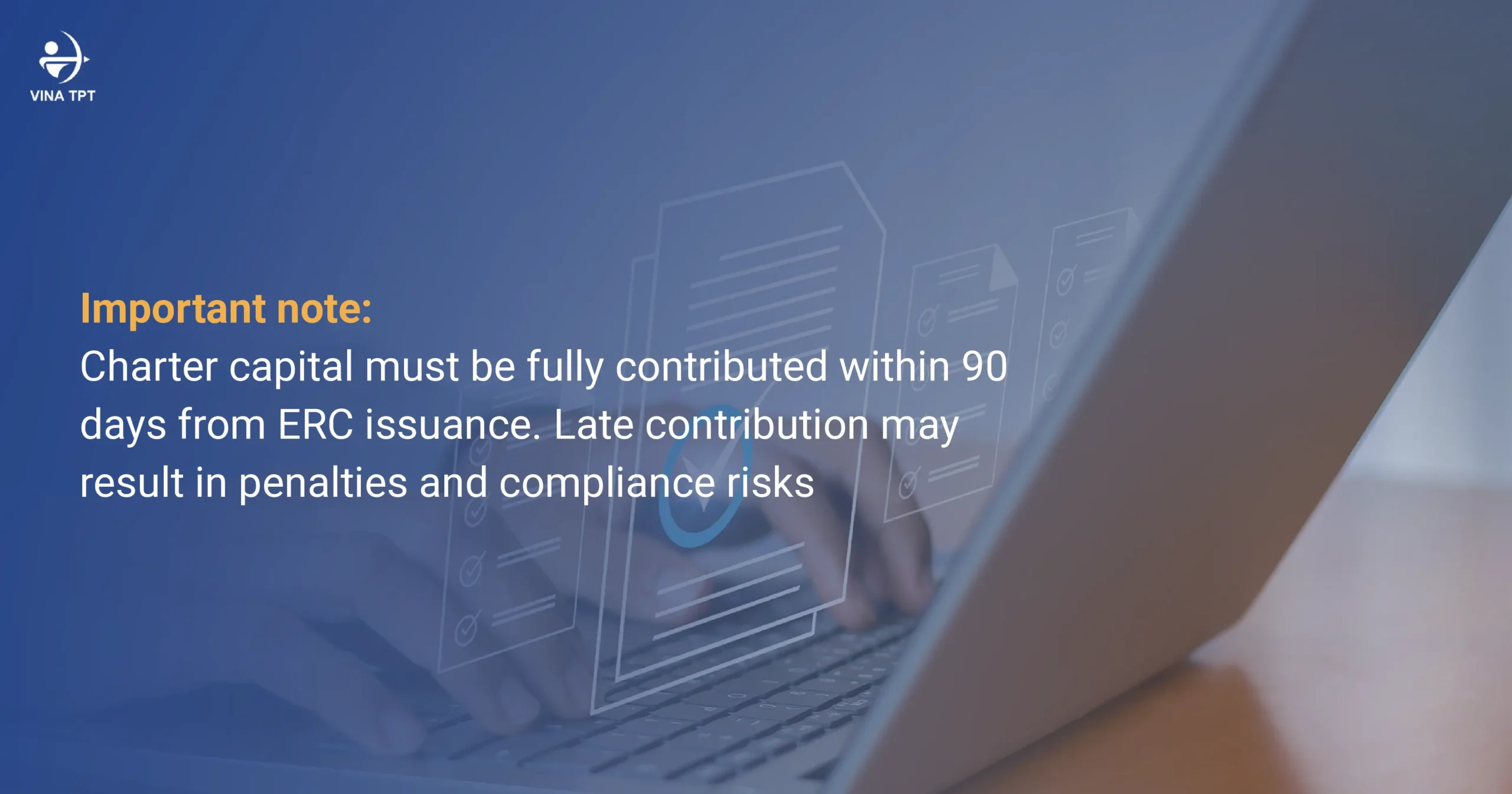
- Open an investment capital account and transaction account (charter capital must be fully contributed within 90 days of receiving the ERC)
- Register initial tax accounts and complete business identification procedures on the VNeID system.
- Monitor mandatory tax filing deadlines, especially Value-Added Tax (VAT), even if no business activities have occurred.
- Apply for work permits, Temporary Residence Cards (TRC), and business visas for foreign investors or employees working in Vietnam for more than 3 months.
Note: Early compliance is crucial when learning how to start import export business in Vietnam to avoid penalties. Many investors choose outsourced finance & accounting services to reduce risks and focus on core business activities. At this stage, investors can clearly see how to start import export business in a practical and compliant way.
Step 4 – Obtain necessary licenses and permits for import export
A major advantage is that no general import-export license is required if you register the correct business lines.
However, certain products still need specific permits, such as:
- Food, pharmaceuticals, cosmetics, chemicals, and agricultural products
- Goods under specialized management (defense, security, environment, etc.)
- If a company is not only engaged in import export activities but also participates in trading activities in Vietnam, such as distribution or retail, it will be required to obtain business license and retail Outlet Establishment License.
You will also need to:
- Register for tax code and customs code
- Connect to the electronic invoicing system
- Register import-export rights (automatically granted with appropriate business lines)
Explore Outsourced Accounting Services
6. Common challenges when starting an Import Export Business in Vietnam
Although Vietnam offers many advantages, the process of starting an import export business is not always smooth, especially for first-time foreign investors.
Administrative procedures, while improved, can still be time-consuming if documents are incomplete. Language barriers and differences in working culture may also slow down progress when dealing with government agencies or local partners.
Other common challenges include cash flow management, foreign exchange fluctuations, and logistics costs. Additionally, Vietnam’s legal and policy framework continues to evolve, requiring businesses to stay updated to avoid compliance risks.
Having a knowledgeable local consulting partner from the beginning can significantly reduce these risks and ensure smoother implementation.
7. Why Vina TPT can help you successfully start your Import Export Business
For investors learning how to start import export business, having the right consulting partner can make a significant difference.
With over 20 years of experience supporting FDI enterprises, Vina TPT fully understands the practical difficulties foreign investors face when starting an import-export business in Vietnam.
We provide end-to-end solutions, from advising on suitable business lines and products, completing IRC/ERC procedures, assisting with Temporary Residence Cards (TRC), to setting up compliant accounting and tax systems from day one.
What sets Vina TPT apart is our ability to connect all these steps into a seamless process. Our multilingual team can support you remotely, making the entire journey more convenient – especially for investors who have not yet established a physical presence in Vietnam.
If you are still unsure how to start import export business, working with experts can significantly shorten your setup time. Contact Vina TPT today for a free consultation and to build the most suitable roadmap for your import export business in Vietnam.