

Vietnam’s restaurant market is highly dynamic, with a wide variety of international cuisines successfully operating – from Turkish, Chinese, Japanese, Hong Kong, Korean, France, Italy, Thailand, Taiwanese to Malaysian concepts. Vietnamese consumers are open-minded and eager to embrace new culinary experiences, creating significant opportunities for foreign investors when starting a restaurant.
However, the legal and business environment in Vietnam changes constantly, leading many foreign investors to make costly mistakes. This article from Vina TPT compiles the most common pitfalls when opening a restaurant in Vietnam and practical ways to avoid them, so you can have a smooth start and sustainable operations.
Pitfall 1 – Choosing the Wrong Location When Starting a Restaurant
In the F&B industry, location determines more than 50% of a project’s success or failure. A classic mistake many international investors make when starting a restaurant is relying too heavily on global location theories while ignoring local traffic patterns, sidewalk culture, and real foot traffic in Vietnam.
- Common mistakes: Accepting high rental costs in premium central locations with low target foot traffic, or choosing areas without convenient motorbike/car parking – a critical factor affecting Vietnamese customers’ psychology.
- Serious consequences: Actual revenue fails to cover fixed costs (rent, utilities, equipment depreciation), leading to negative cash flow and forced closure within 3–6 months, resulting in the total loss of initial investment in hard assets.
- Prevention strategies for investors:
- Spend at least 2–3 months conducting on-site surveys at different times of day (especially peak lunch and dinner hours, weekends) to accurately assess customer density and behavior.
- Perform in-depth analysis of direct and indirect competitors within a 1-2 km radius of the potential location.
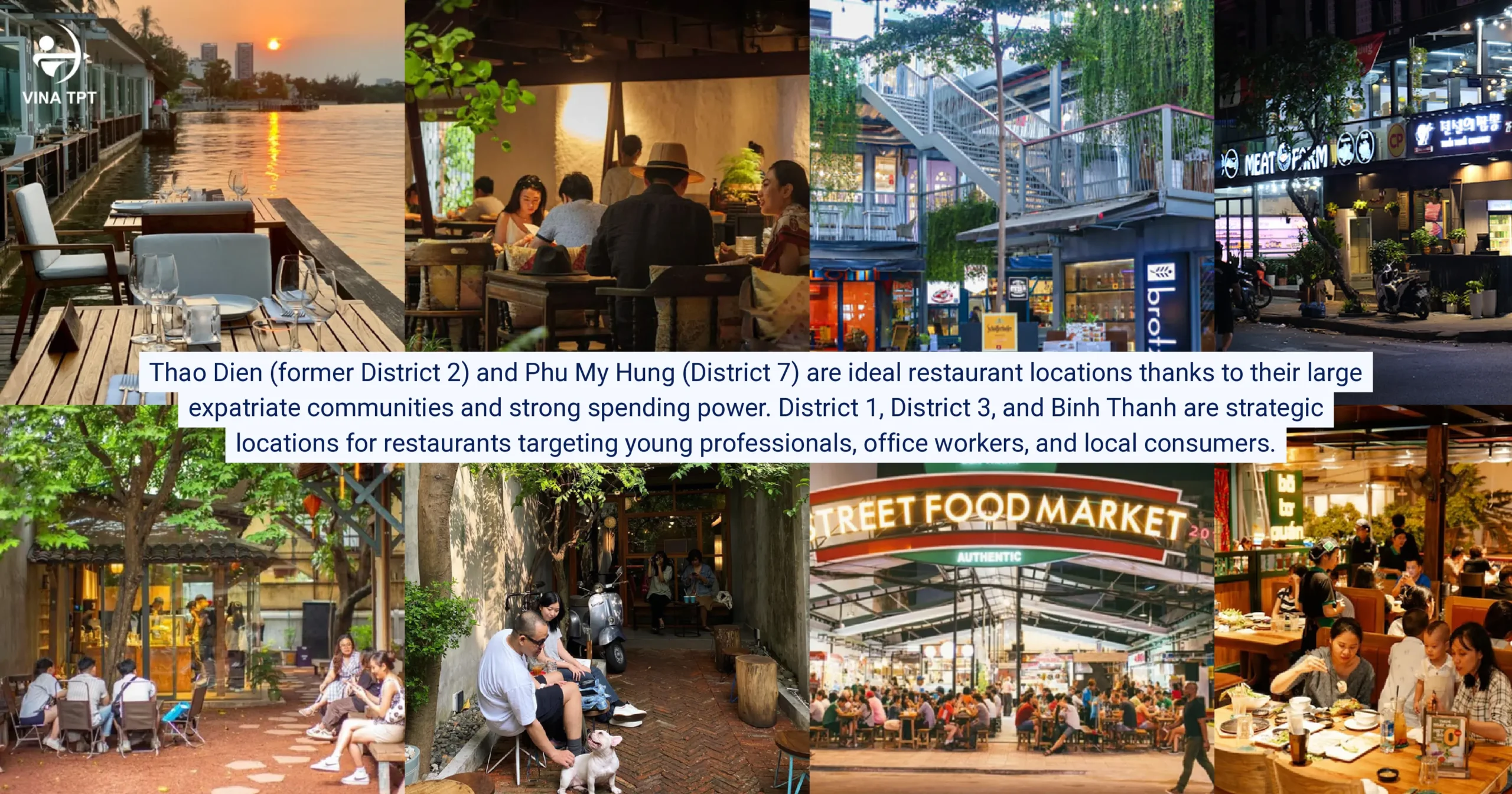
- Strategic area recommendations in Ho Chi Minh City: For Western or premium concepts, areas with high concentrations of expats such as Thao Dien (former District 2) or Phu My Hung (District 7) are excellent choices with high-spending customers. For targeting young Vietnamese professionals, areas near central District 1, District 3, or Binh Thanh offer better cost-performance ratios.
For a more comprehensive view of technical standards and legal conditions for business locations, you can refer to our in-depth guide: Choosing the Best Location for Business in Vietnam: Industry-Based Guide.
Pitfall 2 – Licensing Mistakes When Starting a Restaurant
Many foreign business owners mistakenly believe that completing the Investment Registration Certificate (IRC) and Enterprise Registration Certificate (ERC) is enough to open a restaurant. In reality, F&B is a highly conditional business sector that requires a complete set of sub-licenses before actual operations can begin.
Investors must pay special attention to completing the following legal requirements:
- Certificate of Eligibility for Food Safety: This is the most critical mandatory requirement. The facility must prove a one-way processing flow, clear origin of ingredients, and that all staff have received food safety training.
- Fire Prevention and Fighting Approval: Current regulations for design approval and acceptance of fire prevention systems for restaurants and commercial kitchens are extremely strict. Non-compliant renovation can lead to indefinite suspension of the project.
- License for Selling Alcohol, Beer, and Tobacco (if applicable): If the menu includes alcoholic beverages, you must obtain a retail alcohol license according to local quota regulations.
- Foreign Personnel Procedures: For key positions such as Executive Chef or Restaurant Manager who are foreigners, the company must complete Work Permit and Temporary Residence Card (TRC) applications.
Missing any sub-license during post-inspection by market management and inter-agency authorities can lead to very high administrative fines, seizure of violating goods, or, in serious cases, immediate suspension of business operations – seriously damaging your international brand reputation.
Contact Vina TPT for a Free Company Formation Consultation
Pitfall 3 – Ineffective Recruitment and Staff Management
Human resources are the lifeblood that maintains service quality in the hospitality industry. However, Vietnam’s F&B labor market has very unique characteristics regarding turnover and fierce competition. A foreign restaurant business investor who does not understand these will easily fall into a staffing crisis.
- Real situation: Businesses often struggle to recruit highly skilled chefs who understand international cuisine and service staff with good foreign language skills. In addition, the turnover rate in this industry in Vietnam is very high, mainly due to uncompetitive compensation, unclear career paths, or management styles that do not align with local communication culture.
- Labor law risks: Many foreign investors are unaware of Vietnam’s Labor Code regulations on contract signing, mandatory social insurance contributions, working hours, rest periods, and disciplinary procedures, leading to prolonged legal disputes.
- Management advice from Vina TPT:
- Establish a clear compensation structure, including competitive base salary combined with service charge and performance-based tips to motivate staff.
- Organize regular internal training on professional skills and service culture so employees see opportunities for personal growth.
- Outsource payroll and labor compliance processes to professional providers to ensure 100% protection of employee benefits and taxes.
Pitfall 4 – Non-Compliance with Tax and Accounting Regulations
Vietnam’s tax management system for foreign-invested enterprises (FDI) operates on a self-declaration, self-payment, and self-responsibility basis. Therefore, carelessness or lack of experience in updating tax guidance circulars can create enormous hidden risks for your restaurant project.
- Common accounting mistakes in restaurants:
- Incorrect or late declaration of Value-Added Tax (VAT) and Personal Income Tax (PIT) for both foreign and local staff.
- Inaccurate Ingredient Tracking and Cost of Goods Sold System: A unique characteristic of the restaurant industry is the daily purchase of fresh ingredients (meat, fish, vegetables, etc.) from wholesale markets or small farmers. Managing ingredient inflows, outflows, inventory, and calculating the cost per dish requires much stricter monitoring compared to other industries. Without tight control, food cost can easily exceed, eroding profit margins and making it difficult to prove legitimate expenses during Corporate Income Tax (CIT) finalization.
- Financial consequences: During tax audits or finalization, the company may face heavy late-payment or incorrect-declaration fines amounting to hundreds of millions of VND, while also damaging the company’s legal credit rating and visa/TRC extension processes for investors.
How Vina TPT Helps You Avoid These Pitfalls
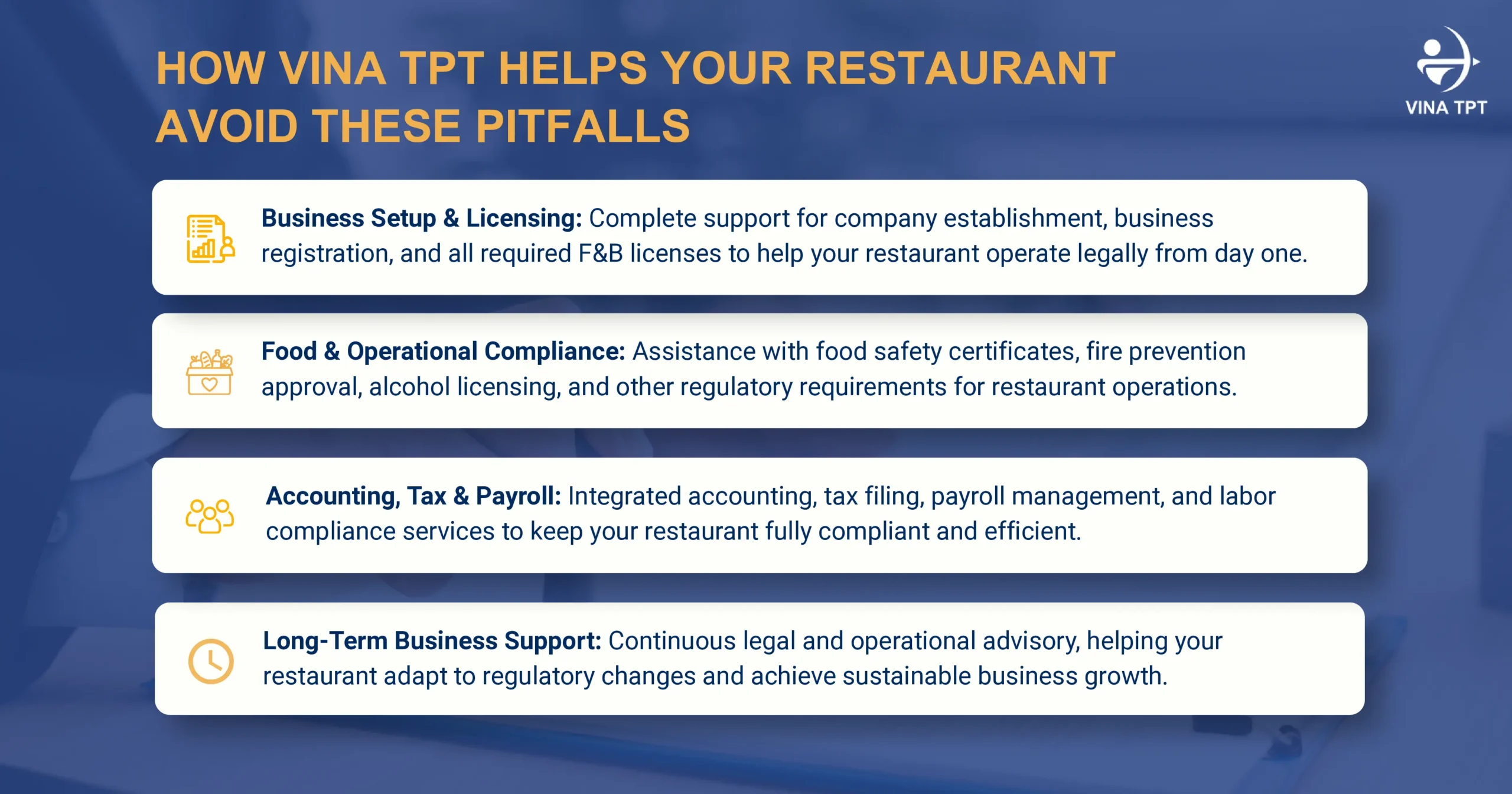
Understanding the complex challenges of starting a restaurant in Vietnam, Vina TPT offers a comprehensive legal consulting and support package. We act as an extended arm to help you remove all procedural barriers so you can focus entirely on creating space and culinary quality:
- Business Structure Setup Advisory: Guiding you on optimizing capital flow, selecting appropriate distribution and F&B service codes in line with WTO commitments and Vietnamese law.
- End-to-End Licensing Support: On behalf of investors, preparing documents, handling consular legalization, submitting applications, and liaising with authorities to obtain IRC, ERC, and especially the complex sub-licenses such as Food Safety Certificate, Fire Prevention Approval, and Alcohol Retail License.
- Specialized F&B Accounting & Tax Services: Establishing compliant accounting systems, optimizing input documents for fresh ingredients, and representing the company during tax audits.
- Comprehensive HR & Payroll Management: Assisting with standard employment contracts, payroll processing, PIT and social insurance finalization, and end-to-end Work Permit and TRC procedures for foreign chefs and managers.
With a team of lawyers who deeply understand the service market and over 20 years of experience supporting international brands, Vina TPT is committed to protecting your capital and ensuring absolute legal safety for your project.
Conclusion
The journey of entering Vietnam’s restaurant business promises highly attractive profits thanks to the dynamic market size and steadily increasing purchasing power. However, to turn potential into real success, proactively identifying and avoiding the four major pitfalls regarding location, licenses, staffing, and taxes is an absolute necessity.
Are you planning on starting a restaurant in Vietnam and want a solid, safe roadmap from the very first steps? Contact Vina TPT today for a free, in-depth consultation and comprehensive support to make your restaurant a success.