How to Get a Business License in Vietnam: Step-by-Step FDI Guide

business license vietnam

business license vietnam

Setting up a company in Vietnam – which business licenses do you actually need? This is a common question of foreign investors when they begin researching the legal procedures for company formation. For foreign investors, the phrase “business license” is not a single administrative document, but a general term for the mandatory legal pair: IRC (Investment Registration Certificate) and ERC (Enterprise Registration Certificate). In addition, depending on the specific business field, the company may need to register additional sub-licenses (sub-license).

This article provides detailed guidance on the accurate step-by-step implementation process, supplies actual timelines, and lists the mandatory procedures that need to be completed after receiving the license, helping investors prepare correctly from the beginning in order to obtain a business license vietnam in a convenient manner.

1. What a Business License Vietnam Means for Foreign Investors

The concept of “business license” for an FDI company is not a single type of license. When implementing a foreign direct investment project, this is a unified term for two foundational levels of legal certificates:

  • Investment Registration Certificate (IRC): The document that records the approval of the competent authority for the investment project. The IRC records core information about the investor, business objectives, total investment capital, project implementation location, and operating term.
  • Enterprise Registration Certificate (ERC): The official document that establishes the legal entity status of the company in Vietnam. The ERC records the company name, head office address, charter capital, and information of the legal representative. The code recorded on the ERC is simultaneously the tax code of the company.

For conditional business lines (for example: direct retail activities to end consumers), the company must apply for an additional Business License (Business License for retail activities) or a specialized license (sub-license). These sub-licenses operate independently and are not on the same level as the IRC/ERC but are mandatory conditions for entering operations. Readers may refer to the detailed document list in the article IRC/ERC Documents.

Step 1 – Confirm Business Lines, Market Access, Channel and Company Type

The initial preparation stage plays a decisive role in the entire licensing progress. Accurately determining the foundational factors helps avoid having to amend the dossier multiple times:

  • Determine the business list & Distribution channels: The company needs to clarify the products/services to be provided, target customer objects, and distribution channels (wholesale, retail, or e-commerce) in order to cross-check and code them correctly according to the Vietnam Standard Industrial Classification system.
  • Check Market Access Conditions: Carefully appraise the foreign ownership ratio of foreign investors and the list of business lines with restricted market access under the regulations in the Law on Investment 2025 (Law 143/2025/QH15, effective from 01/03/2026).
  • Select the legal model:
    • Limited Liability Company: Suitable for the majority of medium and small investors due to the lean management structure and limited liability within the scope of contributed capital.
    • Joint Stock Company: Suitable when there are multiple shareholders or when the company plans to raise capital.
  • Prepare the head office location: Complete the office lease contract or registered address contract (Shared Office) that has full legal documents of the lessor before submitting the dossier.

Step 2 – Prepare and Obtain the IRC

The process of obtaining the Investment Registration Certificate (IRC) requires close coordination between documents prepared by the investor and technical dossiers built by the advisory firm:

  • Documents prepared by the Investor:
    • Individual investor: A passport that is still valid (only needs to be notarized in Vietnam) and a bank account balance confirmation document to prove financial capacity (do not use a guarantee letter).
    • Corporate investor: Legal documents of the parent company that have undergone consular legalization at the Vietnamese Consulate in the home country. The legalization process usually takes approximately 14–30 days, therefore it should be completed within 30 days before the official filing date.
  • Documents drafted by the Advisory firm: Application for implementation of the investment project, Investment Project Proposal, premises lease contract together with legal documents proving the lessor’s right to lease. Information of the Legal Representative and Chief Accountant/Person in charge of accounting must be determined for registration right at the time of submission.
  • Receiving authority & Processing time: The dossier is submitted at the Department of Finance (previously the Department of Planning and Investment) or the Management Board of the Industrial Zone/Export Processing Zone if the project is located in a concentrated zone. The actual time to receive the IRC is approximately 5–6 weeks from when the dossier is complete (the time prescribed by law is shorter), not including the time for obtaining explanation opinions from inter-agency authorities.
  • New legal point: Article 19 of the Law on Investment 2025 allows foreign investors to establish a company (issuance of ERC) before performing the investment project registration procedure (issuance of IRC) if they fully meet the market access conditions.

Step 3 – Obtain the ERC

After completing and receiving the IRC, the company proceeds to submit the company establishment registration dossier to obtain the ERC.

  • Processing time: The actual time usually ranges from 1-2 working weeks.
  • Legal Representative regulations: The company may register one or more Legal Representatives, but must ensure that at least one person resides regularly in Vietnam.
  • Important note: When the ERC is issued, the company already has an official tax code. However, the company is still not allowed to issue invoices or receive capital contributions immediately and must continue with the operational steps in Step 4.

The Legal Representative is the person who stands as the representative of the company in transactions with state authorities, banks, and partners, so investors need to select a person who can be present in Vietnam when needed to sign documents and work with banks. After obtaining the ERC, the information recorded on the certificate is the basis for subsequent steps such as seal engraving, tax registration, and account opening.

EXPLORE VINA TPT COMPANY FORMATION SERVICES

Step 4 – Complete Post-Licensing Work

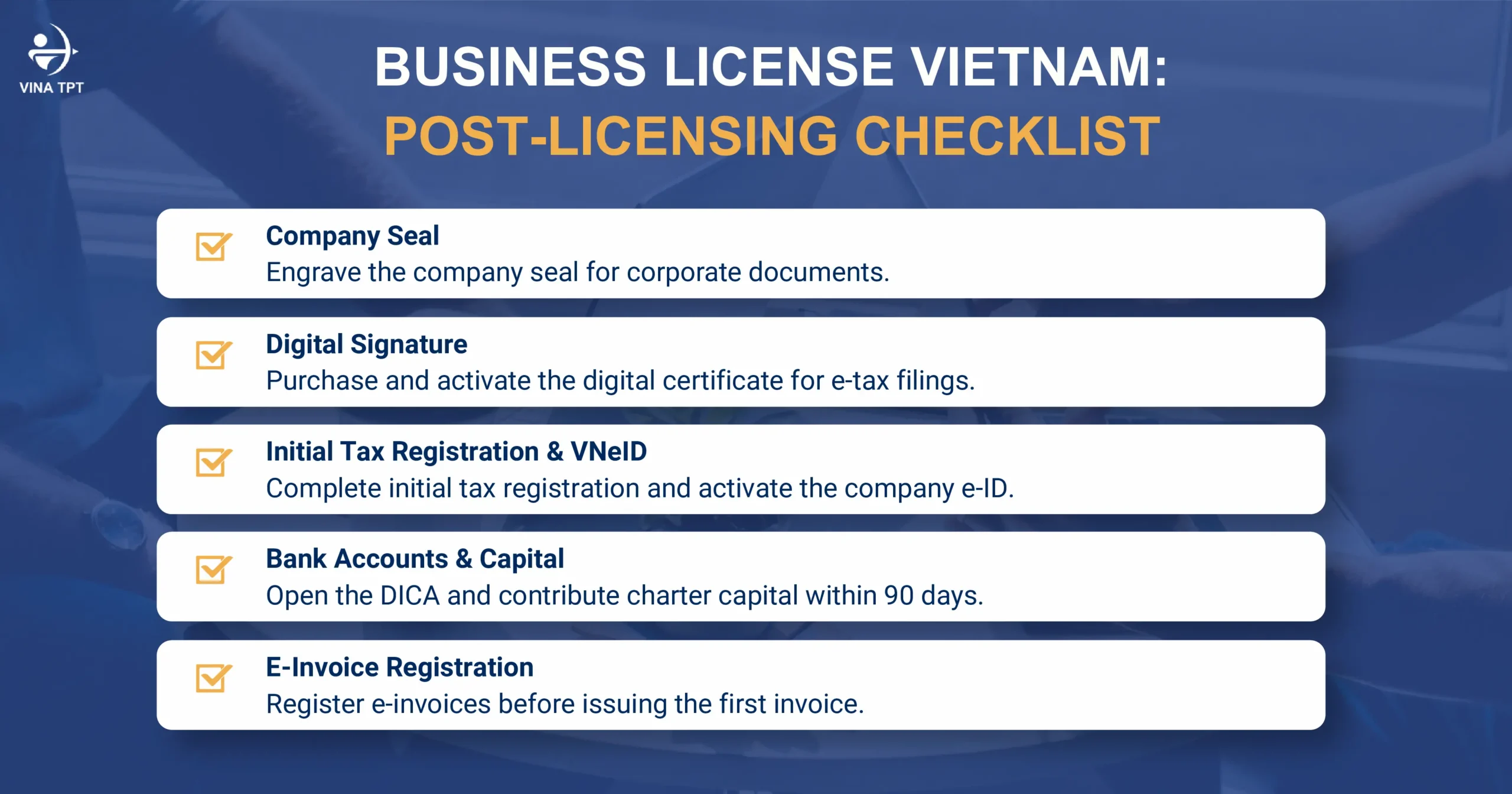
For the company to officially enter legal and tax-safe operations, investors need to complete the following post-registration steps in the correct order:

  • Engrave the legal entity seal of the company.
  • Purchase and activate the Digital Signature (USB Token / Digital Certificate) used for electronic transactions.
  • Perform the initial tax registration procedure and register the electronic identification account (VNeID) for the company.
  • Open the Direct Investment Capital Account (DICA) at a licensed commercial bank. When opening the account, the Legal Representative must be present in person; the bank will require the visa/temporary residence card of the Legal Representative and the Decision on appointment of the Chief Accountant.
  • Proceed to contribute the full charter capital through the DICA account within 90 days from the date of issuance of the ERC. Late capital contribution will be subject to administrative penalties and there is a risk of license revocation.
  • Perform the procedure to register the use of electronic invoices with the managing tax authority. 

The company should prepare a tracking list of each step, completion date, and person in charge so as not to miss important milestones such as the 90-day capital contribution deadline.
business license vietnam

Step 5 – Check Whether You Need a Sub-License

The company needs to accurately review the field of operation in order to determine the obligation to apply for sub-licenses:

  • B2B trade activities: Companies engaged in wholesale and import-export business normally only need to own the ERC to meet the conditions for operations.
  • B2C retail activities: Companies performing retail distribution to end consumers (including the form of retail via e-commerce) are required to apply for an additional Business License (business license) for retail activities.
  • Other conditional business lines: Fields such as education, healthcare, logistics… require separate specialized operating licenses. The company should discuss carefully with the advisory firm before registering industry codes.

Determining early whether a sub-license is needed helps the company avoid having to adjust business lines or apply for additional licenses after already entering operations, when business progress may be affected.

Business License Support at Vina TPT

With more than 20 years of experience accompanying more than 500 corporate clients, Vina TPT’s specialist team brings a full-package advisory and procedure implementation solution, helping foreign investors obtain a business license safely and on schedule:

  • Directly review industry codes, market access conditions, and advise on a suitable company model before preparing the dossier.
  • Clearly divide the list of documents that the investor needs to prepare (passport, account balance confirmation, consular legalization) and the entire portion of work that Vina TPT undertakes (drafting technical dossiers, submitting, explaining, and receiving IRC/ERC results).
  • Support a legal business registration address solution through the Shared Office service for clients establishing a company.
  • Undertake the full package of tax – banking procedures after the ERC and provide accounting – tax services right from the first month.
  • More than 20 years of experience accompanying more than 500 corporate clients, with a specialist team supporting fluently in English, Japanese, and Chinese.

Conclusion

In summary, the process of owning a business license vietnam for foreign investors is completing the IRC and ERC pair, accompanied by specialized sub-licenses if belonging to a conditional field. Accurate document preparation right from the initial definition step will help optimize time and costs. If belonging to a conditional industry, the company needs to determine early the sub-licenses that must be applied for so that the business plan is not interrupted. Please send a detailed description of the expected business activities together with the nationality of the investor to Vina TPT to receive the detailed document list and the IRC/ERC licensing roadmap for the company’s business license vietnam.
BOOK A FREE CONSULTATION

business license vietnam

Company Formation in Vietnam: 7 Practical Tips for Foreign Investors

Company-Formation-in-Vietnam-7-Practical-Tips-for-Foreign-Investors

Company-Formation-in-Vietnam-7-Practical-Tips-for-Foreign-Investors

In our practical experience providing FDI investment advisory services, we have seen company formation in Vietnam files approved and completed in as little as 2-3 weeks. Conversely, quite a few cases drag on for more than two months because business lines must be added repeatedly, the registered office address must be changed, or all foreign legal documents must be retranslated. This large difference in processing time usually does not come from the state authorities, but from the order and method in which the investor prepares the file before submission.

Drawing on our experience accompanying hundreds of FDI companies that have successfully entered the market, Vina TPT has compiled the following 7 practical tips. The first five points will help your licensing file follow the correct path from the first submission. The next part clarifies the mandatory legal obligations that must be activated immediately upon receiving the ERC, and the final part explains how Vina TPT accompanies you from business model design through to sustainable compliant operations.

1. Check the Business Activities Before Preparing Any Documents

The decisive first step in the FDI company formation process is to identify and accurately describe the actual business model the company will operate in Vietnam, before proceeding with the legalization of foreign documents or drafting the registration file.

It is necessary to clearly distinguish between the “business activity you want to do” and the “business lines that can be registered.” An actual business model may include wholesale, direct retail to end consumers, consulting services, import-export, or F&B operations that serve alcoholic beverages. Each way of describing the activity and its scope will determine completely different market-access conditions, foreign ownership limits, conditional sectors, and sub-licenses.

Investors should provide a detailed description of the business model to the advisory firm before proceeding with the translation or legalization of any document. This description needs to clarify:

  • Products & Services: The specific goods to be traded, or the solutions/services to be provided (for example: software, management consulting, logistics services, industrial equipment).
  • Commercial structure and distribution channels: Whether operations follow a wholesale (B2B) model, direct retail to end consumers (B2C), e-commerce, pure import-export, or cross-border service provision.
  • Operational specifics: The location where services are provided, warehouse scale, or special factors such as serving alcoholic beverages in an F&B model, trading conditional goods, or requirements for specialized premises.

Based on this detailed information, the specialist team will review the VSIC industry codes and accurately determine the market-access conditions, foreign ownership ratio, and list of accompanying sub-licenses. This review helps establish an accurate document list from the outset and completely eliminates the risk of having to adjust documents, retranslate, or provide additional explanations midway.

2. Choose a Capital Level That Matches the Actual Business Plan

The question “What is the minimum capital required to set up a company in Vietnam?” usually does not produce a useful answer. Except for certain financial, banking, or real-estate fields that require statutory capital, most service and trading sectors in Vietnam do not prescribe a fixed minimum charter capital. Nevertheless, the registered capital must be commensurate with the project scale, headcount, office rental costs, and the plan to sustain operations for the first 6-12 months. Registered capital that is too low relative to premises and inventory costs will cause the investment registration authority to request transparent explanations.

In addition, investors must tightly manage the capital contribution timeline: the mandatory legal deadline is within 90 days from the date the ERC is issued (or according to the disbursement schedule clearly stated on the IRC). If capital contribution is delayed beyond the prescribed 90-day period, the company will face serious administrative fines, late-payment interest, and a high risk that the business registration authority will revoke the Enterprise Registration Certificate.

Preparing a detailed operating budget for the first 6-12 months before finalizing the charter capital and investment capital is a necessary step. The capital contribution cash flow transferred from a personal account or the parent company’s overseas account into the Direct Investment Capital Account (DICA) in Vietnam needs to be planned in advance, to avoid the situation where the company waits until the bank account is opened before starting to arrange the funds.

3. Secure the Business Address Before Filing the Application

A location that is “available to rent” in practice is not necessarily a legally eligible address for company registration. The building used as the registered office must have the correct commercial/office function, the lease contract must fully meet the conditions for filing, and the legal documents of the premises must match exactly in name, administrative address, and area with the project description. Residential apartments or collective housing are strictly prohibited from being used as company headquarters.

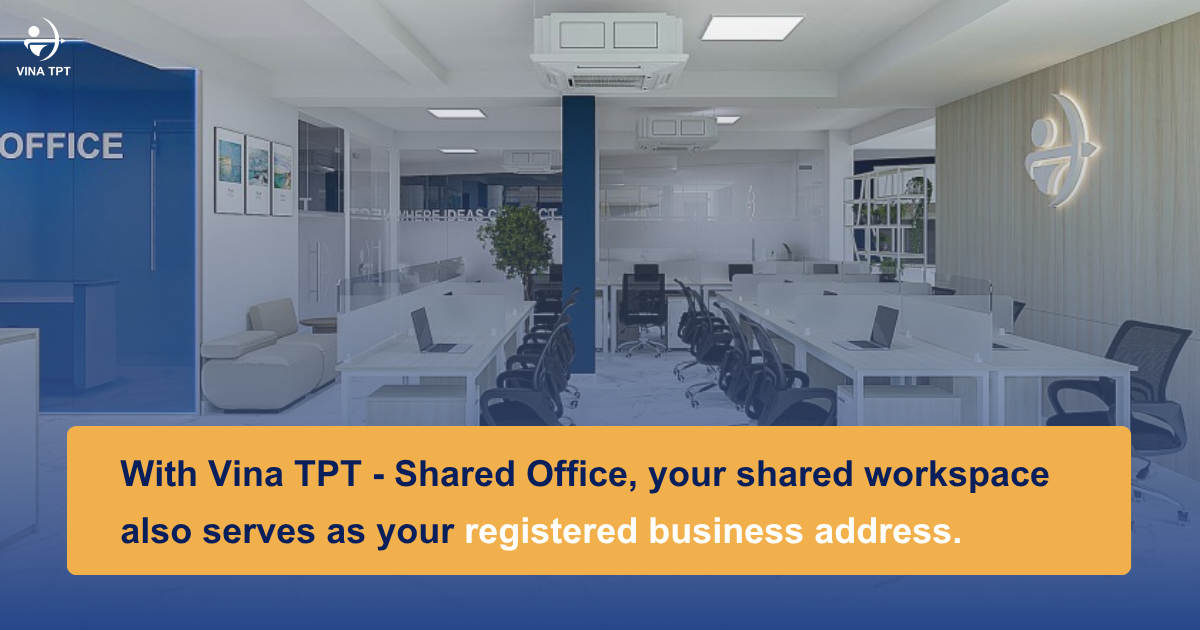
For newly established FDI companies, using a shared office is a more optimal solution than leasing a traditional office: it provides a legal lease contract, a central business registration address, reception services, cost savings in the first year, and the flexibility to upgrade to a private office when headcount increases.

Investors should request the landlord to provide complete legal documents of the premises (construction permit, land/building use right certificate, sublease contract) so that the advisory firm can review them before a long-term deposit is placed. Changing the registered office address midway is one of the main reasons why a Vietnam company formation file is rejected or returned.

Explore Vina TPT’s Shared Office Services


4. Prepare Foreign Documents Correctly the First Time

The requirements for original documents issued abroad differ clearly between two groups of investors:

  • Individual investors: A valid passport and a bank balance confirmation (proof of financial capacity) showing a balance equivalent to the committed capital contribution.
  • Corporate investors (parent company): Certificate of Incorporation, company charter, most recent audited financial statements, decision appointing the representative, and the representative’s passport.

All documents issued abroad must go through the following process: Consular legalization at the Vietnamese Embassy/Consulate in the home country → notarized translation into Vietnamese in Vietnam → consistency check of the data.

These legal documents should be issued and consularized close to the filing date (ideally within 30 days) to avoid the investment registration authority requesting explanations or rejecting them as outdated. Most importantly: the full name, passport number, permanent address, parent company name, and registered capital must be 100% consistent on every page of the documents. A small character discrepancy between the passport and the bank balance confirmation is enough to interrupt the entire foreign company setup Vietnam process.

Explore Vina TPT’s Company Formation Services

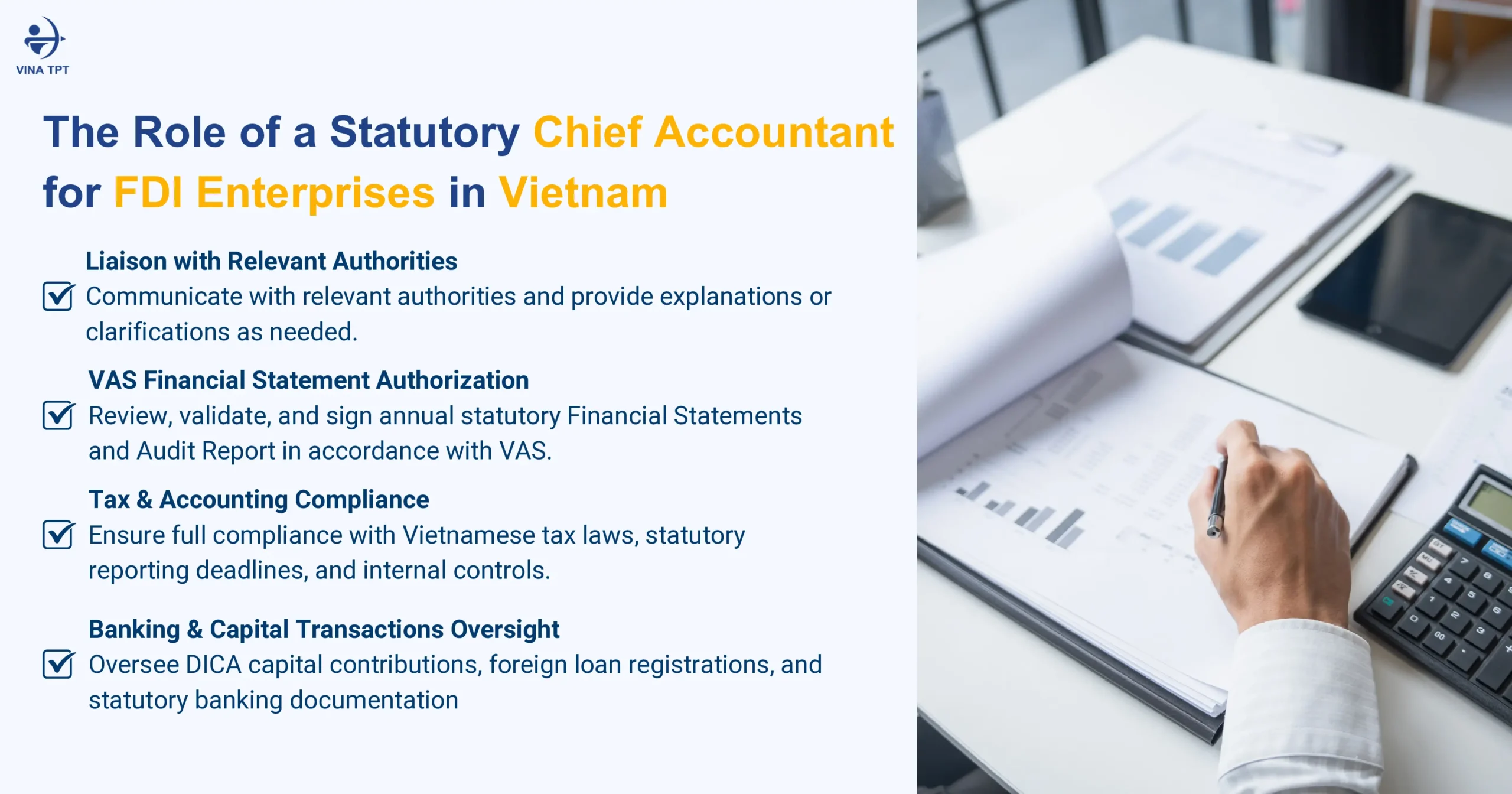
5. Name the Chief Accountant When You File, Not After

Many investors mistakenly believe that they only need to look for accounting staff once the company is officially operating. In reality, at the time of filing the FDI company registration application (ERC), the information of the Chief Accountant (or the person in charge of accounting) already needs to be declared in the legal file. Immediately afterward, commercial banks in Vietnam will also mandatorily require the presentation of the Chief Accountant appointment decision before agreeing to open the Direct Investment Capital Account (DICA) and the current account.

Proactively confirming a professional accounting service provider right from the pre-formation stage helps the company complete the initial registration file smoothly. Using an outsourced Chief Accountant service together with a tax compliance package is the option chosen by the majority of FDI companies, ensuring legal continuity and data responsibility from the first day of licensing.

Company-Formation-in-Vietnam-7-Practical-Tips-for-Foreign-Investors

6. What to Line Up After the Company Is Formed

Receiving the Enterprise Registration Certificate (ERC) is only the starting point of putting the company into operation. Here is the list of mandatory post-formation procedures that investors need to budget for and implement immediately:

  • Open bank accounts and contribute capital: Open the Direct Investment Capital Account (DICA) and the VND current account. The bank will require the Legal Representative’s visa/TRC and the Chief Accountant appointment decision. Transfer 100% of the charter capital within the 90-day deadline.
  • Activate initial legal and tax formalities: Engrave the company seal, purchase a digital signature (CA Token), register the company’s VNeID electronic identity account, and complete the initial tax registration file with the directly managing tax office.
  • Register e-invoices: Complete registration to use tax-authority-coded electronic invoices before issuing the first sales or service invoice.
  • VAS accounting books and personnel: Set up the accounting book system under VAS standards; register a social insurance unit code if hiring employees; apply for Work Permits and Temporary Residence Cards (TRC) for the founder/foreign specialists.
  • Mandatory FDI investment reporting: File periodic project implementation reports as required by the Law on Investment.

7. Why You Should Partner with a Trusted Advisory Firm 

The process of establishing and operating an FDI company in Vietnam requires a deep understanding of the investment legal system and local administrative practice. Partnering with a reputable advisory firm such as Vina TPT helps international investors optimize licensing time, proactively eliminate risks, and establish a solid compliance system from the outset, based on more than 20 years of practical experience:

  • Market and industry-code review (Pre-Filing Stage): Analyze the actual business model, assess market-access conditions, advise on company type (LLC/JSC), optimal capital structure, and accurately map VSIC industry codes.
  • Document guidance and consular legalization: Provide an accurate list of original documents and check 100% information consistency of foreign documents before proceeding with consular legalization and judicial notarized translation.
  • Registered office address solution (Shared Office): Provide a legal business registration address at central locations in Ho Chi Minh City, with a full lease contract and building legal documents to attach to the state filing.
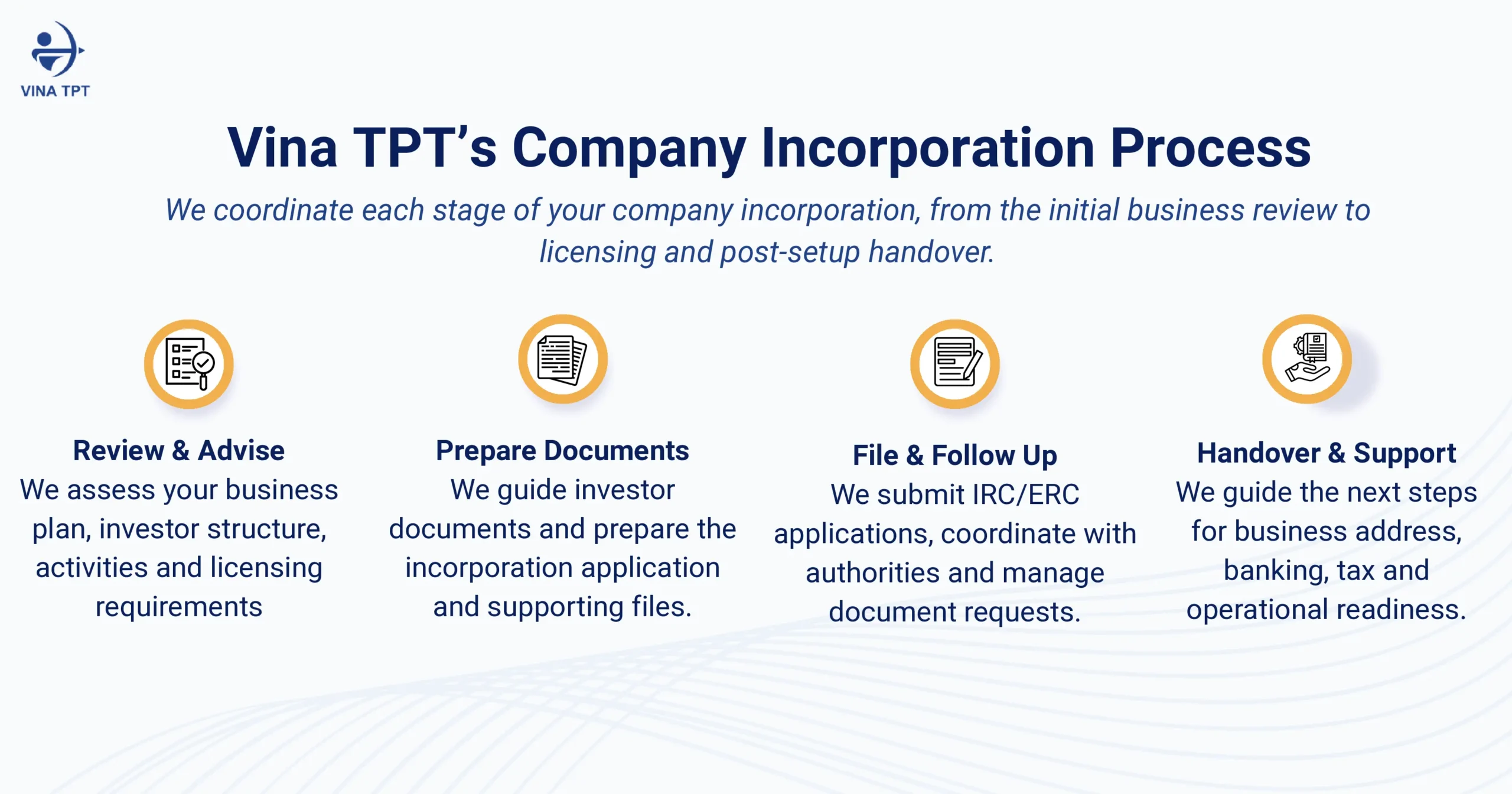
  • End-to-end company formation representation (Licensing Stage): Represent the client in filing the application, providing explanations, and working directly with state authorities to hand over the original IRC and ERC on schedule.
  • Post-licensing operational and compliance ecosystem (Post-Setup Ecosystem): Vina TPT provides a comprehensive operating solution so investors can focus entirely on business development with peace of mind: Accounting & Tax (VAS), Account opening & cash flow, Personnel & labor legal matters, FDI compliance reporting.

Do not let language barriers and administrative procedures delay your market-entry plan. You only need to provide the intended business model and operating plan. Vina TPT’s team of specialists will analyze and prepare a complete execution roadmap completely free of charge.

BOOK A FREE CONSULTATION

Company-Formation-in-Vietnam-7-Practical-Tips-for-Foreign-Investors

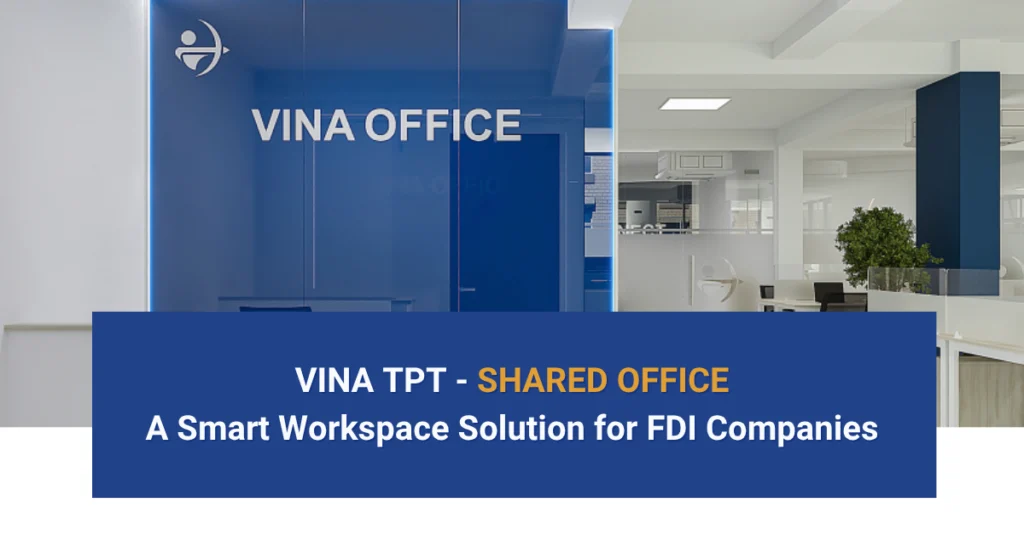
Shared Office Vietnam: A Smart Workspace Solution for Startups and FDI Companies 

Vina-tpt-shared-office-in-vietnam-1

Shared Office Vietnam: A Smart Workspace Solution for Startups and FDI Companies 

Entering Vietnam’s dynamic market opens up tremendous growth opportunities for foreign investors, global startups, and multinational corporations. However, establishing an operational presence often comes with a major challenge: leasing a traditional office. High upfront capital expenditure (CapEx), long-term lease commitments, and complex administrative procedures can quickly drain valuable resources before a business even launches. 

For companies with a long-term strategic vision, choosing a shared office in Vietnam offers a flexible and cost-effective alternative. It provides a ready-to-use workspace while ensuring full compliance with local legal requirements from day one. 

Shared Office vs. Traditional Office vs. Coworking Space 

Choosing the right office in Vietnam is about more than finding a place to work—it directly impacts your operating costs, business image, and day-to-day efficiency. Whether you’re setting up a new company or expanding your presence, understanding the differences between a Shared Office, Traditional Office, and Coworking Space will help you make the right decision.

Criteria Shared Office Traditional Office Coworking Space
Primary Purpose A fully serviced office with dedicated workstations for small teams, combined with a registered business address. A private office leased exclusively by one company with full control over the premises. A flexible, shared workspace designed for individuals and teams in a collaborative environment.
Workspace Dedicated desks or private offices with shared facilities. Entire private office customized to your business needs. Hot desks, dedicated desks, or shared seating areas.
Business Registration Yes. Provides legally compliant office lease documents for company registration. Yes. Suitable for business registration with a standard office lease. Depends on the provider. Some locations support company registration, while others do not.
Flexibility High. Flexible terms with minimal upfront investment. Low. Long-term lease commitments and office setup are typically required. Very high. Daily, weekly, or monthly memberships are common.
Setup Cost Low. Ready-to-use office with furniture and utilities included. High. Requires office fit-out, furniture, equipment, and ongoing facility management. Low. Membership fees generally include shared amenities.
Best For SMEs, foreign investors, and growing businesses with 1–20 employees. Established companies requiring complete privacy and branding control. Freelancers, startups, remote teams, and digital nomads seeking networking opportunities.

Each office solution serves a different stage of business growth.

A Traditional Office offers the highest level of privacy and customization, making it ideal for larger organizations with stable operations and long-term office requirements. However, it also requires significant upfront investment, longer lease commitments, and additional costs for office setup and management.

A Coworking Space is best suited for freelancers, startups, and remote professionals who value flexibility and community. It provides a dynamic working environment with networking opportunities but may offer limited privacy and, depending on the provider, may not always support business registration.

For many foreign investors and SMEs entering Vietnam, a Shared Office provides the ideal balance between professionalism, flexibility, and cost efficiency. It combines a legally registered business address with fully equipped workstations, meeting rooms, reception services, and essential office facilities—all without the financial burden of leasing and managing a traditional office. This allows businesses to establish a professional presence, operate efficiently from day one, and scale their workspace as the team grows.

serviced-office-ho-chi-minh-city

Legal Compliance: Can You Use a Shared Office for Business Registration in Vietnam? 

One of the biggest concerns for foreign investors establishing a legal presence in Vietnam is meeting local regulatory requirements. 

Under Vietnamese business regulations, every company must register a legitimate commercial business address that satisfies the legal requirements for obtaining both the Investment Registration Certificate (IRC) and the Enterprise Registration Certificate (ERC). 

To ensure full legal compliance, your workspace provider should meet the following requirements: 

  • Legally valid sublease agreement: The provider should issue a lease agreement that is legally acceptable for business registration. 
  • Proper zoning and building approval: The building must be officially licensed for commercial business activities. 
  • Fire safety compliance: The property should comply with Vietnam’s fire prevention and firefighting regulations and, where applicable, have been inspected and approved by the relevant authorities. 

At Vina TPT Office, every workspace solution is designed to meet strict legal compliance standards, helping your business registration application proceed smoothly through the approval process. 

Shared-Office-for-Business-Registration-1

Vina TPT Shared Office: A Complete Business Support Ecosystem 

At Vina TPT, we understand that international investors need more than just office space when starting a business in a new country. Expanding into Vietnam involves navigating complex accounting, taxation, corporate legal matters, and human resources. 

That’s why our shared office is more than simply a workspace rental service—it serves as the physical foundation of a comprehensive business support ecosystem. By combining flexible office solutions with professional advisory services, Vina TPT removes many of the challenges associated with market entry, enabling foreign businesses to operate safely and efficiently from their very first day in Vietnam. 

Premium Amenities at Vina TPT Shared Office 

  • Located at 5th Floor, 75/18-20-22 Hoang Sa Street, Sai Gon Ward, Ho Chi Minh City, Vietnam
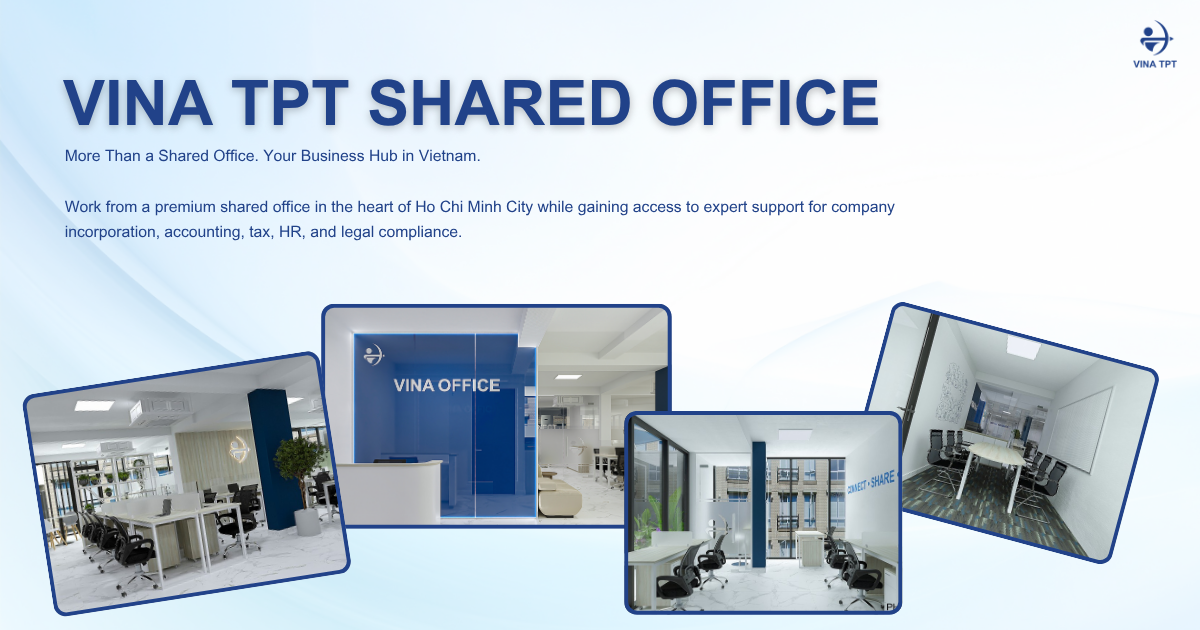
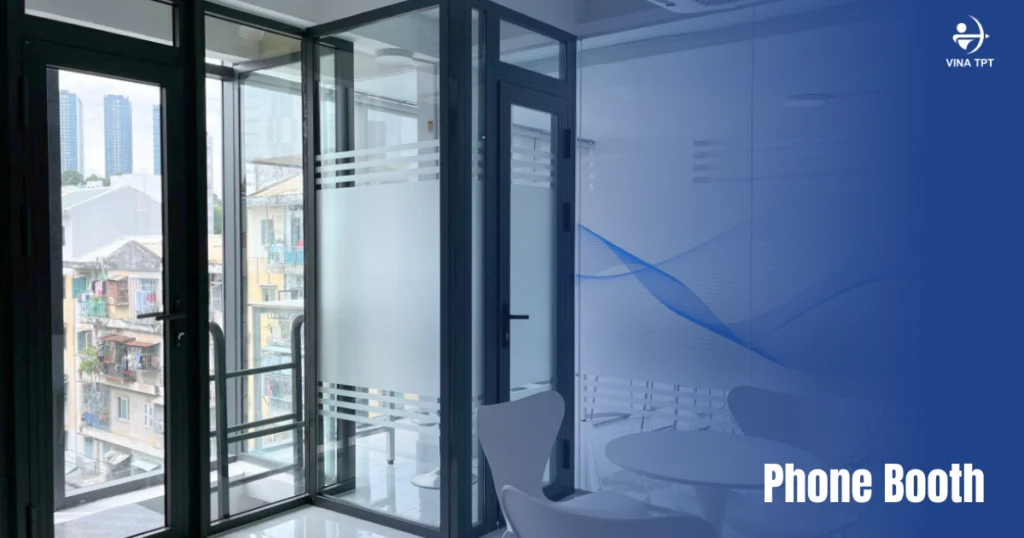
  • Vina TPT Office offers a modern and flexible workspace for startups, SMEs, and foreign companies entering the Vietnamese market. 
  • Situated along the scenic Hoang Sa canal, our office combines a peaceful working environment with excellent connectivity to Ho Chi Minh City’s major business districts. 
  • Whether you’re meeting clients, collaborating with your team, or managing day-to-day operations, you’ll enjoy a productive workplace in a highly accessible location. 

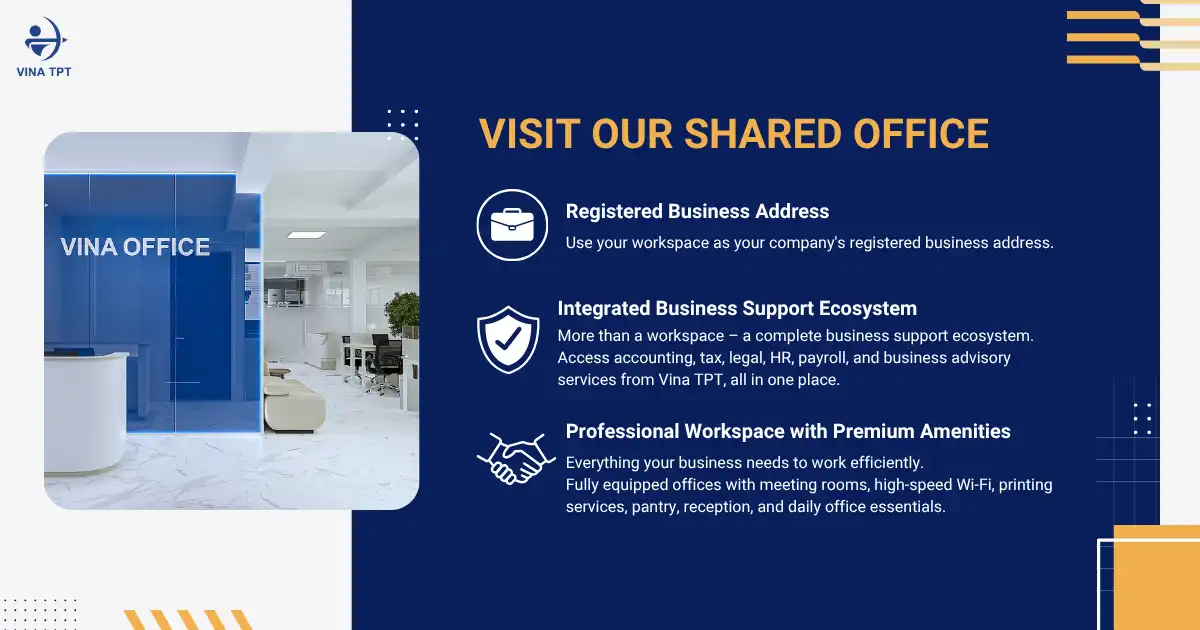
To help your team get started immediately, our shared office is equipped with modern infrastructure and professional administrative support, including: 

  • High-Speed Business Internet: Secure, enterprise-grade fiber-optic internet that ensures stable connectivity for uninterrupted global operations. 
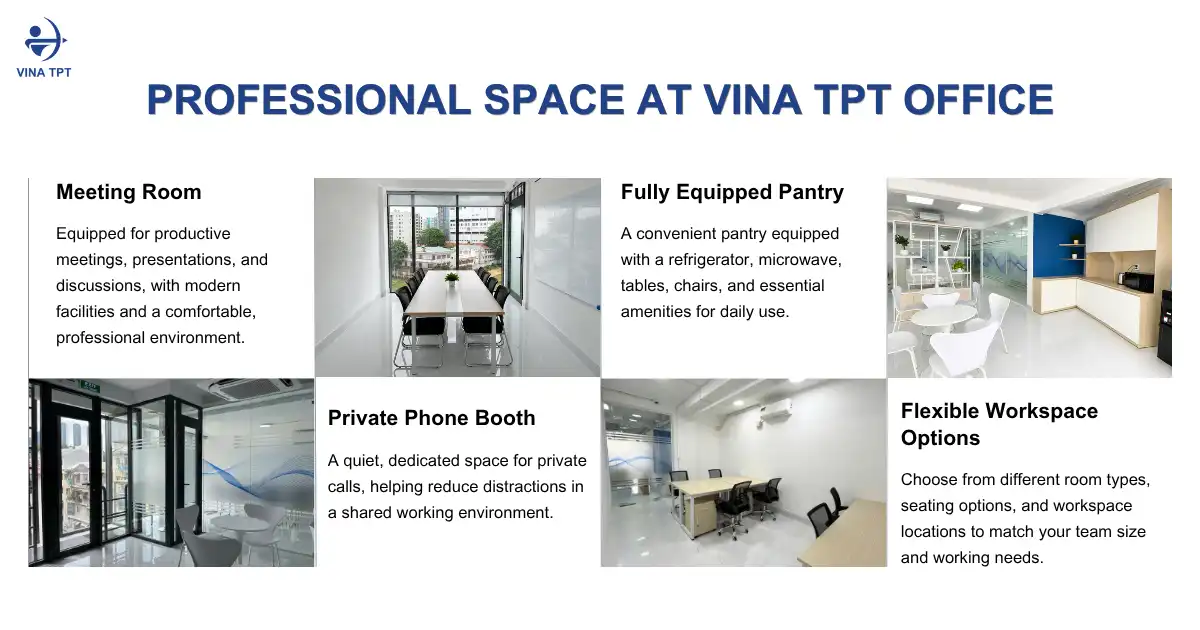
  • Modern Meeting Rooms: Fully equipped meeting rooms featuring whiteboards and large display screens (LED TVs), ideal for client presentations, team meetings, and online conferences. Each meeting room accommodates up to 15 people. 
  • Bilingual Reception Services: Our professional reception team communicates fluently in both English and Vietnamese, welcoming your guests and handling business mail and parcels. 
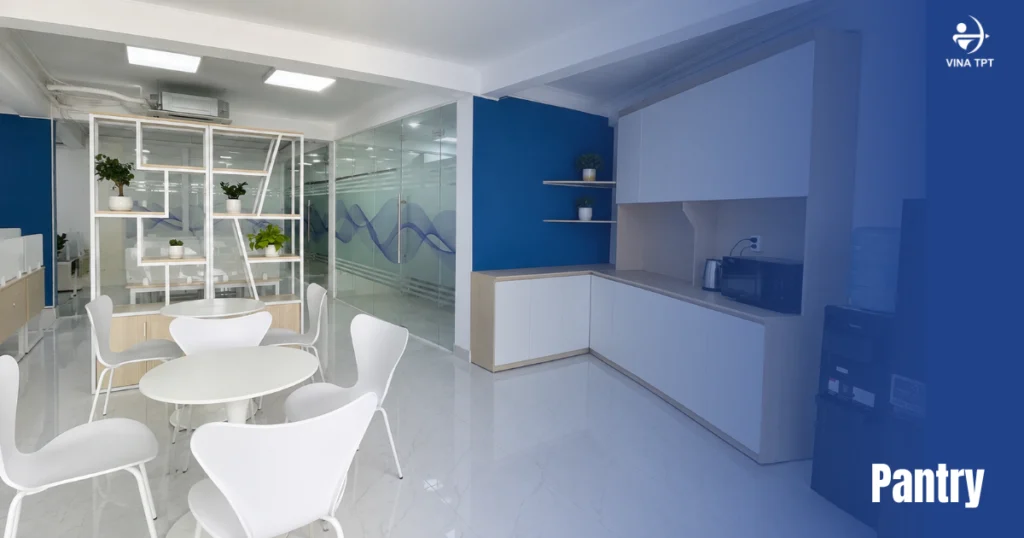
  • Comfortable Pantry Area: A relaxing shared pantry with complimentary tea and coffee, as well as a refrigerator and microwave, creating a welcoming space for networking and informal discussions. 

Why Choose Vina TPT Shared Office? 

Choosing Vina TPT Office as your workspace partner gives your business more than just a place to work. It provides an integrated business ecosystem that helps you establish, operate, and grow your company in Vietnam with confidence.

Comprehensive Business Ecosystem

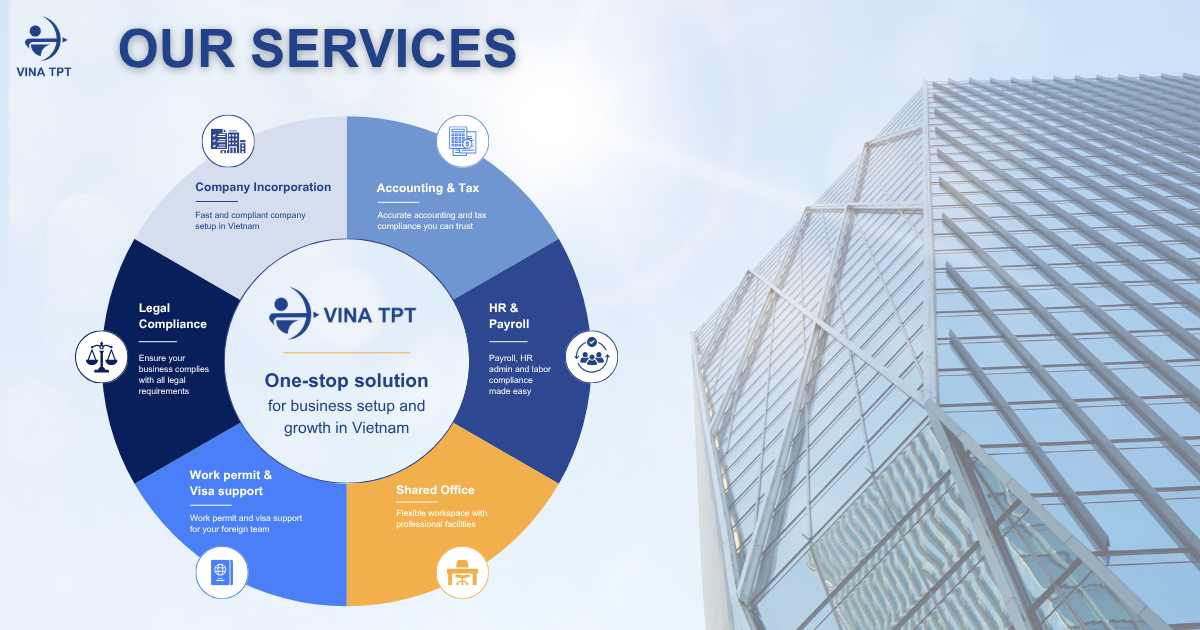
More than a shared office, Vina TPT Office connects your workspace with a full range of professional business services. Whether you need accounting, tax compliance, legal advisory, payroll, HR support, or company incorporation, our in-house experts are ready to assist. This integrated approach allows you to focus on growing your business while we take care of the operational and compliance requirements.

Full Legal Compliance

Doing business in Vietnam requires ongoing compliance with corporate, tax, and labor regulations. Backed by Vina TPT’s experienced accounting, tax, and legal professionals, our office solutions are designed to support your business from incorporation through daily operations. We help reduce compliance risks, avoid unnecessary penalties, and ensure your company stays on the right track as regulations evolve.

Save Time and Reduce Costs

Managing separate providers for office rental, accounting, tax, payroll, and legal support can be time-consuming and costly. With Vina TPT Office, everything is coordinated under one trusted partner. This streamlined approach reduces administrative workload, improves communication, and helps your business save both time and operational expenses.

Move In and Start Working Immediately

Our fully furnished shared office is ready for your team from day one. There’s no need to invest in office fit-outs, furniture, internet installation, or administrative setup. Simply move in and start working in a professional environment with meeting rooms, reception services, high-speed Wi-Fi, printing facilities, and other essential amenities already in place – allowing you to accelerate your market entry and preserve valuable startup capital.

services-vina-tpt-business-ecosystem-1

How Much Does a Shared Office Cost in Vietnam? 

Understanding the local market helps foreign investors estimate operating costs more accurately. Shared office rental rates in Vietnam vary depending on the location and level of service provided. 

  • Hot Desks / Flexible Desks: USD 80–150 per month: Ideal for freelancers, independent professionals, and business travelers who need occasional access to a professional workspace. 
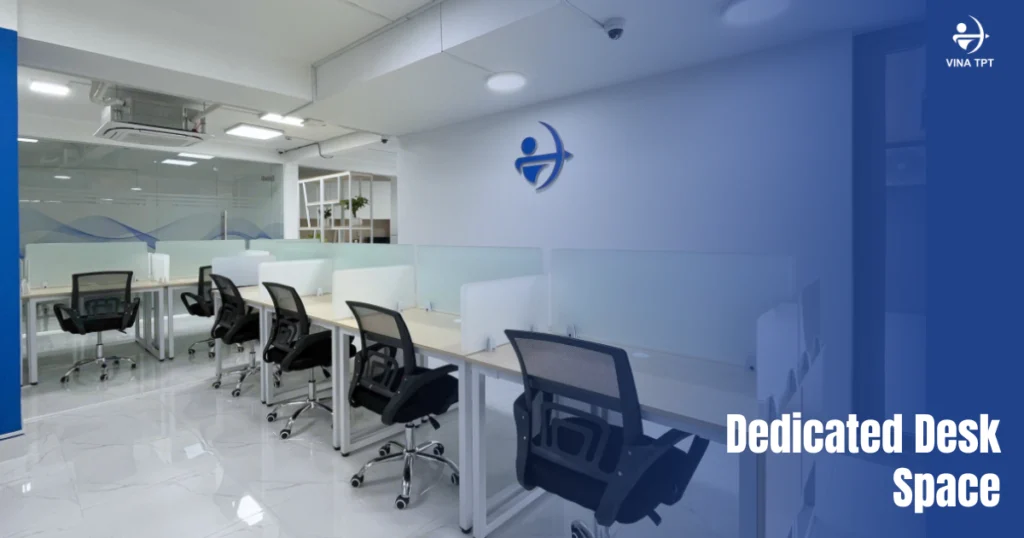
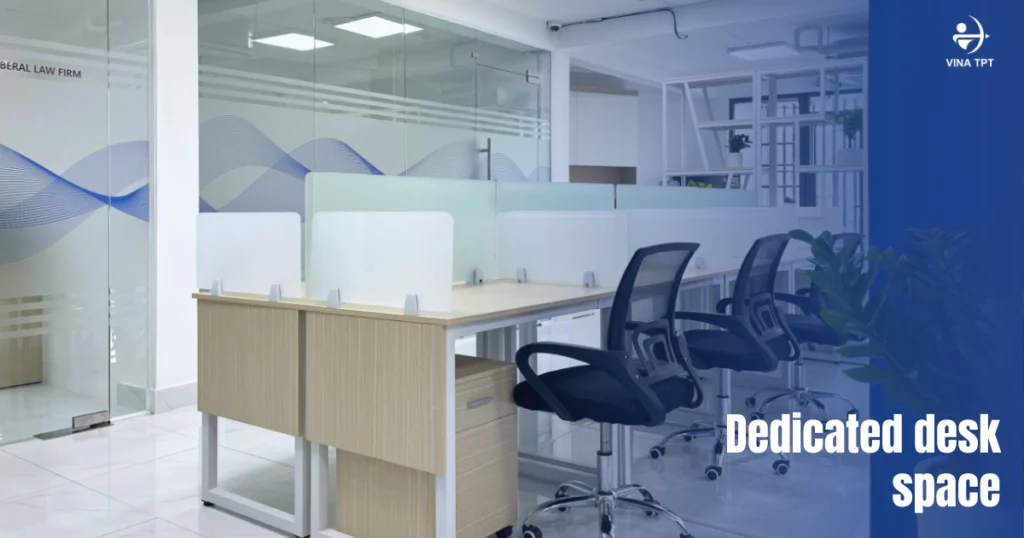
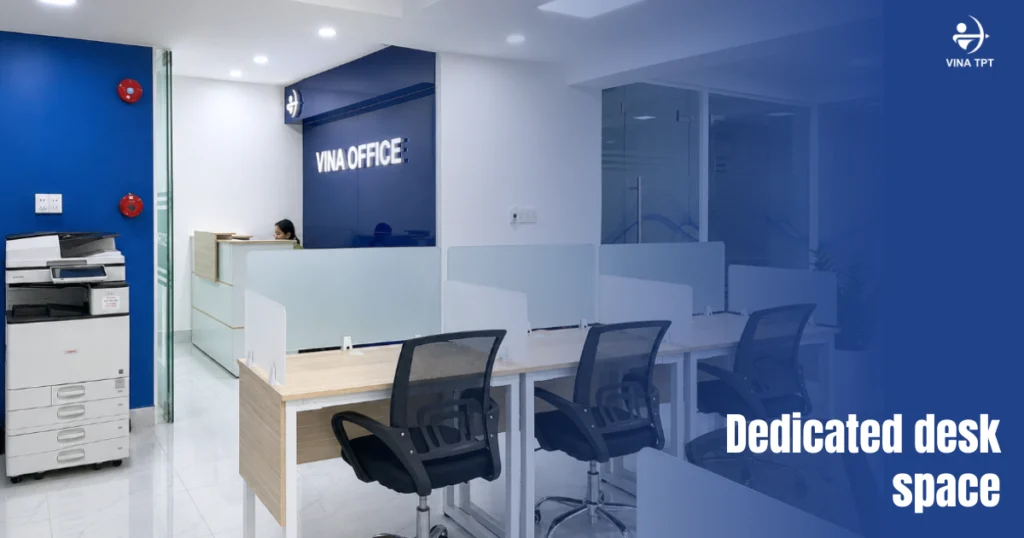
  • Dedicated Desks: USD 150–250 per month: A personal workstation with a lockable storage cabinet, making it an excellent choice for growing teams that require a permanent workspace. 
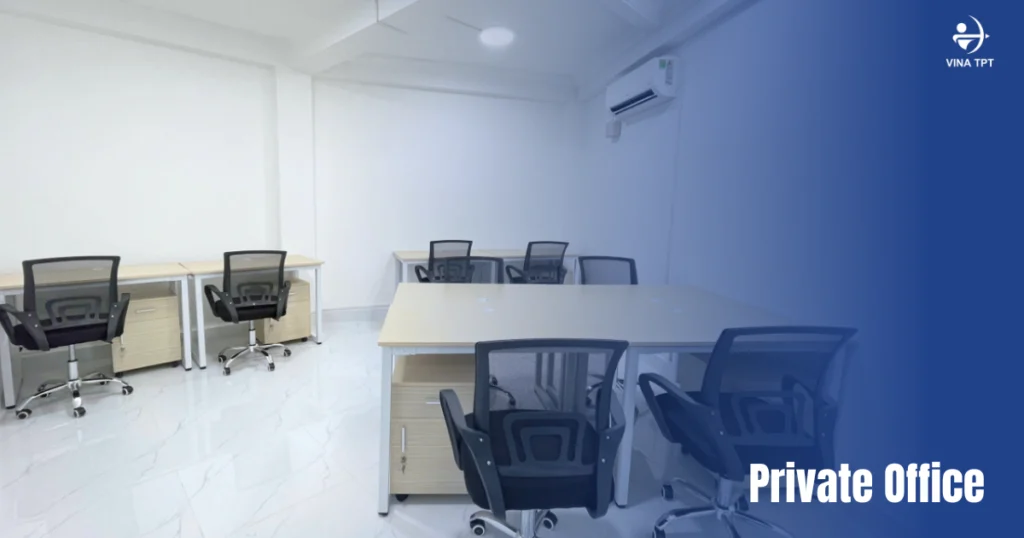
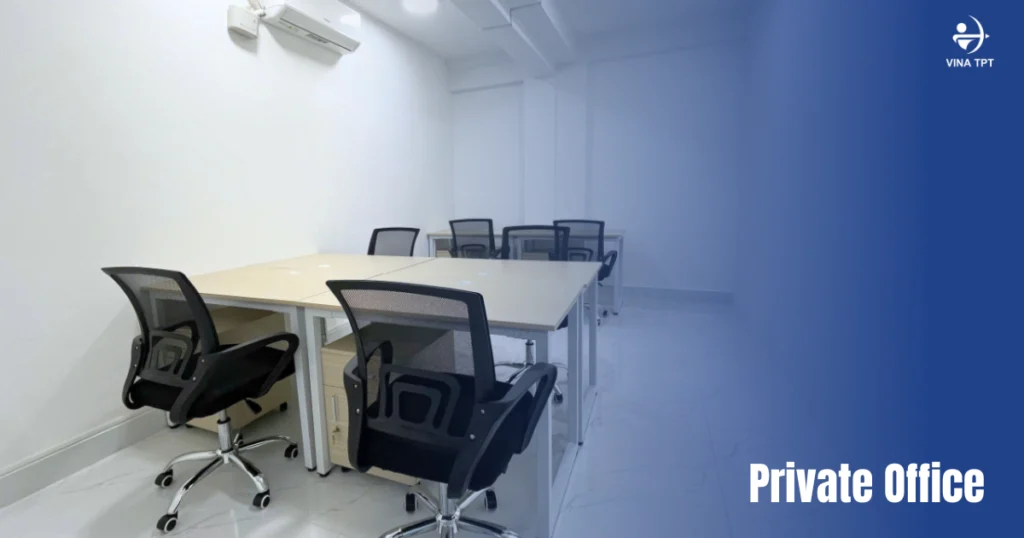
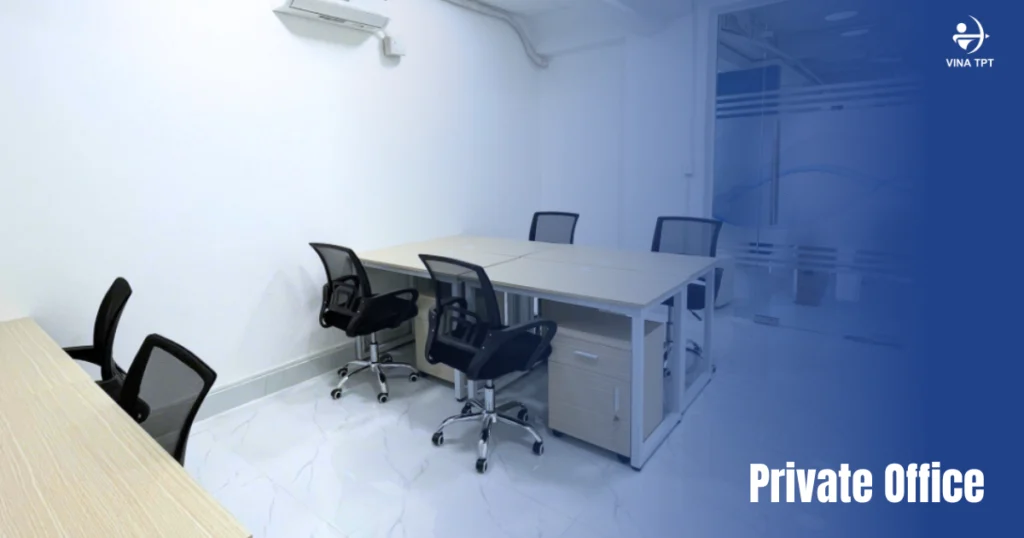
  • Private Serviced Offices: Starting from USD 500–700+ per month: Fully enclosed, secure private offices designed for branch offices or businesses that require dedicated operational space. 

Vina TPT offers competitive and transparent pricing with no hidden fees, along with flexible quarterly and annual payment options to accommodate different business needs. 

As an exclusive benefit, clients who use Vina TPT’s company incorporation services can enjoy complimentary access to our Shared Office while waiting for their business registration procedures to be completed. This allows businesses to reduce startup costs and begin preparing for operations even before receiving their Enterprise Registration Certificate (ERC). 

Frequently Asked Questions (FAQs) About Shared Offices in Vietnam 

Q: Can a 100% foreign-owned enterprise (FIE) use a shared office address to register a company in Vietnam? 

A: Yes. A foreign-invested enterprise (FIE) can use a shared office as its registered business address, provided that the workspace provider offers all required legal documentation, including a valid sublease agreement, and the property is officially approved for commercial business activities by the relevant authorities. 

Q: Does the Shared Office rental fee include management fees, electricity, and other operating costs? 

A: Yes. The Shared Office rental fee at Vina Office is all-inclusive, covering management fees, electricity, internet, cleaning, and other standard operating costs. There are no hidden charges, so you can move in and start working immediately without worrying about additional monthly facility fees. 

Q: Can I rent a Shared Office from Vina TPT without using any of its other services? 

A: Currently, our Shared Office service is available exclusively to clients who are already using other services within the Vina TPT ecosystem, such as: 

  • Company incorporation 
  • Accounting services 
  • Tax services 
  • Payroll services 
  • Corporate legal services 
  • Other related business advisory services 

This policy is designed to ensure legal compliance, operational security, and consistent service quality for all of our clients. 

By supporting businesses throughout their entire journey—from company formation to daily operations—we gain a thorough understanding of each client’s legal status. This enables us to provide more effective support in managing registered business addresses, receiving official correspondence, communicating with government authorities, and handling ongoing compliance matters. 

BOOK A FREE OFFICE TOUR AND GET QUOTE