Starting a business in Vietnam: 12 frequently asked questions by foreign investors

starting-a-business-in-vietnam-12-frequently-asked-questions-by-foreign-investors

Vietnam continues to be an attractive destination for FDI capital thanks to its strategic location, competitive costs, and continuously improving business environment. With the Law on Investment 2025 taking effect from March 1, 2026, the company incorporation process has become more flexible. In many cases, investors can now obtain the Enterprise Registration Certificate (ERC) before the Investment Registration Certificate (IRC).

However, understanding the legal procedures, required documents, timelines, and ongoing compliance obligations remains a challenge for many new foreign investors.

This article compiles the 12 most frequently asked questions by foreign investors when starting a business in Vietnam. The content is organized by stage to give you a clear overview of the entire process – from preparation to operation.

12 most frequently asked questions about starting a business in Vietnam 2026

starting-a-business-in-vietnam-12-frequently-asked-questions-by-foreign-investors

1. Can foreigners own 100% of a company in Vietnam in 2026?

Most business sectors in Vietnam allow 100% foreign ownership. According to Vietnam’s WTO commitments and the Law on Investment 2025, only a few sectors, such as advertising, logistics, tourism, and education, may have ownership restrictions or require joint ventures with Vietnamese partners.

Tip: Check the business line code and market access conditions carefully before planning to avoid having to amend your application during the appraisal process.

2. What is the minimum charter capital required for a foreign-owned company?

Vietnamese law does not set a universal minimum charter capital for all sectors. However, the registered capital must be appropriate to the project scale and will be reviewed by the licensing authority.

In practice, common reference levels include:

  • Trading and distribution: USD 10,000 – 50,000 (USD 10,000 is often considered the practical minimum)
  • Fintech: around USD 2 million, depending on the business model and licensing requirements
  • Commercial banks: approximately USD 120 million (under specialized regulations)
  • Real estate: No fixed minimum, but a minimum equity ratio of 20% (for projects under 20 hectares) or 15% (for projects of 20 hectares and above) is required.

Important note: Charter capital must be fully contributed within 90 days from the date the Enterprise Registration Certificate (ERC) is issued. Failure to do so may result in administrative penalties and affect the company’s credibility with authorities and partners.

3. What documents must foreign investors prepare and do they require consular legalization?

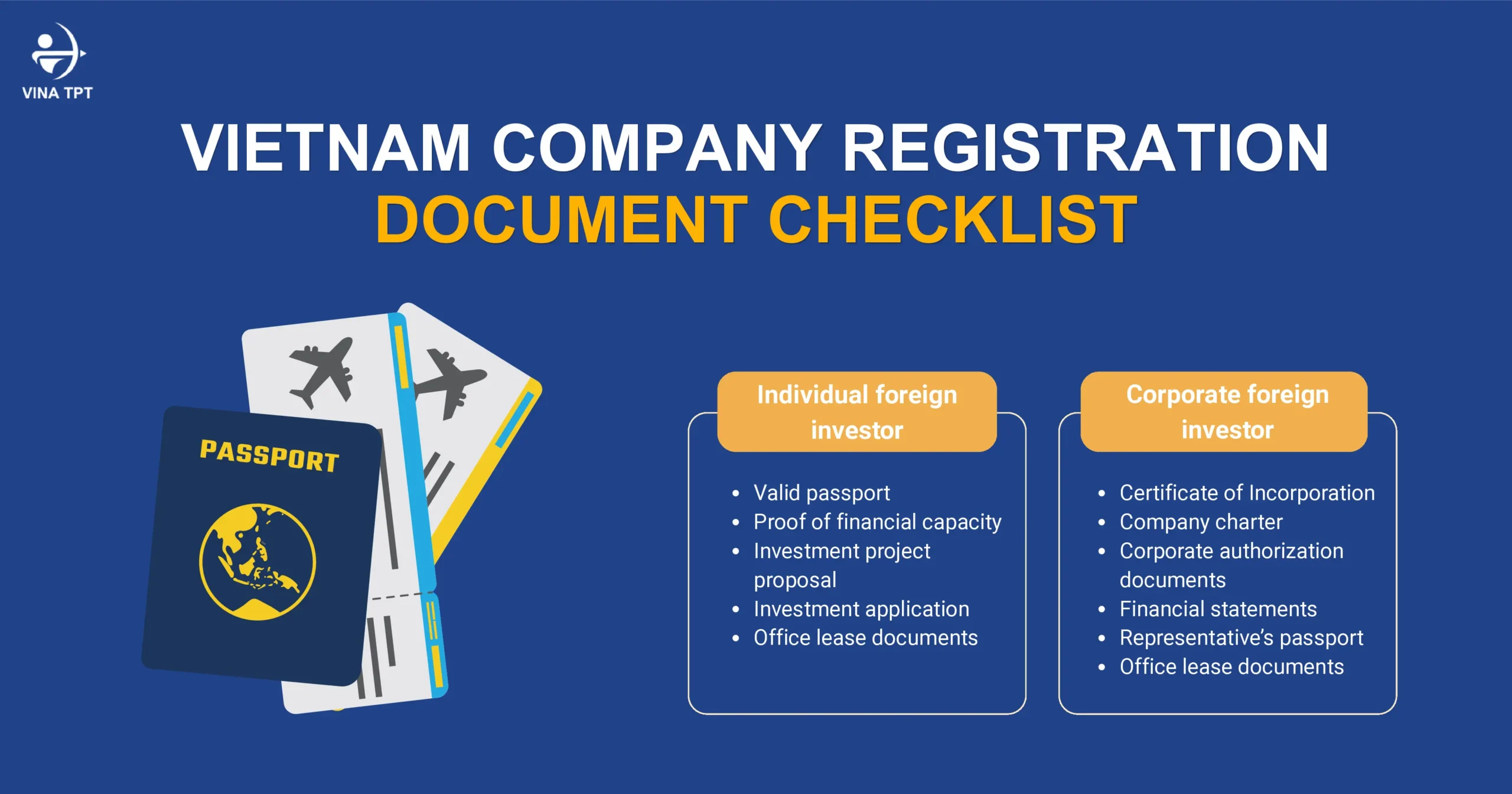
Document preparation is a critical step when starting a business in Vietnam. The main required documents include:

  1. Application for investment project implementation
  2. Proof of the investor’s legal status (passport for individuals; Certificate of Incorporation for organizations)
  3. Investment project proposal (including objectives, scale, total investment capital, funding plan, location, timeline, and socio-economic impact assessment)
  4. Proof of financial capacity (bank statements or parent company support letter)
  5. Documents proving the project location (office lease agreement or proof of legal right to use the premises)
  6. Technology explanation (if the project requires technology appraisal)
  7. Business Cooperation Contract (BCC)

Important: All foreign documents must be consular legalized, notarized, and officially translated into Vietnamese. This is a mandatory requirement for the application to be accepted.

4. Which business lines are still conditional or restricted for foreign investors?

Approximately 80% of business lines in Vietnam have no conditions, allowing relatively straightforward operations after company registration.

However, investors should pay attention to:

  • Conditional business lines: Education, healthcare, logistics, tourism, advertising, real estate, etc. (require sub-licenses, facilities, or professional capacity)
  • Restricted market access sectors: May limit foreign ownership percentage or require joint ventures with Vietnamese partners
  • Prohibited sectors: As stipulated by Vietnamese law

From July 1, 2026, the updated list of conditional business lines under the Law on Investment 2025 will be fully applied. Always verify your business line code and specific conditions before registration.

5. Should I choose a Limited Liability Company (LLC) or Joint Stock Company (JSC)?

The choice depends on your investment objectives, project scale, and future development plans.

  • Limited Liability Company (LLC): Most popular among foreign investors due to its simple structure, high flexibility, and suitability for startups or medium-sized businesses.
  • Joint Stock Company (JSC): Better suited for companies planning to raise capital from multiple investors or prepare for future listing.

For the initial stage of starting a business in Vietnam, an LLC is usually recommended. You can later convert to a JSC when scaling or seeking larger investments.

starting-a-business-in-vietnam-12-frequently-asked-questions-by-foreign-investors

6. What is the difference between IRC and ERC under the new Investment Law 2026?

  • IRC (Investment Registration Certificate): Approves the investment project, including capital, business lines, location, and incentives (if any).
  • ERC (Enterprise Registration Certificate): Establishes the company’s legal entity status, including the tax code and business registration details.

Under the Law on Investment 2025, in non-restricted sectors, investors can apply for the ERC before the IRC. This allows the company to obtain legal status earlier for opening bank accounts, leasing offices, or applying for visas.

7. How long does it actually take to register a company in Vietnam in 2026?

The timeline depends on the project type and document quality. The process typically includes:

  • Investment Registration Certificate (IRC): 30 – 45 working days
  • Enterprise Registration Certificate (ERC): 7 – 10 working days after IRC approval

With complete and valid documents, the total process usually takes 6 to 8 weeks. Proper preparation and working with an experienced consultant can significantly reduce delays.

EXPLORE OUR SERVICES

8. Do I need a Vietnamese legal representative or director?

Every company in Vietnam must have at least one legal representative residing in Vietnam. This person can be a Vietnamese citizen or a foreigner holding a valid Temporary Residence Card (TRC).

Foreign investors can serve as the legal representative themselves if they meet the residency requirements.

>>> You may also be interested in: Nominee Director in Vietnam: Legal Risks, Requirements, and Safer Alternatives for Foreign Investors (2026 Guide)

9. Can I apply for a Temporary Residence Card (TRC) during or right after registration?

Yes. Investors can apply for a TRC after the company receives its ERC and holds an appropriate DT visa (DT1-DT3 depending on capital contribution).

Processing time is typically 5-15 working days. Many investors apply for the TRC immediately after company registration to secure long-term residency.

>>> You may also be interested in: Guide to Securing a TRC Vietnam for Foreign Investors in 2026

starting-a-business-in-vietnam-12-frequently-asked-questions-by-foreign-investors

10. What must I do immediately after receiving the Enterprise Registration Certificate (ERC)?

After receiving the ERC, you should promptly complete the following:

  • Open an investment capital account (DICA) and fully contribute charter capital within 90 days
  • Register for tax, obtain a digital signature, and issue electronic invoices
  • Register and announce the company seal (if required)
  • Register employees and social insurance (if hiring staff)

11. What are the key ongoing compliance obligations (tax, reporting, IAR…)?

Once operational, companies in Vietnam must fulfill regular compliance obligations, including:

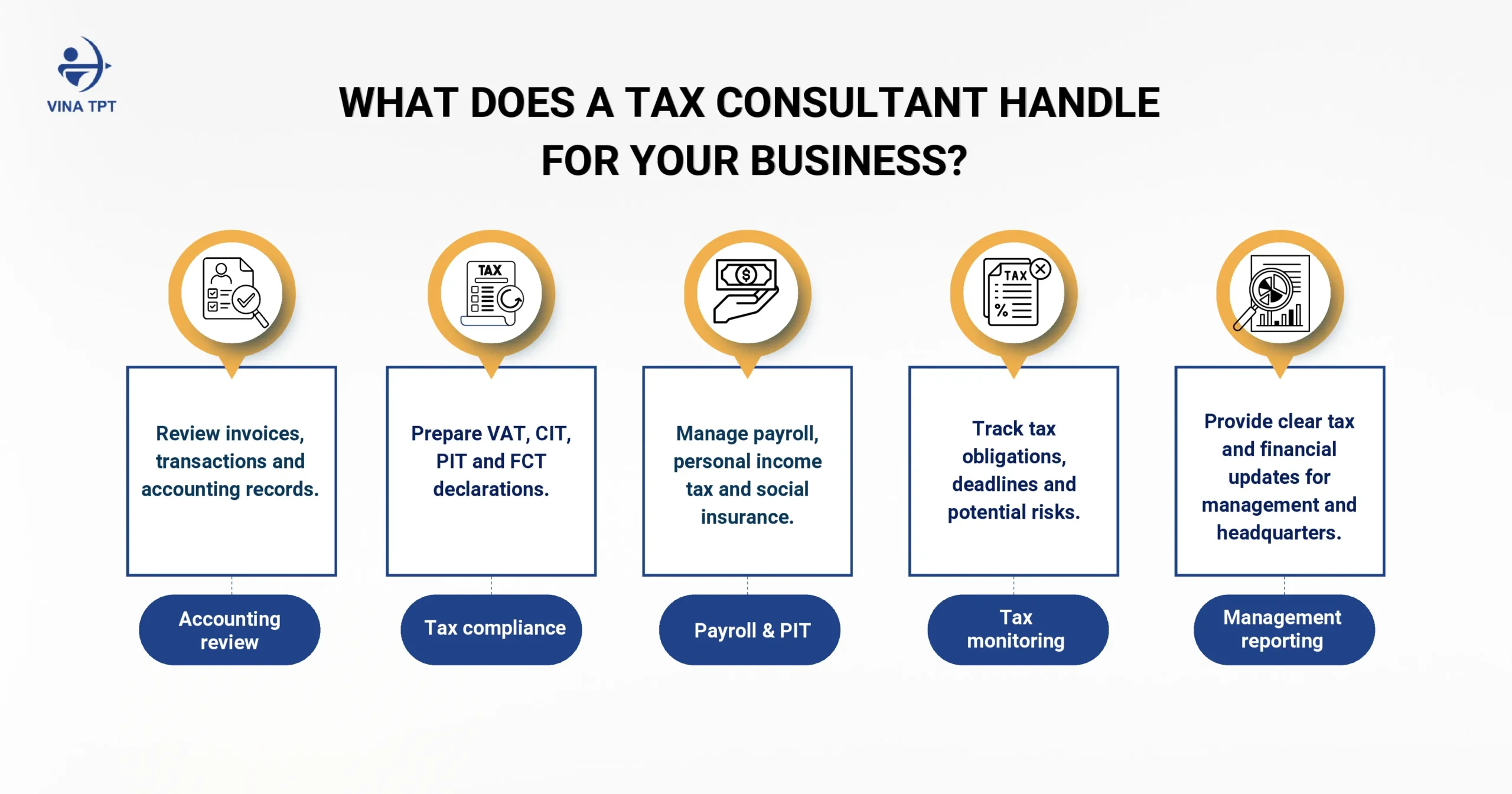
  • Declaration and payment of VAT, Corporate Income Tax (CIT), and Personal Income Tax (PIT)
  • Submission of Investment Activity Reports (IAR) – quarterly and annually for FDI companies
  • Preparation of annual financial statements (some companies require statutory audit)
  • Updating any changes in company registration (capital, business lines, legal representative, etc.)

12. When and why should I consider outsourced financial accounting services?

It is highly recommended to engage outsourced accounting services from the early stage if you do not yet have an internal team familiar with VAS and Vietnamese tax regulations.

Outsourcing helps control costs, minimize compliance risks, and ensures timely, accurate financial reports for both management and investors.

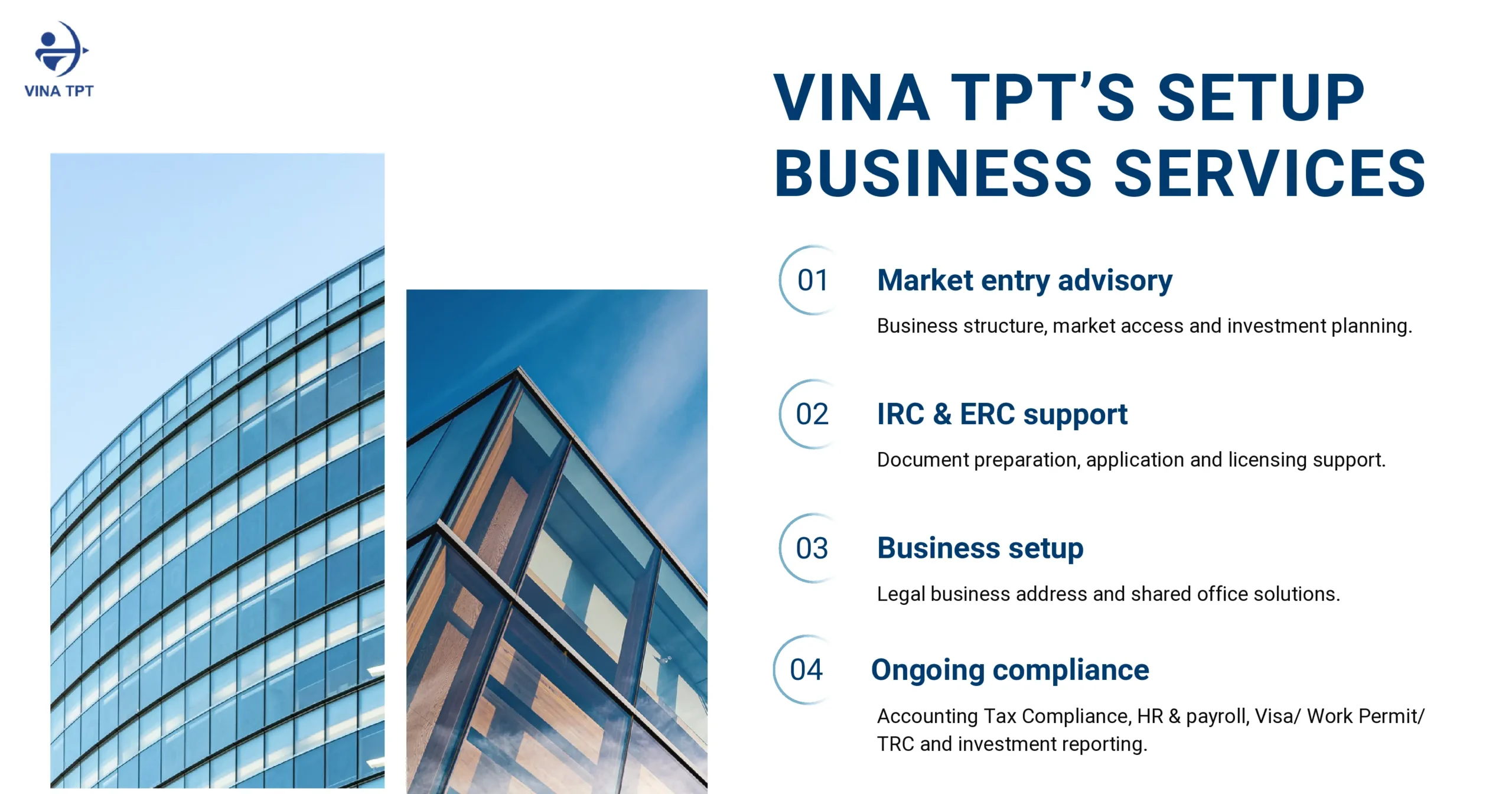
Looking for a reliable accounting partner? Explore Vina TPT’s outsourced accounting services to find the right solution for your business.

Explore Accounting Service

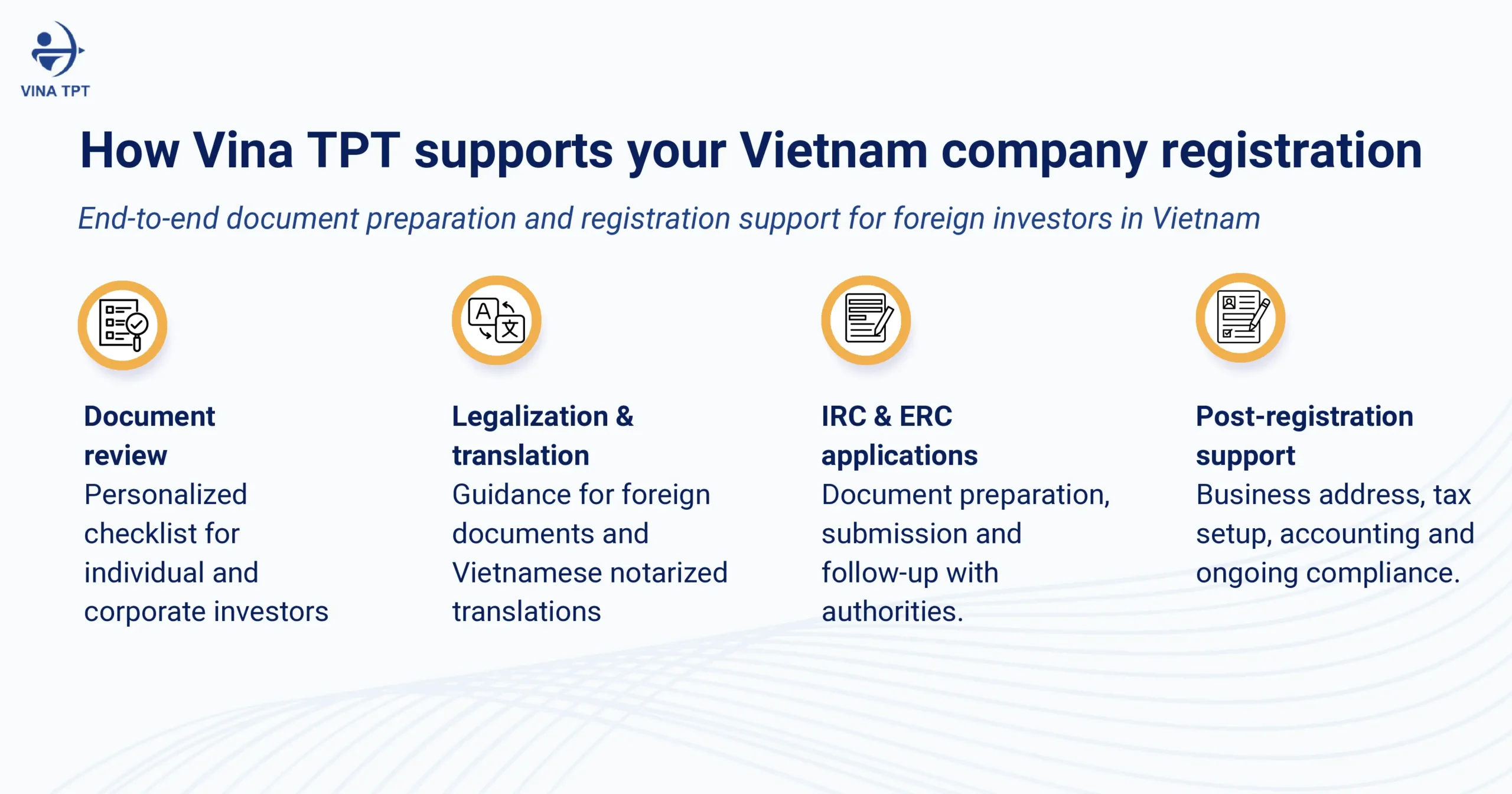
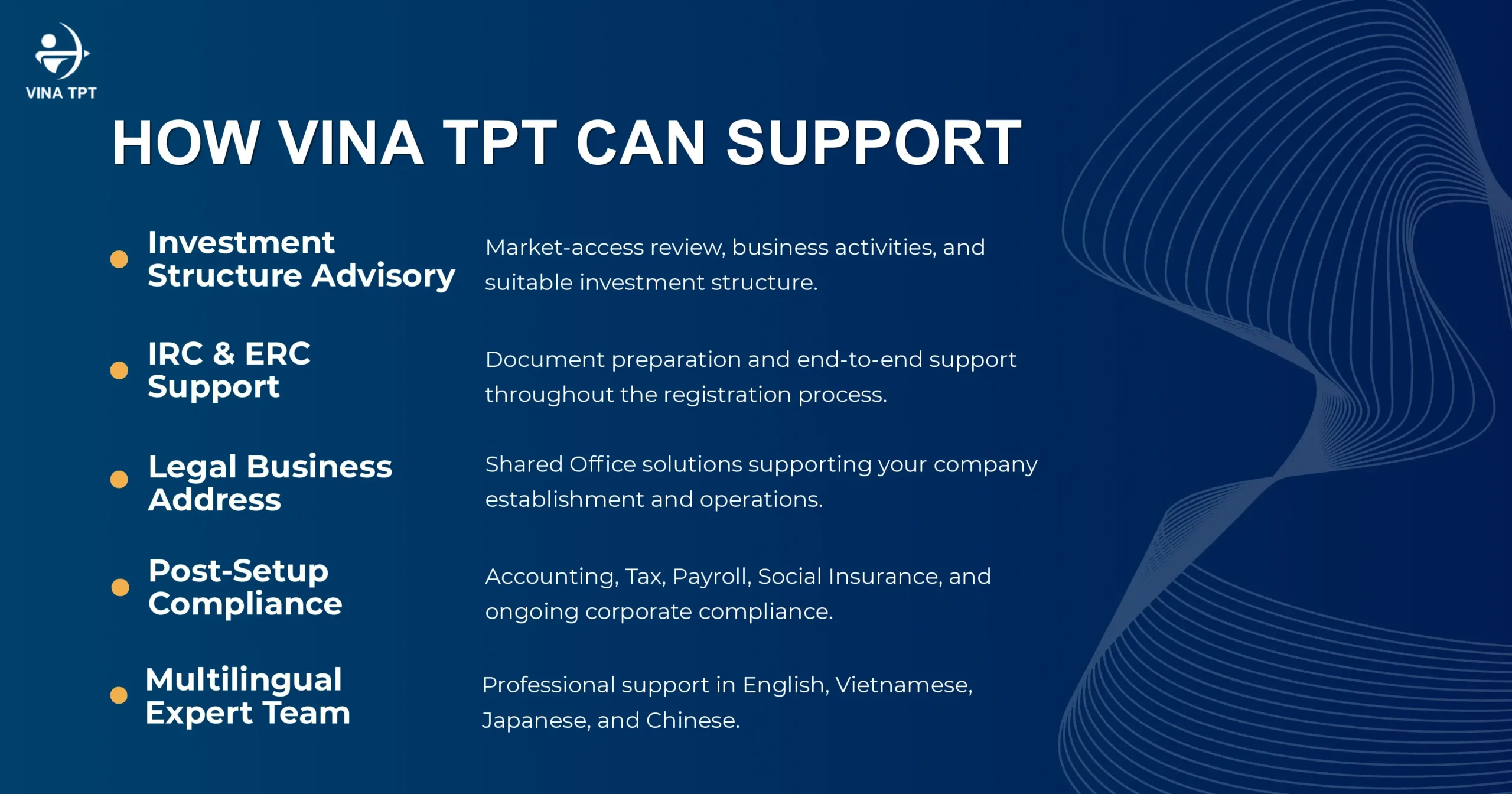
Why choose Vina TPT for starting and operating your business in Vietnam

With over 20 years of experience supporting FDI enterprises, Vina TPT provides comprehensive solutions for foreign investors when starting a business in Vietnam:

  • Full support for IRC, ERC, TRC, and work permit procedures
  • Qualified Chief Accountant and outsourced finance & accounting services (bookkeeping, tax, payroll)
  • Bilingual and multilingual reporting (Vietnamese – English – Japanese)
  • End-to-end support from company formation through operations and expansion

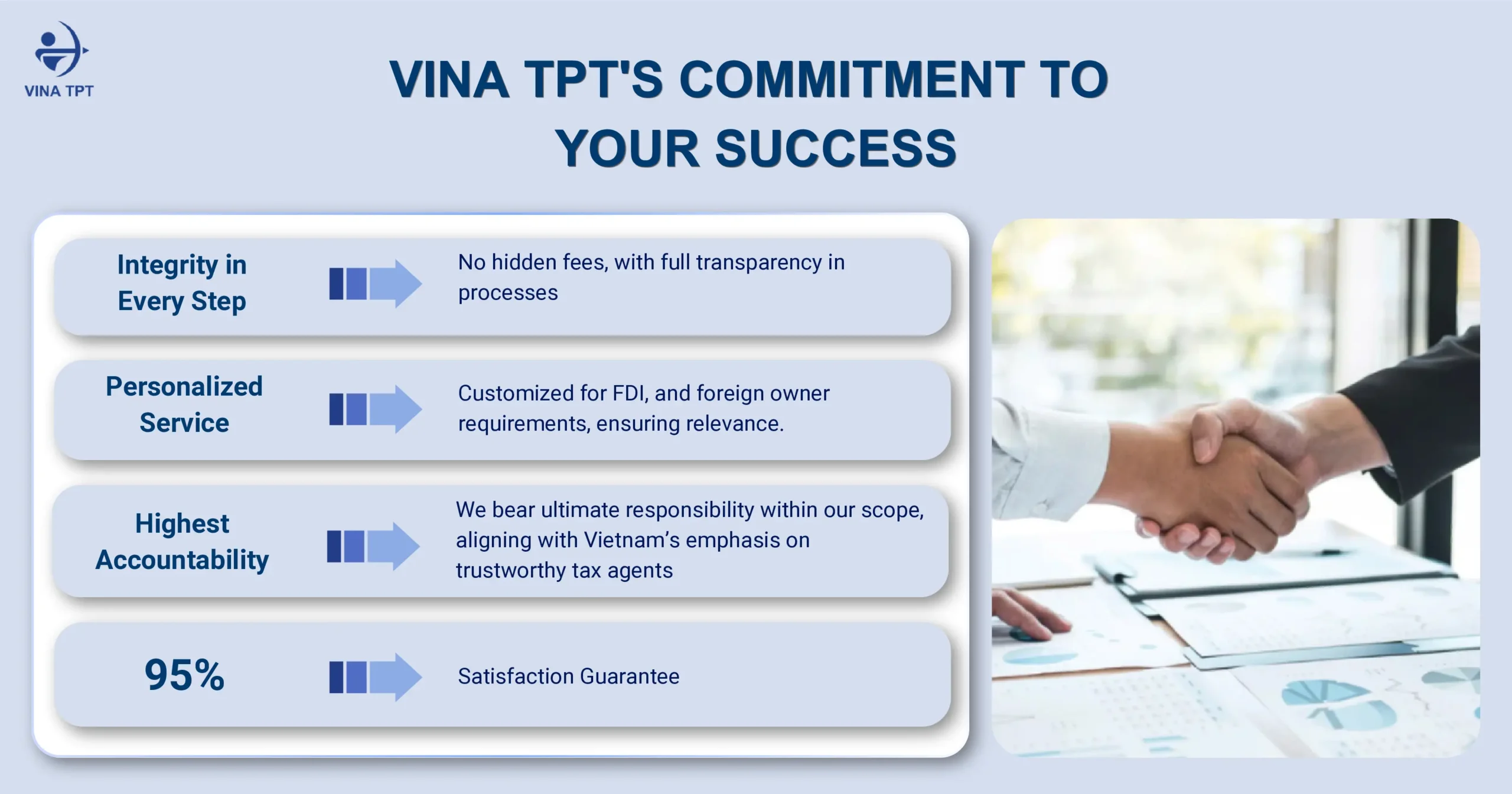
Each client is supported by a multi-level expert team (Assistant – Senior – Manager), ensuring accuracy and timeliness.

starting-a-business-in-vietnam-12-frequently-asked-questions-by-foreign-investors

Conclusion

With the Law on Investment 2025, starting a business in Vietnam has become more transparent and flexible. However, thorough preparation regarding documents, capital, and compliance obligations remains essential for success.

Partnering with a professional consulting firm will help you save time, reduce risks, and focus on your core business activities.

Contact Vina TPT today for personalized consultation and a tailored solution for your investment plan in Vietnam.

BOOK A FREE CONSULTATION

Accountant for Startups in Vietnam: How to choose the right Accounting Service

accountants-for-startups-in-vietnam-key-services-every-founder-should-know

accountants-for-startups-in-vietnam-key-services-every-founder-should-know

For foreign investors starting a business in Vietnam, you focus on building your product, acquiring customers, and scaling the market. Meanwhile, bookkeeping, tax compliance, and financial reporting, especially with Vietnam’s constantly evolving tax regulations, can quickly become major obstacles if not handled properly.

Accountants for startups are specialized accounting services, usually provided on an outsourcing basis. They offer flexible support ranging from transaction recording and tax filing to strategic financial advice. These services can scale with your business stages, deliver timely data, and help founders make better-informed decisions.

Below is essential information every founder should know when choosing accountants for startups in Vietnam in 2026.

Why startups need specialized accountants (Not just any Bookkeeper)

Startups are characterized by rapid growth, high cash burn, tight runway monitoring, and the need for investor-ready financial reports. A regular bookkeeper typically focuses on basic data entry and record-keeping.

In contrast, accountants for startups are typically provided as specialized outsourced accounting services, offering not only bookkeeping but also strategic financial support, tax optimization, and actionable insights to help founders make informed decisions.

Key reasons startups need specialized accounting services include:

  • Preparation of financial models and reports for fundraising
  • Taking advantage of tax incentives under Decree 20/2026 (corporate income tax exemption/reduction for startups)
  • Ability to scale quickly as the company grows
  • Distinguishing between simple data entry and strategic financial analysis

Therefore, accountants for startups go far beyond basic bookkeeping. They act as a vital tool to help startups control cash flow and avoid running out of money before achieving product-market fit.

2. 5 essential services accountants for startups

To evaluate whether an accounting service is suitable for your startup, founders should consider these 6 key functions:

2.1 Bookkeeping & Daily Transaction Management

Bookkeeping forms the foundation of your financial system. It involves recording and classifying daily transactions in accordance with Vietnamese Accounting Standards (VAS).

In the early stages, startups often have frequent small transactions. If not recorded accurately and promptly, discrepancies can accumulate and create serious financial control issues.

Key tasks include:

  • Recording transactions in accordance with Vietnamese Accounting Standards (VAS)
  • Using cloud-based software for real-time data entry and bank reconciliation
  • Categorizing expenses (marketing, server costs, salaries, etc.)

Cloud-based systems allow founders to access financial data anytime, while minimizing accumulated errors that could require major adjustments later.

Explore Accounting Services

2.2 Tax Compliance & Filing

Tax compliance involves fulfilling all tax obligations, including declaration, payment, and staying updated with legal changes.

For startups, understanding and utilizing available tax incentives is crucial for optimizing early-stage costs.

Key tasks include:

  • Timely declaration and payment of VAT, Corporate Income Tax (CIT), and Personal Income Tax (PIT)
  • Application of tax incentives under Decree 20/2026/NĐ-CP (where applicable)
  • Handling electronic invoices and monitoring new tax regulations

Accurate tax filing is not only a legal requirement but also helps avoid administrative penalties. For newly established startups without an experienced internal team, outsourcing tax compliance is often the safest and most efficient choice.

2.3 Payroll & Employee Benefits

Payroll management covers salary processing and all employee-related obligations. In a startup environment, team structures change rapidly, often with flexible policies such as performance bonuses or stock options.

Key tasks include:

  • Calculating salaries, bonuses, and incentives
  • Handling social insurance (BHXH), health insurance (BHYT), unemployment insurance (BHTN), and PIT deductions

Efficient payroll management reduces labor disputes and helps maintain team stability.

GET PROFESSIONAL PAYROLL SUPPORT

2.4 Financial Reporting & Management Insights

Financial reporting serves both compliance and management purposes. For startups, tracking burn rate and runway is essential for cash flow control.

Key tasks include:

  • Preparing monthly Profit & Loss (P&L) statements and cash flow reports
  • Monitoring gross and net burn rate as well as runway
  • Providing intuitive management dashboards

Real-time visibility into burn rate helps founders understand exactly how long their current capital will last and make proactive spending adjustments.

2.5 Audit & Compliance Readiness

Audit readiness means keeping your records and data prepared for audits or investor due diligence. As startups raise larger funding rounds, transparency requirements increase significantly.

Key tasks include:

  • Preparing documentation for audits
  • Support with appointing a Qualified Chief Accountant
  • Coordinating with external auditors throughout the audit process to finalize audited financial statements
  • Ensuring full regulatory compliance

Being audit-ready helps startups avoid delays during fundraising, pass tax inspections smoothly, and build credibility with investors.

accountants-for-startups-in-vietnam-key-services-every-founder-should-know

Why many startups choose to outsource Accounting instead of building in-house teams

Most startups prefer outsourcing accountants rather than building an internal finance team early on. Here are the main advantages:

  • Cost optimization: Building a full in-house accounting team (bookkeeping, tax, reporting, and chief accountant) involves high fixed costs for salaries, benefits, training, and software – a heavy burden when revenue is unstable.
  • Reduced compliance risks: Vietnam’s accounting and tax regulations change frequently. Experienced outsourced teams stay updated and have handled similar cases for many startups.
  • Timely reporting and better decision-making: Outsourced services deliver not only raw data but also management insights such as burn rate, runway, cash flow forecasts, and investor-ready reports.
  • Flexibility across growth stages: You can start with basic bookkeeping and scale up to strategic advisory as your startup grows, without locking in high fixed costs.
  • Focus on core activities: Founders and teams can concentrate on product development, customer acquisition, and market expansion instead of administrative tasks.

In today’s competitive startup ecosystem, outsourcing accounting is no longer just a cost-saving measure, it has become a strategic decision that enhances efficiency, reduces risk, and builds a solid foundation for sustainable growth.

Key considerations when choosing accountants for startups

When selecting accountants for startups, founders should evaluate more than just price. Consider these important factors:

  • Proven experience with startups and FDI companies
  • Strong knowledge of VAS (Circular 99), current tax regulations, and startup incentives
  • Use of modern cloud technology and real-time dashboards
  • Ability to provide strategic advisory and financial analysis
  • Flexible pricing models (package or stage-based)
  • Clear contract scope, reporting timelines, and SLA commitments
  • Relevant case studies with similar startups

accountants-for-startups-in-vietnam-key-services-every-founder-should-know

Why Vina TPT Is the Trusted Accountants for Startups in Vietnam

With over 20 years of experience supporting FDI companies and startups in Vietnam, Vina TPT offers comprehensive accountants for startups services with a professional and scalable approach:

  • Bookkeeping compliant with VAS and tax regulations
  • Flexible payroll solutions tailored for startup structures
  • Financial reporting with key metrics such as burn rate and runway
  • Strategic advisory including financial modeling and cost optimization
  • Support from company formation through audit and compliance readiness
  • Bilingual and multilingual reporting

Every client is supported by a multi-level expert team (Assistant – Senior – Manager), ensuring high quality and timely delivery of financial data.

Professional accountants for startups help you maintain transparent finances, reduce risks, utilize 2026 tax incentives, closely monitor burn rate & runway, and prepare effectively for fundraising rounds. The result is faster, more sustainable growth without being held back by administrative issues.

Contact Vina TPT today for personalized consultation and a tailored accountants for startups solution that matches your current growth stage.

BOOK A FREE CONSULTATION

[Newsletter] Vietnam Tax Policy Updates February 2026 – VAT, CIT, PIT, and Tax Administration

Vietnam Tax Policy Updates Vina TPT

The Vietnam Tax Policy Updates for February 2026 have been officially released, marking a significant shift in the regulatory framework for VAT, CIT, FCT, and tax administration procedures. For FDI enterprises operating in Vietnam, staying closely aligned with these Vietnam Tax Policy Updates is the key to maintaining compliance, optimizing cash flow, and preparing for future tax audits.

1. Value Added Tax Updates

Advertising Revenue from YouTube Subject to 10% VAT Rate

According to Official Letter No. 1068/CT-CS issued on February 12, 2026, the information in the Vietnam Tax Policy Updates clarifies the VAT obligations for digital content creators:

  • Period before July 1, 2025: In cases where a company receives revenue sharing (typically 55%) from Google (YouTube) through video uploads, this total income is identified as revenue from advertising activities. Accordingly, the enterprise is mandatory to declare and pay VAT at a rate of 10%.

  • Period from July 1, 2025 onwards: VAT policies will be strictly applied according to the Law on Value Added Tax No. 48/2024/QH15. Businesses should pay special attention to invoice and document conditions to correctly apply these new regulations.

2. Corporate Income Tax & Foreign Contractor Tax

Reforming Documentation Procedures for International Transactions

This month’s Vietnam Tax Policy Updates record significant efforts in reducing administrative procedures related to CIT and FCT:

  • FCT Compliance: An important change is the abolition of the requirement to submit copies of business licenses or practice certificates of foreign contractors to the tax authorities. Instead, taxpayers only need to store these documents at the enterprise’s headquarters for tax administration inspection purposes upon request.

  • CIT Finalization: The tax administration authority has issued new general declaration forms for CIT and host country profits, helping to simplify calculations for petroleum activities (including forms 03-1A, 03-1B, 03-1C/TNDN).

  • Collateral Assets: Quarterly tax declaration dossiers for credit institutions declaring on behalf of taxpayers with collateral have also been officially abolished, helping to reduce the periodic reporting burden.

3. Personal Income Tax Updates

Significant Simplification of Family Circumstance Deduction Dossiers

A prominent highlight in the Vietnam Tax Policy Updates this time is the reduction of unnecessary paperwork for PIT from salaries and real estate transfers:

  • PIT from Salaries & Wages: Employees and businesses no longer have to submit copies of tax deduction documents if the paying organization has sent full electronic data to the tax administration system.

  • Dependent Registration: Separate dependent registration forms (Form 07/DK-NPT-TNCN, 07/THDK-NPT-TNCN) are officially abolished. Instead, this information will be integrated directly into the individual’s first-time tax registration process.

  • Real Estate Transfer: Dossiers are simplified to the maximum by removing the requirement to submit copies of identity cards (CCCD) and notarized transfer contracts. Taxpayers only need to provide simple photocopies instead of originals or certified copies as before.

4. Land Use Tax & Petroleum Activities

New Forms to Improve Management Efficiency

To improve efficiency in tax administration, the Vietnam Tax Policy Updates have introduced updated forms:

  • Non-agricultural Land Use Tax: A new declaration form has been issued, allowing taxpayers to directly register for tax exemption or reduction on the declaration without having to prepare a separate dossier as previously required.

  • Petroleum Sector: Natural resource tax, CIT, and host country profits have now been consolidated into general declaration forms for both provisional calculation and year-end finalization, creating data synchronization.

5. Tax Administration: Penalty Framework under Decree 310

Effectively starting from January 16, 2026, Vietnam Tax Policy Updates emphasize the amendments in Decree No. 310/2025/ND-CP. This decree changes the face of tax administration activities through:

  • Invoice Penalties: Adjusting the fine bracket for acts of issuing invoices at the wrong time or failing to issue invoices according to regulations.

  • Aggravating Circumstances: Clearly defining “large-scale” violations based on the number of violating invoices or the total amount of tax evaded (including VAT, CIT, etc.).

  • Right to Accountability: Updating new procedures allowing taxpayers to exercise their right to accountability before official administrative sanction decisions are issued.

6. Transitional Provisions for 2026

Understanding the transition period is the most critical part of the Vietnam Tax Policy Updates to avoid systematic errors:

  • For the 2025 Tax Period: Businesses continue to perform declaration and finalization according to the old forms prescribed in Decree 126/2020/ND-CP and Circular 80/2021/TT-BTC.

  • For Tax Periods from 2026 onwards: All new forms mentioned in this Vietnam Tax Policy Updates newsletter regarding VAT, CIT, and FCT will officially become mandatory.

Conclusion

The updates in the Vietnam Tax Policy Updates for February 2026 show a clear trend: Simplifying administrative procedures while tightening tax discipline through digitalization. Proactively adjusting to these new regulations is a vital factor for every business.

At Vina TPT, we specialize in handling complex situations related to VAT, CIT, and FCT. Our team of experts is always ready to ensure that your tax administration processes are fully compliant with the latest changes from the Vietnam Tax Policy Updates.

Contact Vina TPT today for professional tax advice!

Vina TPT Tax Expert analyzing Vietnam Tax Policy Updates 2026

Restaurant Bookkeeping services in Vietnam: 6 key functions every owner needs

restaurant-bookkeeping-services-in-vietnam-6-key-functions-every-owner-needs-in-2026

restaurant-bookkeeping-services-in-vietnam-6-key-functions-every-owner-needs-in-2026

Running a restaurant in Vietnam involves managing multiple moving parts – kitchen operations, customer service, staff scheduling, and delivery platforms. Revenue can fluctuate seasonally, while food cost and labor cost often account for 60-70% of total expenses. Additionally, integrating POS systems with delivery apps like Grab, ShopeeFood makes accurate data recording and control increasingly complex.

Restaurant Bookkeeping services are specialized accounting solutions designed for the F&B industry. They focus on handling perishable inventory, multi-channel revenue, shift-based labor costs, and daily prime cost tracking. Outsourcing this function helps restaurant owners obtain accurate, timely reports that comply with Vietnamese Accounting Standards (VAS) under Circular 99, while ensuring full adherence to the 8% VAT rate applied to food and beverage services through December 31, 2026.

Below are the 6 key functions every restaurant owner or F&B investor should look for when choosing professional Restaurant Bookkeeping services in Vietnam.

1. Sales & Revenue Tracking

Sales and revenue tracking involves recording, reconciling, and analyzing all income from various sources to ensure data accuracy and consistency between operations and accounting records.

Key tasks include:

  • Direct integration with POS systems and delivery platforms (Grab, ShopeeFood, Baemin, etc.)
  • Reconciliation of revenue by payment method: cash, card, bank transfer, and e-wallets
  • Breakdown of sales by shift, by menu item, and by day

In the F&B sector, revenue is generated continuously – often hour by hour. Weekly reconciliation is therefore essential to detect cash discrepancies, data errors, or missing orders in a timely manner, helping minimize losses and maintain tight revenue control.

2. Inventory & Cost of Goods Sold (COGS) Management

For restaurants, profitability depends heavily on effective cost control of raw materials. Inventory and COGS management tracks stock levels and calculates the actual cost of each dish.

Because ingredients are constantly received and used, recorded data may not always reflect real consumption. Without regular stocktaking and reconciliation, small discrepancies can lead to significant losses.

Key tasks include:

  • Analysis of variances between theoretical and actual inventory, along with recommended adjustments.
  • Accurate calculation of COGS and food cost percentage.
  • Monitoring product expiry timelines and coordinating with internal staff for timely handling.
Food cost typically represents a significant portion of total expenses. Even small discrepancies in recording or inventory data can lead to substantial losses if not identified and addressed in a timely manner.

3. Expense Categorization & Vendor Management

Expense categorization and vendor management ensure all costs are recorded accurately and transparently.

Restaurants often work with numerous suppliers. Without clear categorization and regular reconciliation, businesses risk misrecording expenses or making duplicate payments.

Key tasks include:

  • Categorizing expenses (food, beverages, overhead, marketing, utilities, etc.)
  • Managing suppliers, reconciling invoices, and controlling payments
  • Tracking contract terms and payment schedules

Accurate expense categorization helps optimize overhead costs while maintaining service quality.

restaurant-bookkeeping-services-in-vietnam-6-key-functions-every-owner-needs-in-2026

4. Payroll & Employee Cost Handling

This function covers salary calculation, labor cost management, and fulfillment of tax and insurance obligations for employees.

Most restaurant staff work flexible shifts, with overtime and customer tips. Without a clear payroll system, errors in income allocation can easily occur, leading to staff disputes or tax filing inaccuracies.

Key tasks include:

  • Calculating wages based on shifts, overtime, bonuses, and tip allocation
  • Handling social insurance (BHXH), health insurance (BHYT), unemployment insurance (BHTN), and Personal Income Tax (PIT) deductions under 2026 regulations
  • Managing leave, maternity benefits, and staff changes
  • Preparing confidential payroll reports and payslips for each employee

Accurate payroll management helps control labor costs while ensuring full compliance with Vietnam’s labor and tax laws.

EXPLORE PAYROLL SERVICES

5. Financial Reporting & Management Insights

Financial reporting and management insights involve preparing financial statements and analyzing data to provide timely information that supports operational and strategic decision-making.

A restaurant may generate high revenue but low profit due to uncontrolled ingredient or labor costs. Without detailed daily or shift-based reports, owners struggle to identify problems and make timely adjustments.

Key tasks include:

  • Preparing Profit & Loss (P&L) statements by day, week, and month according to VAS standards
  • Delivering management reports such as prime cost reports, cash flow forecasts, and menu profitability analysis
  • Providing bilingual (Vietnamese – English) or multilingual reports (including Japanese if needed)
  • Real-time data visualization through dashboards

The goal is to deliver clear, timely financial data so restaurant owners can not only monitor performance but also proactively optimize operations.

6. Tax Compliance & Filing

This function ensures the business fulfills all tax obligations, including declaration, payment, and reporting as required by Vietnamese law.

Key tasks include:

  • Declarate Value Added Tax (VAT)
  • Corporate Income Tax (CIT) and Personal Income Tax (PIT) finalization
  • Handling electronic invoices
  • Support during tax audits or inspections

Proper tax compliance minimizes risks of penalties and supports stable long-term operations.

>>> You may also be interested in: 

7. Why outsourcing Restaurant Bookkeeping services Is a game changer

Outsourcing restaurant bookkeeping services enables F&B businesses to ensure compliance while significantly improving operational efficiency and financial control. In an industry characterized by fluctuating revenue, high ingredient costs, and shift-based operations, having an accurate and timely accounting system is essential.

Key benefits include:

  • Cost optimization and time savings: Eliminate the need for a specialized in-house accounting team, reducing training, software, and personnel management costs.
  • Higher accuracy and compliance: Data is processed according to VAS standards and updated tax regulations, minimizing errors and penalty risks.
  • Better control and decision-making: Timely financial reports allow owners to monitor performance, control costs, and adjust operations flexibly.
  • Access to F&B industry expertise: Work with professionals who understand restaurant-specific best practices for cost control and operations.
  • Support for multi-branch expansion: Standardized accounting systems make scaling easier while maintaining consistency.
  • Real-time technology: Cloud-based tools provide anytime access to data, reduce data loss risks, and enable real-time financial monitoring.

Vina TPT Bookkeeping services: Tailored for Restaurants in Vietnam

Understanding the unique operational needs of the F&B sector, Vina TPT has developed specialized bookkeeping services for restaurant businesses and FDI enterprises in Vietnam. Our solutions emphasize flexibility, data security, and multilingual support to simplify financial and HR management.

Our restaurant-focused services include:

  • Automated shift-based payroll calculation integrated with timekeeping systems
  • Electronic invoicing, tax reporting, and PIT handling for part-time staff
  • Bilingual and multilingual financial reports (English – Vietnamese – Japanese) tailored to corporate standards
  • Ongoing legal compliance support and updates on the latest labor regulations in Vietnam

With our multi-level review process (Assistant – Senior – Manager), all data and reports undergo thorough checking before delivery. This ensures restaurant owners can monitor labor costs in real time, maintain full compliance with Vietnamese Accounting Standards (VAS), minimize errors, and optimize processing time.

Contact Vina TPT today to receive personalized consultation and build the most suitable restaurant bookkeeping service package for your business scale and operating model. Our expert team is ready to support you in achieving stable operations and sustainable growth.

BOOK A FREE CONSULTATION

restaurant-bookkeeping-services-in-vietnam-6-key-functions-every-owner-needs-in-2026

Nominee Director Vietnam: Legal risks, requirements, and safer alternatives for foreign investors (2026 Guide)

nominee-director-in-vietnam

Foreign investors often face challenges when establishing a company in Vietnam, particularly in appointing a legal representative. Vietnamese law requires at least one individual who resides in Vietnam to serve in this role. As a result, many investors consider using a Nominee Director Vietnam – a person who appears on official documents but does not actively participate in day-to-day management.

However, significant changes took effect in 2025-2026. The amended Law on Enterprises 2025 and Decree 168/2025 introduced strict requirements for disclosing Ultimate Beneficial Owners (UBO). A Nominee Director is no longer a simple way to maintain anonymity. Attempting to conceal the true owner can lead to heavy administrative fines, legal disputes, and even loss of control over the company.

This article explains the concept, reasons for use, legal requirements, and major risks of using a Nominee Director in Vietnam. It also presents safer, more transparent alternatives for FDI enterprises.

1. What is a Nominee Director Vietnam?

A Nominee Director in Vietnam is an individual appointed as the legal representative on official company registration documents, mainly to satisfy the legal requirement that at least one legal representative must reside in Vietnam. In most cases, this person does not participate in the company’s actual management.

To understand clearly, it is important to distinguish three key concepts:

  • Legal Representative: Under the Law on Enterprises 2025, every company in Vietnam must have at least one legal representative who resides in Vietnam. This person bears full legal responsibility for signing contracts, representing the company before state authorities, banks, and partners, and ensuring compliance with tax and labor obligations.
  • Nominee Director: This is a method of appointing a legal representative where the individual is named on paper to satisfy legal requirements but does not participate in actual management. Real control remains with the foreign investor through internal agreements.
  • Nominee Shareholder: This relates to ownership of shares or capital contributions. The nominee holds the shares on paper but is not necessarily the legal representative. These are two entirely different roles.

Even with internal agreements, Vietnamese law still holds the appointed legal representative fully accountable. Therefore, a Nominee Director Vietnam is only a temporary solution and carries significant risks – especially after mandatory transparent UBO disclosure began in 2025.

2. Why do foreign investors consider using a Nominee Director Vietnam?

Although the risks are increasing, many foreign investors still consider using a Nominee Director in Vietnam during the early stages of starting a business in Vietnam. Here are the most common reasons:

  • They do not yet reside permanently in Vietnam or lack a TRC and work permit: Most foreign investors are not ready or able to relocate to Vietnam immediately. Obtaining a Temporary Residence Card (TRC) and work permit requires time and separate procedures. While waiting, they need a legally residing representative to allow the company to operate. A Nominee Director serves as a temporary solution to meet the legal requirement of having a representative who resides in Vietnam.
  • They want to speed up the company incorporation process: The IRC/ERC registration process can sometimes be delayed due to project approval or document preparation. Appointing a Nominee Director allows the company to complete registration faster, open bank accounts, and begin certain operations without waiting for the main investor to be physically present in Vietnam.
  • Certain business sectors require clear “local presence”: Even though the Law on Investment 2025 has opened the market further, some conditional or restricted sectors – such as logistics, education, advertising, and tourism – still exist. In these cases, having a Vietnamese-named legal representative on paper can make the application smoother and create a stronger impression of “local presence” when dealing with partners and government authorities.
  • To reduce the initial administrative and management burden on the parent company: When establishing a subsidiary or branch in Vietnam, headquarters often prefer to focus on high-level strategy rather than daily administrative tasks. Using a Nominee Director helps reduce the workload related to legal procedures, signing minor contracts, and dealing with state agencies in the early phase – saving time and internal resources for the parent company.

Important Note: While these reasons may seem practical in the initial stage, using a Nominee Director should only be a temporary solution. With the mandatory Ultimate Beneficial Owner (UBO) disclosure requirements effective from 2025, long-term use of a Nominee Director has become increasingly risky and is no longer aligned with Vietnam’s push toward greater transparency in the investment environment.

3. Legal requirements for Directors and Legal Representatives in Vietnam

According to the Law on Enterprises and related regulations, a legal representative must meet these conditions:

  • Be an individual (Vietnamese or foreign) residing in Vietnam.
  • Be at least 18 years old and have full legal capacity.
  • Be responsible for signing contracts, representing the company before authorities, and ensuring overall compliance.
  • Have no prohibitions on establishing or managing enterprises in Vietnam (including no bankruptcy declarations).

Companies must always maintain at least one legal representative residing in Vietnam. If this person leaves the country, they must provide a written power of attorney to another resident. They remain fully responsible for the actions of the authorized person.

DISCOVER HOW WE SUPPORT YOUR BUSINESS GROWTH

4. Major legal risks of using a Nominee Director Vietnam

This is the highest-risk area for foreign investors, especially after the UBO regulations took effect:

  • Loss of company control: The Nominee Director has actual legal authority to sign contracts, borrow money, transfer assets, or even dissolve the company. In disputes, courts typically recognize the nominee as the legitimate representative.
  • UBO disclosure risks: Hiding or misdeclaring the ultimate beneficial owner violates Decree 168/2025. This can result in heavy administrative fines or even revocation of the investment project if considered a “sham transaction.”
  • Civil and criminal liability: Both the nominee and the real beneficial owner may be jointly liable for tax debts, labor violations, or economic crimes. Cases where the nominee “disappears” or demands extra benefits often lead to prolonged litigation.
  • Internal agreements are often unenforceable: Powers of attorney or indemnity agreements can be declared invalid by courts if they are seen as attempts to conceal the true purpose.
  • Risks to FDI projects: Authorities may revoke the Investment Registration Certificate (IRC) or Enterprise Registration Certificate (ERC) if a nominee structure is found to circumvent foreign ownership restrictions.

In practice, many disputes have resulted in asset loss, operational disruption, and significant financial damage for foreign investors.

nominee-director-in-vietnam

5. Are there safer alternatives to a Nominee Director Vietnam?

Yes. Foreign investors can choose more transparent and secure options that still meet the legal representative requirement while maintaining control and complying with UBO disclosure rules.

Recommended alternatives include:

  • Appointing the foreign investor directly as director combined with obtaining a TRC Vietnam
  • Using a Qualified Chief Accountant service (a licensed professional who can serve as legal representative)
  • Implementing a dual legal representative mechanism (one local and one foreign)
  • Engaging a professional legal representative service

These solutions prioritize transparency, reduce risks, and support long-term sustainable operations. However, in certain transitional situations, such as when the investor is still abroad or has not yet completed legal requirements, a Nominee Director may still be used temporarily with strong safeguards.

nominee-director-in-vietnam

6. How to choose a reliable Nominee Director Vietnam service (If Needed)

If you still need a nominee director during the transition period, pay close attention to these factors to minimize risks:

  • Clear and robust contracts: The agreement must clearly define responsibilities, indemnity clauses, scope of power of attorney, and control mechanisms to ensure real control remains with the investor.
  • Reputable service provider: Choose a provider with a clear legal entity, proven experience, and the ability to support UBO compliance under Decree 168/2025.
  • Independent legal review: Have an independent legal advisor review all contracts to avoid gaps and ensure balanced rights between parties.
  • Avoid choosing based solely on price: Low-cost services that lack transparency or proper control processes often carry hidden long-term risks.

A Nominee Director should only be used when truly necessary and for a short period. Combine it with strong internal controls to limit future disputes or legal liability.

How Vina TPT supports foreign investors with company setup & compliance

With more than 20 years of experience assisting FDI enterprises, Vina TPT understands the challenges foreign investors face during company incorporation — especially when considering a Nominee Director to meet legal requirements.

Instead of relying on high-risk solutions, Vina TPT offers comprehensive and transparent alternatives, including:

  • Advice on capital structuring and FDI company establishment (IRC/ERC)
  • Support for appointing a suitable legal representative, including Qualified Chief Accountant services
  • Outsourced finance and accounting, tax compliance, and payroll services
  • Assistance with TRC Vietnam applications and work permit exemptions for investors
  • Guidance on UBO disclosure and compliance under Decree 168/2025

In an environment where UBO regulations are increasingly strict, using a Nominee Director is no longer a safe long-term option. Non-transparent structures can lead to legal, financial, and operational risks.

Choosing a transparent structure, working with professional services, and ensuring full legal compliance not only minimizes risks but also enhances credibility and supports sustainable growth for your FDI business in Vietnam.

Contact Vina TPT today for expert advice on company establishment, capital structuring, legal representative appointment, and tailored finance & accounting solutions for your investment model.

BOOK A FREE CONSULTATION


TRC Vietnam 2026: Guide to applying for a Temporary Residence Card for Foreign Investors

TRC-Vietnam-2026

As a foreign investor operating an FDI project in Vietnam, do you often face difficulties with short-term visas? Frequent entry and exit not only disrupts your work but also increases costs and affects long-term business management.

The Temporary Residence Card (TRC) offers a practical solution. It allows foreign investors to reside legally in Vietnam for an extended period, from 2 to 10 years, without repeatedly renewing short-term visas. The TRC provides flexible multiple-entry/exit privileges and supports essential procedures such as opening bank accounts, signing contracts, and proving residency.

This article delivers a detailed guide on eligibility, required documents, application process, processing time, fees, and key considerations for obtaining a TRC in Vietnam. It also explains how Vina TPT can support your company throughout the entire process.

TRC-Vietnam-2026

1. What is a TRC Vietnam?

A Temporary Residence Card (TRC Vietnam) is a residency document issued by the Vietnam Immigration Department (under the Ministry of Public Security) to eligible foreigners. It replaces a visa and allows continuous legal residence in Vietnam for the period stated on the card (typically 2 to 10 years, depending on the visa category).

Important clarification: TRC (Temporary Residence Card) is completely different from a Tax Residency Certificate. The TRC relates to immigration and residency rights, while the Tax Residency Certificate is issued by tax authorities to apply double tax avoidance agreements (DTAs).

2. Benefits of obtaining a TRC Vietnam

Holding a TRC Vietnam delivers significant practical advantages for foreign investors:

  • Business benefits: Stable residency enables you to focus on project management, operations, and oversight without visa-related interruptions.
  • Personal benefits: Freedom to enter and exit Vietnam multiple times, plus easier sponsorship of family members.
  • Legal and tax benefits: Helps prove residency duration when needed, especially for double taxation avoidance agreements.
  • Cost benefits: Substantially reduces expenses and time compared to repeatedly renewing short-term visas.

In practice, many FDI investors report significantly improved operational efficiency and greater focus on long-term business development after obtaining their TRC.

3. Who can apply for a TRC Vietnam as a foreign investor?

Not every foreign investor qualifies for a TRC. To be eligible, you generally need to meet these conditions:

  • Have capital contribution or investment in a Vietnamese enterprise
  • Hold a valid DT visa (DT1, DT2, DT3, or DT4)
  • Possess a passport valid for at least 13 months
  • Provide legal documents of the company (Enterprise Registration Certificate – ERC and/or Investment Registration Certificate – IRC)
  • Have valid temporary residence registration with local police

The table below compares DT visa types and corresponding TRC eligibility (updated according to the Law on Investment 2025):

DT Visa Type

Minimum Capital Contribution Maximum Visa Duration Maximum TRC Duration

Notes

DT1

≥ 100 billion VND or incentivized sectors Up to 10 years Up to 10 years Highest priority for large-scale projects

DT2

50 – under 100 billion VND or incentivized sectors Up to 5 years Up to 5 years Applies to encouraged investment projects

DT3

3 – under 50 billion VND Up to 3 years Up to 3 years Most common for medium-sized investors

DT4

Under 3 billion VND 12 months Not eligible Short-term visa only


Note on the Law on Investment 2025 (effective March 1, 2026): The new law allows greater flexibility. In many cases (especially non-restricted sectors), foreign investors can obtain the Enterprise Registration Certificate (ERC) before the Investment Registration Certificate (IRC). This change helps investors prove capital contribution, business address, and investment status earlier, making the TRC application smoother and faster.

EXPLORE OUR SERVICES

4. Step-by-step guide to apply for a TRC Vietnam

The application process for a TRC in Vietnam typically includes the following steps:

  1. Prepare eligibility: Ensure you hold a valid DT visa and your company has completed legal procedures (ERC and/or IRC), along with proof of capital contribution.
  2. Prepare documents: Gather all required paperwork. Foreign documents must be notarized, translated into Vietnamese, and consular legalized as needed.
  3. Submit the application: File in person or online at the Immigration Department office where your company is headquartered.
  4. Receive the result: Standard processing time is about 5 working days once the file is complete and valid. Additional time may be required if supplementary documents are needed.
  5. Renewal (if necessary): Apply for renewal before the TRC expires.

TRC-Vietnam-2026

5. Frequently asked questions about TRC Vietnam

Foreign investors often have many practical questions when preparing to apply for a TRC Vietnam (Temporary Residence Card). Below are the most common questions with clear, concise, and realistic answers.

5.1 How long does it take to obtain a TRC in Vietnam?

The official processing time for TRC application is 5 working days from the date the Immigration Department receives a complete and valid dossier.

In practice:

  • If your dossier is perfect with no missing documents, you can typically receive the TRC within 5-7 working days.
  • If additional documents are required, the process may take 10-15 working days.

5.2 What documents are required to apply for a TRC Vietnam?

The TRC application requires a detailed set of documents. Here is the standard list:

  • Original passport valid for at least 13 months and a valid DT visa
  • Application form NA6 (sponsored by organization) or NA8 (individual)
  • Two 2×3 cm passport photos with white background
  • Temporary residence confirmation issued by local police
  • Notarized copies of ERC and/or IRC
  • Documents proving capital contribution
  • Company seal-related documents (if required)
  • Sponsorship letter from the company

All foreign documents must be consular legalized, notarized, and officially translated into Vietnamese. Failure to meet these requirements is one of the most common reasons for application rejection or delays.

5.3 How much does a TRC Vietnam cost?

The fee for issuing a TRC depends on the validity period of the card (updated for 2026):

  • Up to 2 years: approximately 145 USD
  • From over 2 years to 5 years: approximately 155 USD
  • From over 5 years to 10 years: approximately 165 USD

This fee is paid directly at the Immigration Department when submitting the application.

5.4 What are the most common mistakes to avoid when applying for a TRC Vietnam?

Submitting incomplete or invalid documents: Many applicants submit foreign documents that have not been consular legalized, translations that are not properly notarized, incorrectly completed NA6/NA8 forms, or photos that fail to meet the strict requirements (size, background, or recency).

  • Consequence: The dossier is returned multiple times, turning a simple 5-day process into weeks or months of delay.
  • How to avoid it: Create a detailed checklist and have your entire application reviewed by a professional before submission.

Using the wrong type of investment visa (DT visa)

  • Consequence: The Immigration Department may reject the TRC application outright or require you to apply for a new visa, significantly delaying the entire process.
  • How to avoid it: Determine the correct DT visa type (DT1, DT2, or DT3) from the very beginning based on your investment capital and industry.

Delays in obtaining temporary residence confirmation: Failing to secure the temporary residence confirmation (Form NA17) on time due to unclear lease agreements or lack of coordination with the landlord.

  • Consequence: This step often becomes a major bottleneck, stalling the entire application.
  • How to avoid it: Prepare a legally compliant office address early and work closely with the landlord to complete the temporary residence confirmation promptly.

Insufficient proof of capital contribution: Missing bank statements, capital contribution minutes, or discrepancies between the actual contributed amount and the registered capital in the ERC/IRC.

  • Consequence: The application is either sent back for supplementation or rejected due to failure to prove financial capacity.
  • How to avoid it: Keep complete and clear records of all capital transfers and contribution documents from the moment the investment is made.

Most mistakes stem from inadequate preparation or lack of familiarity with Vietnam’s immigration procedures. Working with an experienced consulting firm from the early stages can help you avoid these risks, minimize delays, and obtain your TRC smoothly and on time.

6. How Vina TPT can help you secure your TRC smoothly

With over 20 years of experience supporting FDI enterprises, Vina TPT provides a comprehensive approach to TRC applications, from initial advisory to final approval. 

We support businesses in structuring their investment to meet visa and TRC requirements, while handling the entire documentation process, including notarization, translation, and consular legalization. Our team works directly with the Immigration Department to ensure smooth processing, while also integrating related services such as company establishment, work permit exemption, and finance and tax support. This end-to-end approach helps minimize risks, ensure compliance, and significantly reduce processing time for investors.

TRC-Vietnam-2026

We are committed to accuracy, speed, and efficiency so you can focus on your business instead of administrative procedures.

Contact Vina TPT today for personalized advice and professional support tailored to your investment needs in Vietnam.

BOOK A FREE CONSULTATION

5 Key functions you should include in your outsourced finance and accounting package

5 key functions you should include in your outsourced finance and accounting package

5-key-functions-you-should-include-in-your-outsourced-finance-and-accounting-package

The period 2025-2026 marks significant developments in Vietnam’s tax and accounting framework. Circular 99/2025/TT-BTC, effective from January 1, 2026, introduces updates to accounting guidance, including changes to the chart of accounts and financial reporting, contributing to Vietnam’s gradual alignment with IFRS standards.

In addition, recent amendments to Corporate Income Tax regulations and the revised Law on Personal Income Tax (effective from July 1, 2026) will have a direct impact on compliance and business operations. Furthermore, the temporary VAT reduction to 8% (subject to government extension policies) continues to affect tax planning and cost structures for businesses.

These changes create challenges for many FDI enterprises in staying compliant, especially when simultaneously handling Vietnamese Accounting Standards (VAS), reconciliation with International Financial Reporting Standards (IFRS), tax management, and payroll for foreign employees (expatriates).

In this context, many companies choose outsourced finance and accounting services as a strategic solution. These services ensure compliance, optimize costs, reduce operational burden, and allow businesses to focus on core activities.

This article provides a comprehensive overview of the 5 key functions you should look for in an outsourced finance and accounting package. It is designed to help foreign investors select a reputable and suitable service provider in Vietnam.

1. Bookkeeping Management

Bookkeeping services (in outsourced finance and accounting package) involve the collection, verification, and recording of all financial transactions according to applicable accounting standards. It forms the foundation for preparing financial statements, tax declarations, and working with auditors.

From 2026 onward, with the implementation of Circular 99/2025/TT-BTC, enterprises must comply with the new chart of accounts and regulations under Vietnamese Accounting Standards (VAS). At the same time, they often need to address differences between VAS (used for local regulatory reporting) and IFRS (required by headquarters or parent companies). Accurate recording from the very beginning is therefore essential.

A professional outsourced finance and accounting package typically includes the following bookkeeping services:

Monthly tasks:

  • Collection, verification, and secure storage of valid accounting documents (vouchers)
  • Data entry and review of accounts according to the new chart of accounts under Circular 99
  • Preparation of detailed monthly financial statements
  • Provision of ad-hoc managerial reports upon request

Year-end tasks:

  • Preparation of annual financial statements in accordance with VAS
  • Close coordination with independent auditors (liaising with auditors)
  • Support for VAS–IFRS reconciliation for headquarters reporting

Important note: A common misconception is that simply entering all documents is sufficient. In reality, transactions must be recorded correctly according to Vietnamese accounting principles (VAS). Even small deviations can lead to tax adjustments, prolonged audits, and unnecessary additional costs.

>>> You may also be interested in: Best Bookkeeping Services for Startups in Vietnam

2. Financial Reporting & Management Reports

Financial reporting is crucial not only for regulatory compliance but also as a vital tool for monitoring business performance and supporting timely decision-making.

In an outsourced finance and accounting package, financial reporting services usually include:

  • Preparation of monthly and annual financial statements in accordance with Vietnamese accounting standards
  • Consolidation of financial statements (where required)
  • Delivery of customized management reports, such as cash flow statements, budget variance analysis, KPI tracking, and cost analysis

For FDI companies, receiving timely monthly financial reports is particularly important. These reports enable leadership to closely monitor the company’s financial position and adjust business plans promptly.

3. Tax Compliance & Filing

For foreign-invested enterprises, lack of familiarity with Vietnam’s tax regulations is a frequent cause of errors and penalties. Obligations include Value-Added Tax (VAT), Corporate Income Tax (CIT), Personal Income Tax (PIT), Foreign Contractor Tax (FCT), Withholding Tax (WHT), and specialized reports such as investment activity reports.

A comprehensive Tax Compliance & Filing service within outsourced finance and accounting typically covers:

  • Monthly or quarterly VAT declaration and payment
  • Provisional CIT declaration and finalization under the Corporate Income Tax Law 
  • Monthly, quarterly, and annual PIT declaration and payment according to the new 5-bracket progressive tax schedule effective 2026
  • Handling of Foreign Contractor Tax (FCT) and Withholding Tax (WHT)
  • Support for VAT refund and transfer pricing documentation
  • Preparation of statistical reports and Investment Activity Reports (IAR) specifically required for FDI companies

Non-compliance can result in administrative fines, tax reassessments, late-payment interest, or even temporary suspension of the tax code – all of which directly impact business operations. This is why many FDI enterprises rely on professional tax compliance services to ensure full adherence from the outset.

EXPLORE OUR ACCOUNTING & TAX SERVICES

5-key-functions-you-should-include-in-your-outsourced-finance-and-accounting-package

4. Payroll & Employee Tax Handling

Payroll and employee tax handling involves the calculation of salaries, benefits administration, and management of all tax and insurance obligations related to employees. This is a critical function in business operations, as it directly affects employee welfare and the company’s legal compliance.

A professional outsourced finance and accounting package typically includes the following payroll services:

  • Monthly payroll calculation and preparation of confidential payroll reports
  • Processing of mandatory social insurance, health insurance, and unemployment insurance contributions in accordance with Vietnamese regulations
  • Withholding, declaration, and annual finalization of Personal Income Tax (PIT)
  • Specialized support for matters involving foreign employees (expatriates)

Important note for FDI companies: When a company employs expatriates, additional requirements such as visas, work permits, Temporary Residence Cards, and residency-based Personal Income Tax rules must be handled accurately and in coordination with payroll processing. Therefore, it is recommended to choose a outsourced finance and accounting provider that can support these immigration-related requirements alongside payroll services. This helps ensure consistency, optimize costs, and minimize operational risks.

In practice, effective payroll management goes far beyond simply calculating salaries. It encompasses numerous legal and tax obligations that are frequently updated in Vietnam. By outsourcing this function, many FDI enterprises can significantly reduce the workload on their internal HR teams, ensure full regulatory compliance, and maintain workforce stability – even as labor and tax regulations continue to evolve.

>>> You may also be interested in:

EXPLORE OUR PAYROLL SERVICES

5. Advisory & Ongoing Support

Outsourced finance and accounting should not be limited to execution. It must also provide proactive, strategic advisory support.

At Vina TPT, we go beyond basic services by offering:

  • Legally compliant tax optimization advice
  • Guidance on capital structuring and transfer pricing for related-party transactions
  • Support during tax audits and liaison with auditors
  • Services of a Qualified Chief Accountant (authorized to sign documents and represent the company with state authorities)
  • Assistance in setting up accounting systems and internal controls

Many of our FDI clients have successfully avoided major risks thanks to early advice on the Global Minimum Tax and changes under the 2025 CIT Law. We act not only as a service provider but as a long-term strategic partner – supporting your company from initial setup through expansion.

How to build the right outsourced finance package for your FDI company

To choose the most suitable outsourced finance and accounting package, consider the following:

  • Scale of transactions, number of employees, and expatriate requirements
  • Level of advisory support needed (from basic bookkeeping to full strategic advisory)

When selecting a service provider, FDI enterprises should also evaluate:

    • Professional expertise and clear workflows that ensure full compliance with Vietnamese Accounting Standards (VAS)
    • Responsiveness and team-based support model (rather than reliance on a single individual)
  • Risk management capabilities and clear contractual responsibilities
  • Strong data confidentiality clauses, including scope of information use, security obligations, and breach remedies

5-key-functions-you-should-include-in-your-outsourced-finance-and-accounting-package

With over 20 years of experience in company establishment consulting and financial services tailored for FDI enterprises, Vina TPT fully meets these criteria. We support clients from the initial structuring and setup phase through ongoing finance and accounting operations after incorporation.

Each client is assigned a dedicated team (Assistant – Senior – Manager levels) for multi-layer review and timely issue resolution. We commit to responding within 24-48 hours, ensuring continuous support throughout your operations in Vietnam.

Contact Vina TPT today for a free consultation and to build the most suitable outsourced finance and accounting package for your business model. 

BOOK A FREE CONSULTATION


How Do I Start a Business in Vietnam? Guide for Foreign Investors

how-do-i-start-a-business-in-vietnam-from-idea-to-legal-setup-with-local-experts

When asking the question “How do I start a business?”, foreign investors are entering the stage of clarifying their business ideas and moving toward building a legally compliant and operational business model in Vietnam.

Based on over 20 years of experience in business consulting and supporting the establishment and operation of hundreds of FDI enterprises in Vietnam, this article will guide investors through each step, from preparation to registration and operation, while highlighting key considerations to ensure efficiency and minimize risks.

1. How can foreign investors start a business in Vietnam?

how-do-i-start-a-business-in-vietnam-from-idea-to-legal-setup-with-local-experts

1.1. Requirements for foreign investors to establish a company in Vietnam

Before answering the question “How do I start a business?”, foreign investors need to determine whether their intended business line is eligible for investment. Under the Investment Law, business sectors in Vietnam are classified based on market access levels and regulatory conditions.

In practice, business sectors can be grouped into five main categories:

  • Unconditional business sectors (accounting for approximately 80%): These are sectors that are not subject to specific investment conditions or foreign ownership restrictions. Investors can proceed with standard business registration and comply with general regulations (tax, accounting, labor, etc.).
    Examples: manufacturing, wholesale trading, software development, consulting services, F&B.
  • Investment incentive sectors: These sectors are encouraged by the government and may benefit from incentives such as Corporate Income Tax (CIT) reductions, land rental incentives, or other support policies depending on the project.
    Examples: high technology, R&D, renewable energy, high-tech agriculture, digital transformation.
  • Conditional business sectors: These sectors are allowed to operate but require additional conditions such as sub-licenses, legal capital, technical standards, or professional certifications.
    Examples: education, healthcare, real estate, logistics, food services.
  • Market access restricted sectors for foreign investors: Foreign investors may face limitations on ownership ratio, investment structure, or scope of operations in these sectors.
    Examples: retail distribution, telecommunications, aviation, advertising, financial services.
  • Prohibited business sectors: These activities are strictly prohibited under Vietnamese law due to national security, social ethics, or public health concerns.
    Examples: drug trafficking, human trafficking, prostitution, explosives.

Note:

In practice, the majority of business sectors in Vietnam fall under unconditional categories (around 80%), meaning investors can enter the market relatively easily. However, some industries may overlap across categories (for example, renewable energy can be both incentivized and conditional).

To avoid confusion and streamline the licensing process, investors are advised to check the relevant business codes and applicable conditions on the Business Line Code Lookup page before submitting their applications.

1.2. What company types are suitable?

According to the Investment Law 2020, when exploring how to start a business in Vietnam, foreign investors can choose from several common business structures:

  • Limited Liability Company (LLC): This includes single-member LLCs or multi-member LLCs (with up to 50 capital contributors). This is the most commonly chosen structure by foreign investors due to its simple governance, strong control over operations, and flexibility in either 100% foreign ownership or joint ventures with local partners.
  • Joint Stock Company (JSC): Requires at least three shareholders with no maximum limit. This structure is suitable for businesses planning to raise capital, expand operations, or pursue long-term growth strategies.
  • Representative Office: This entity does not have a commercial function and is primarily used for market research, trade promotion, and liaison activities with partners in Vietnam.

In practice, most foreign investors prefer an LLC when they want full ownership and simplified management, while a JSC is generally more suitable for projects with long-term expansion and capital mobilization plans.

how-do-i-start-a-business-in-vietnam-from-idea-to-legal-setup-with-local-experts

1.3. How much investment capital is required?

One of the key questions when exploring how do I start a business is the required capital. Vietnamese law does not impose a universal minimum charter capital across all sectors. However, in practice, capital must align with project scale, industry, and financial capacity.

Reference capital levels by industry:

  • Trading & distribution: Typically USD 10,000 – 50,000 (USD 10,000 is often considered a minimum reference level).
  • Fintech: Some models may require around USD 2 million depending on licensing conditions.
  • Commercial banking: Minimum capital requirement of approximately USD 120 million.
  • Real estate: No fixed capital requirement, but requires minimum equity of 20% (projects under 20 ha) or 15% (projects over 20 ha).

The above capital levels are for reference only and may vary depending on the investor’s specific business plan and the requirements of the licensing authority.

In practice, charter capital is not merely a formal requirement but directly impacts the application review process and the feasibility of project implementation. If the registered capital does not align with the scale of operations, the business may be required to provide explanations or make adjustments during the licensing process.

1.4. Business registration process in Vietnam

The process of setting up a business in Vietnam typically includes 6 steps, taking around 8-10 weeks depending on the industry:

  • Step 1: Prepare and submit the IRC application
  • Step 2: Obtain the Investment Registration Certificate (IRC)
  • Step 3: Obtain the Enterprise Registration Certificate (ERC)
  • Step 4: Open a capital account and contribute capital (within 90 days)
  • Step 5: Complete post-licensing procedures (tax, e-invoices, labor registration)
  • Step 6: Apply for sub-licenses (if applicable)

In practice, many companies underestimate post-licensing procedures and capital contribution obligations, leading to delays or compliance issues. Proper preparation from the beginning helps shorten timelines and avoid revisions.

After answering “How do I start a business?”, companies move into the operational stage, focusing on financial reporting, tax compliance, hiring, and payroll management.

EXPLORE OUR SERVICES

2. Legal and tax considerations investors should note from the beginning

2.1. What taxes must businesses declare?

After establishment, companies in Vietnam must comply with several taxes, including:

Value-Added Tax (VAT): VAT is one of the most frequently arising taxes during business operations, especially for companies engaged in trading goods, services, or import-export activities. 

Corporate Income Tax (Corporate Income Tax – CIT): CIT is calculated based on the company’s profits. This obligation not only includes annual finalization but also requires quarterly provisional payments and ongoing monitoring of business performance to ensure compliance with regulations.

Personal Income Tax (Personal Income Tax – PIT): Businesses are responsible for withholding, declaring, and paying PIT on behalf of employees for salaries, wages, and other taxable income. Proper compliance is essential to avoid risks such as tax reassessment and administrative penalties.

In practice, many businesses encounter issues from the early stages due to a lack of understanding of filing cycles, tax-specific obligations, or inconsistencies between reports. Having a clear understanding of each tax type helps companies establish an effective accounting and tax system from the beginning.

>>> For more details, refer to: Tax Tips for Small Business in Vietnam: Avoid Common Compliance Mistakes

2.2. Key considerations for hiring and payroll management

Managing payroll in Vietnam can be challenging for FDI companies, especially in the early stages:

  • Labor and insurance regulations (social, health, unemployment insurance) frequently change
  • Salary structures and PIT calculations are complex
  • Language barriers and legal differences create additional challenges

In reality, knowing how do I start a business is not enough without understanding local practices, many FDI companies choose payroll outsourcing services to ensure compliance and reduce internal workload.

>>> See more: Payroll Outsourcing Services in Vietnam: Benefits and Choosing the Right Provider

3. Important considerations when starting a business in Vietnam

Even after understanding how do I start a business, many investors still face challenges due to frequently changing regulations and local administrative practices.

For example, similar applications may require different procedures depending on the authority or location. Tax and labor policies are also regularly updated.

Without proper knowledge, businesses may face repeated revisions, delays, and unnecessary costs.

Therefore, many FDI companies choose to work with consulting firms for partial or full-service support to ensure compliance and efficiency.

4. When should investors work with a consulting firm?

Outsourcing business setup services is especially recommended when:

  • Entering Vietnam for the first time
  • Operating in conditional business sectors
  • Needing fast project implementation
  • Wanting to optimize tax, accounting, and HR from the beginning

For many investors, outsourcing support is the most effective way to answer how do I start a business in Vietnam. Professional consulting firms act as long-term partners, helping businesses minimize risks and operate effectively in Vietnam.

how-do-i-start-a-business-in-vietnam-from-idea-to-legal-setup-with-local-experts

If you are planning how do I start a business in Vietnam, working with an experienced consulting firm is highly recommended. Learn more about Vina TPT’s services to receive tailored consultation for your investment plan.

BOOK A FREE CONSULTATION

Important Notes on Personal Income Tax Finalization 2025 – Latest Updates

important-notes-on-personal-income-tax-finalization-2025

Are you responsible for tax matters in your company, or an individual planning to complete your own tax declaration? Understanding the personal income tax finalization 2025 process, submission deadlines, and key considerations will help minimize errors and optimize processing time.

This article summarizes essential information to help you complete personal income tax finalization 2025 accurately and efficiently.

important-notes-on-personal-income-tax-finalization-2025

1. Why is personal income tax finalization 2025 required?

Personal income tax finalization is the process in which an individual consolidates all income earned during the year (from January 1 to December 31), recalculates the exact amount of Personal Income Tax (PIT) payable in accordance with regulations, and compares it with the tax already provisionally paid or withheld to determine whether there is any additional tax payable or a tax refund due.

In cases where additional tax is payable, it must be settled on time. Late payment may result in penalties, with late payment interest charged at 0.03% per day on the outstanding tax amount.

The finalization results may lead to:

  • Additional payment if there is a shortfall (late payment penalty: 0.03% per day)
  • A tax refund if excess tax has been paid

In addition, completing tax obligations helps individuals avoid legal risks in the future. In many cases such as purchasing property, applying for bank loans, or visa applications, authorities may require proof of completed tax obligations. Without completing tax finalization, individuals may not be able to provide these documents when needed.

2. Who must perform personal income tax finalization 2025?

Not only employees, but also income-paying organizations are responsible for conducting personal income tax finalization 2025 in accordance with Decree 126/2020/ND-CP and Official Letter 883/TCT-DNNCN.

For organizations:

  • Enterprises or organizations paying income that are authorized to finalize tax on behalf of individuals
  • Applicable regardless of whether tax has been withheld, except in cases where no income is paid

For individuals:

  • Resident individuals in Vietnam (those staying 183 days or more in a calendar year or within 12 consecutive months from the first date of arrival in Vietnam) who have additional tax payable or overpaid tax and wish to claim a tax refund or carry it forward to the next tax period are required to conduct personal income tax finalization. (Except where the additional tax payable does not exceed VND 50,000 or the individual does not request a refund or offset.)
  • Foreign individuals who terminate their labor contracts in Vietnam before leaving the country are also required to complete personal income tax finalization.
  • Resident individuals earning income from salaries and wages who are eligible for tax reduction due to natural disasters, fires, or other force majeure events must also perform tax finalization.

Cases not required to declare PIT:

Individuals are not required to perform personal income tax finalization in the following cases:

  • The additional tax payable does not exceed VND 50,000
  • There is overpaid tax, but the individual does not request a tax refund or carry it forward to the next period

To better understand how to determine the payable tax in specific scenarios, you may refer to the detailed guide here: How to Calculate Personal Income Tax 2026 in Vietnam 

3. Deadline for personal income tax finalization 2025

According to Article 44 of the Law on Tax Administration 2019, deadlines are as follows:

For income-paying organizations:

  • No later than the last day of the third month from the end of the calendar year (i.e., March 31, 2025)
  • If the deadline falls on a public holiday, it is extended to the next working day (usually April 1)

For individuals self-finalizing PIT:

  • No later than April 30 of the following year
  • If the deadline coincides with a holiday, it is extended to the next working day

Note: If an individual is eligible for a tax refund, late submission will not be subject to administrative penalties for late filing (Clause 4, Article 28, Circular 111/2013/TT-BTC).

important-notes-on-personal-income-tax-finalization-2025

EXPLORE OUR SERVICES

4. Required documents for personal income tax finalization 2025

According to Subsection 1, Section IV of Official Letter No. 13762/CTHN-HKDCN (2023), the required documents for personal income tax (PIT) finalization are categorized by subject as follows:

For individuals conducting self-finalization

  • PIT finalization declaration form No. 02/QTT-TNCN
  • Dependent deduction appendix No. 02-1/BK-QTT-TNCN (if applicable)
  • PIT withholding certificates (tax deduction documents)
  • Proof of tax payment (for income earned abroad)
  • Supporting documents for deductions (charity, humanitarian contributions, insurance, etc.)
  • Dependent registration documents (if not previously registered)
  • Bank account details (in case of tax refund request)
  • Identification documents (if required by tax authorities for verification)

For companies conducting finalization on behalf of employees

  • PIT finalization declaration form No. 05/QTT-TNCN
  • Appendices: 05-1/BK-QTT-TNCN, 05-2/BK-QTT-TNCN (if applicable)
  • List of authorized individuals for tax finalization (Form No. 08/UQ-QTT-TNCN)

Internal documents for finalization and explanation purposes:

  • Payroll and employee income records
  • Income payment supporting documents
  • Issued PIT withholding certificates
  • Other relevant documents as required by tax authorities (if any)

important-notes-on-personal-income-tax-finalization-2025

Individuals and businesses can complete personal income tax finalization 2025 via the General Department of Taxation’s e-portal or the eTax Mobile application.

5. Important notes for personal income tax finalization 2025

To ensure accurate personal income tax finalization 2025 and minimize risks, taxpayers should note:

Review all taxable income

Compile all income sources, including salary, bonuses, allowances, and other income. Cross-check with the PIT Law 2025 to determine taxable and exempt income correctly.

>>> Reference: Personal Income Tax 2026: Key Changes Directly Affecting Employees

Register dependents on time

Dependent deductions are only applicable if properly registered. Late registration may result in losing deduction eligibility.

Reconcile withheld tax amounts

Compare the amount of tax already withheld (tax deduction) with the actual payable amount after finalization to avoid underpayment or missing a tax refund.

Overall, understanding personal income tax finalization 2025, preparing complete documentation, and meeting deadlines will help individuals and businesses avoid penalties while optimizing tax benefits. In complex cases, working with a professional advisory firm can help save time and ensure full compliance.

Follow the Insights & News section of Vina TPT to stay updated on the latest tax, accounting, and legal regulations for businesses and expats.

BOOK A FREE CONSULTATION

How Finance and Accounting Outsourcing Helps Small Businesses in Vietnam scale efficiently

how-finance-and-accounting-outsourcing-helps-small-businesses-in-vietnam-grow-faster

During the process of establishing and operating a business, one of the most critical factors determining the stability of a small business in Vietnam is its ability to manage finances and cash flow. Ineffective cost control, errors in tax declarations, or a lack of financial direction can not only lead to losses but also slow down business growth.

However, not every business has sufficient resources to build a complete in-house finance and accounting team from the beginning. This is why finance and accounting outsourcing has become a preferred solution for many small businesses, helping optimize costs, ensure compliance, and more importantly, free up internal resources to focus on growth.

how-finance-and-accounting-outsourcing-helps-small-businesses-in-vietnam-grow-faster

1. Why finance and accounting outsourcing helps small businesses optimize resources and scale efficiently

To operate effectively, a small business typically requires multiple specialized roles such as tax accountants, accounts payable/receivable staff, or internal auditors. However, building a full finance function is not only costly but also requires time for management, training, and supervision.

For newly established businesses, this represents a significant investment with no guaranteed efficiency, especially when risks of tax declaration errors still exist if the team lacks experience.

In this context, many businesses turn to finance and accounting outsourcing as an effective alternative, with the following key benefits:

Access to experienced professionals

Businesses can work with accounting, tax, and finance experts who have practical experience, helping ensure compliance and reduce operational errors.

In practice, some providers (such as Vina TPT) even offer clear commitments regarding responsibility in case of tax-related errors. Therefore, businesses should prioritize partners with transparent commitments to protect their long-term interests.

Reduced risks and errors

Professional providers of accounting outsourcing services in Vietnam typically implement multi-layer control processes, continuously update legal regulations, and establish mechanisms to minimize accounting and tax risks.

However, since businesses must share internal financial data with third parties, choosing a provider with clear data security policies is especially important.

Flexibility across different growth stages

Outsourcing services can be adjusted based on business needs:

  • Increased support during peak periods (tax season, audits)
  • Cost optimization during slower business periods
  • Additional expertise when scaling operations

Overall, these benefits significantly reduce the time and resources spent on finance and accounting tasks, allowing businesses to focus on core activities such as product development, market expansion, and revenue growth.

In other words, finance and accounting outsourcing not only ensures stable operations but also acts as a growth accelerator for small businesses.

2. How accounting outsourcing services work

2.1. Finance and accounting outsourcing models for different business stages

Depending on business size and operational needs, companies can choose different finance and accounting outsourcing models. Selecting the right model helps optimize costs while ensuring effective financial management at each stage of growth.

Model

Scope of Work

Suitable For

Transactional Outsourcing – Data entry and accounting transaction recording

– Invoice processing and payments

– Bank and expense reconciliation

Businesses with high transaction volumes seeking operational efficiency
Full-Service Accounting – Bookkeeping and monthly financial reporting

– Management reports and cash flow monitoring

– Compliance advisory under VAS

Small businesses without an in-house accounting team
Controller Services – Internal process setup and controls

– Data review and audit preparation

– Supervision of accounting operations

Growing businesses requiring stronger financial control
Fractional CFO – Financial planning and cash flow forecasting

– Fundraising and M&A advisory

– KPI development and investor reporting

Businesses needing long-term financial direction
End-to-end Service (Vina TPT) – Monthly accounting (bookkeeping, financial statements, management reports)

– Tax declaration & finalization (VAT, CIT, PIT)

– Annual financial statements and audit support

– Compliance advisory and tax updates

Businesses looking to fully outsource accounting and tax while ensuring compliance

2.2. Workflow between businesses and service providers

To ensure transparency and efficiency, professional accounting outsourcing services in Vietnam typically follow a structured workflow:

Step 1: Information and document collection
The service provider collects business information, including accounting documents, previous reports, and specific requirements.

Step 2: Service agreement signing
Both parties agree on the scope of work, timeline, fees, and responsibilities.

Step 3: Execution and reporting
The provider performs bookkeeping, prepares financial and tax reports, and submits them for business review and approval.

Step 4: Record retention and ongoing support
Documents are stored in compliance with regulations, and the business receives support for explanations or additional information when needed.

EXPLORE OUR SERVICES

3. Four criteria for choosing a reliable service provider

Selecting an accounting outsourcing provider not only affects costs but also determines the level of compliance and financial risk of a business. Below are four important criteria to consider:

Experience and track record

Businesses should prioritize providers with many years of experience in accounting and tax services, especially those who have worked with companies in similar industries or business models. Practical experience enables faster problem-solving and reduces the likelihood of errors.

Team expertise

The accounting team should have strong professional knowledge, a solid understanding of legal regulations, and hands-on experience in handling real cases. For businesses with foreign elements, the ability to work in English or Japanese is a significant advantage.

Service quality and reputation

Service quality can be evaluated through client feedback, partner portfolios, or professional certifications. In addition, businesses should review the provider’s working process, level of transparency, and ability to provide support when issues arise.

Cost and pricing structure

The cost of accounting outsourcing services in Vietnam typically depends on transaction volume and business complexity.

For small business in Vietnam with limited transactions, basic accounting and tax services usually start from around VND 3 million per month for bookkeeping and periodic tax filings.

For businesses with more complex operations, such as inventory management, payroll, or advanced management reporting requirements, pricing is often customized based on the actual scope of work.

Therefore, businesses should choose a service provider with pricing that matches their needs, while ensuring that the scope of work, responsibilities, and commitments are clearly defined in the contract. Choosing the right finance and accounting outsourcing partner not only helps control costs but also ensures compliance and builds a stable financial foundation for long-term growth.

4. Finance and accounting outsourcing services at Vina TPT

Unlike many providers that focus solely on document processing and periodic reporting, Vina TPT aims to help businesses proactively manage financial control and compliance throughout their operations.

One of the key differentiators is the provision of monthly financial reports in three languages (English – Vietnamese – Japanese). This allows business owners and foreign investors to monitor their financial performance on an ongoing basis, rather than waiting until year-end.

In addition, Vina TPT places strong emphasis on responsiveness and client support. All client inquiries are handled within 24-48 hours, ensuring that businesses receive timely guidance when issues arise, particularly in areas related to tax compliance and accounting treatment. This level of responsiveness helps create a sense of reliability and continuity in day-to-day operations.

Furthermore, each client at Vina TPT is supported by a 3-level team structure (Assistant – Senior – Manager) rather than a single point of contact. All financial data and reports undergo three layers of independent review, ensuring accuracy, regulatory compliance, and minimizing potential risks. This structured approach is particularly important for businesses that require a high level of reliability in financial reporting and tax compliance.

how-finance-and-accounting-outsourcing-helps-small-businesses-in-vietnam-grow-faster

If you are looking for a reliable partner to manage your accounting and tax compliance in Vietnam, Vina TPT is ready to support. Contact Vina TPT today to receive tailored advice for your business model and ensure full compliance from day one.

BOOK A FREE CONSULTATION