1/ Overview of Tax Breaks and Their Importance for FDI Businesses
Tax breaks, also known as tax incentives, are government measures that reduce or exempt taxes to support businesses and individuals. These aim to boost investment, drive economic growth, and ease financial burdens. In Vietnam, tax breaks typically include exemptions, reduced rates, or deductible expenses. They help companies lower operating costs, boost net profits, and expand operations—especially amid post-pandemic recovery and global competition.
For foreign direct investment (FDI) businesses, tax breaks serve as both financial tools and strategic advantages to attract capital. Under the 2025 Corporate Income Tax Law (No. 67/2025/QH15), these policies align with international commitments like the 15% global minimum tax. This creates competitive edges, encourages reinvestment, and generates jobs in Vietnam.
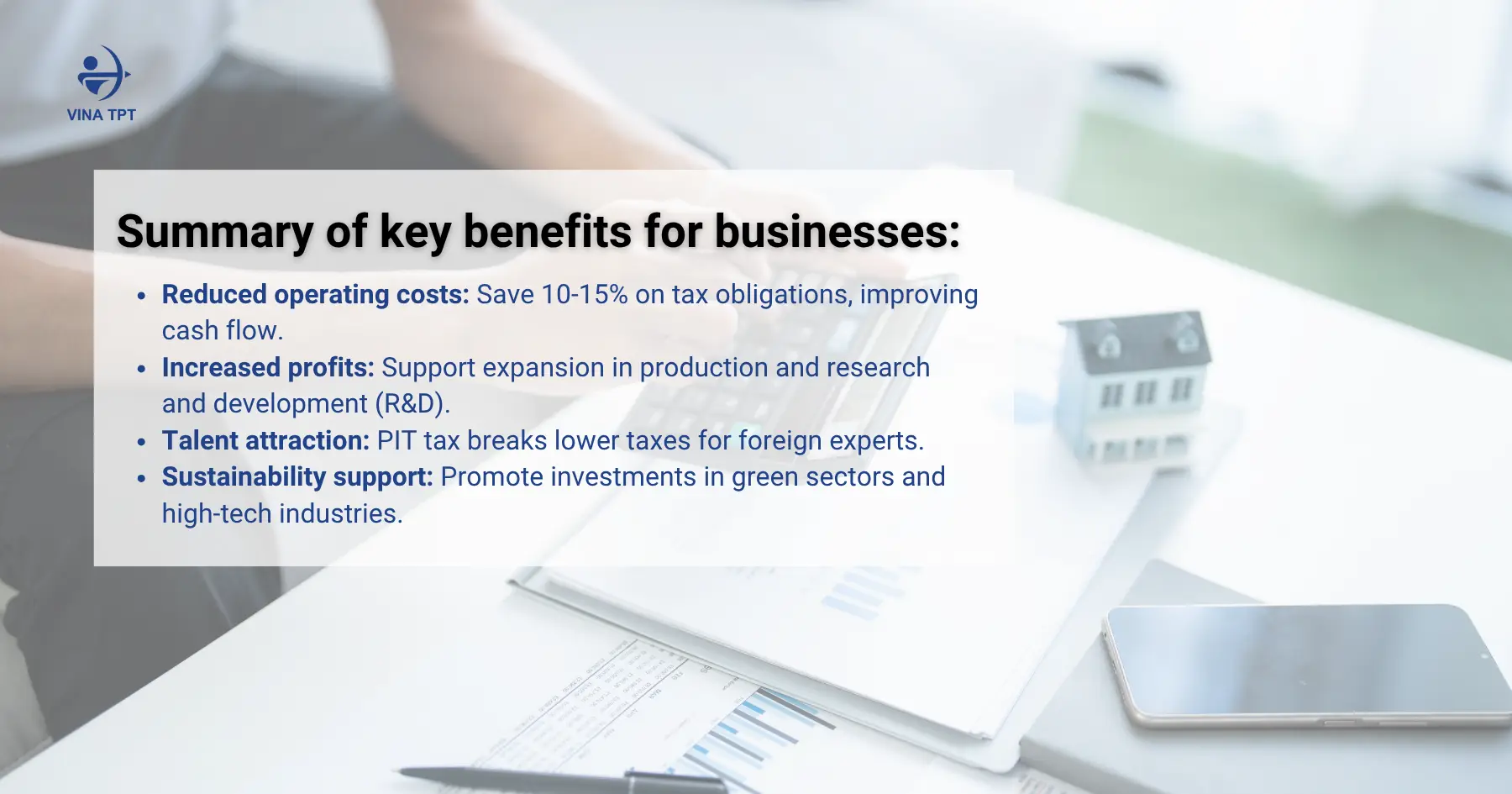
Here’s a summary of key benefits for FDI businesses:
- Reduced operating costs: Save 10-15% on tax obligations, improving cash flow.
- Increased profits: Support expansion in production and research and development (R&D).
- Talent attraction: PIT tax breaks lower taxes for foreign experts.
- Sustainability support: Promote investments in green sectors and high-tech industries.
Explore the common tax breaks available in Vietnam to maximize benefits for your FDI enterprise.
2/ Common Types of Tax Breaks Currently Available
Vietnam’s government is refining tax policies to aid businesses during economic recovery, focusing on priority sectors like technology, green manufacturing, and exports. Starting in 2025, incentives apply to key taxes: Corporate Income Tax (CIT), Value-Added Tax (VAT), and Personal Income Tax (PIT). Each targets different groups and goals, helping FDI businesses cut financial loads and enhance competitiveness. Below is a comparison table:
| Tax Type | Main Incentives | Applicable Entities | Duration |
| CIT | Exemption for 2-4 years, 50% reduction thereafter | FDI businesses in priority sectors | 6-15 years |
| VAT | Reduction from 10% to 8% | Goods and services (exclusions apply) | Until December 31, 2026 |
| PIT | Family deduction of VND 11 million/month (rising to VND 15.5 million/month from 2026) | Individuals and foreign experts as residents | Annual |
2.1 Corporate Income Tax (CIT) Incentives Effective from October 1, 2025
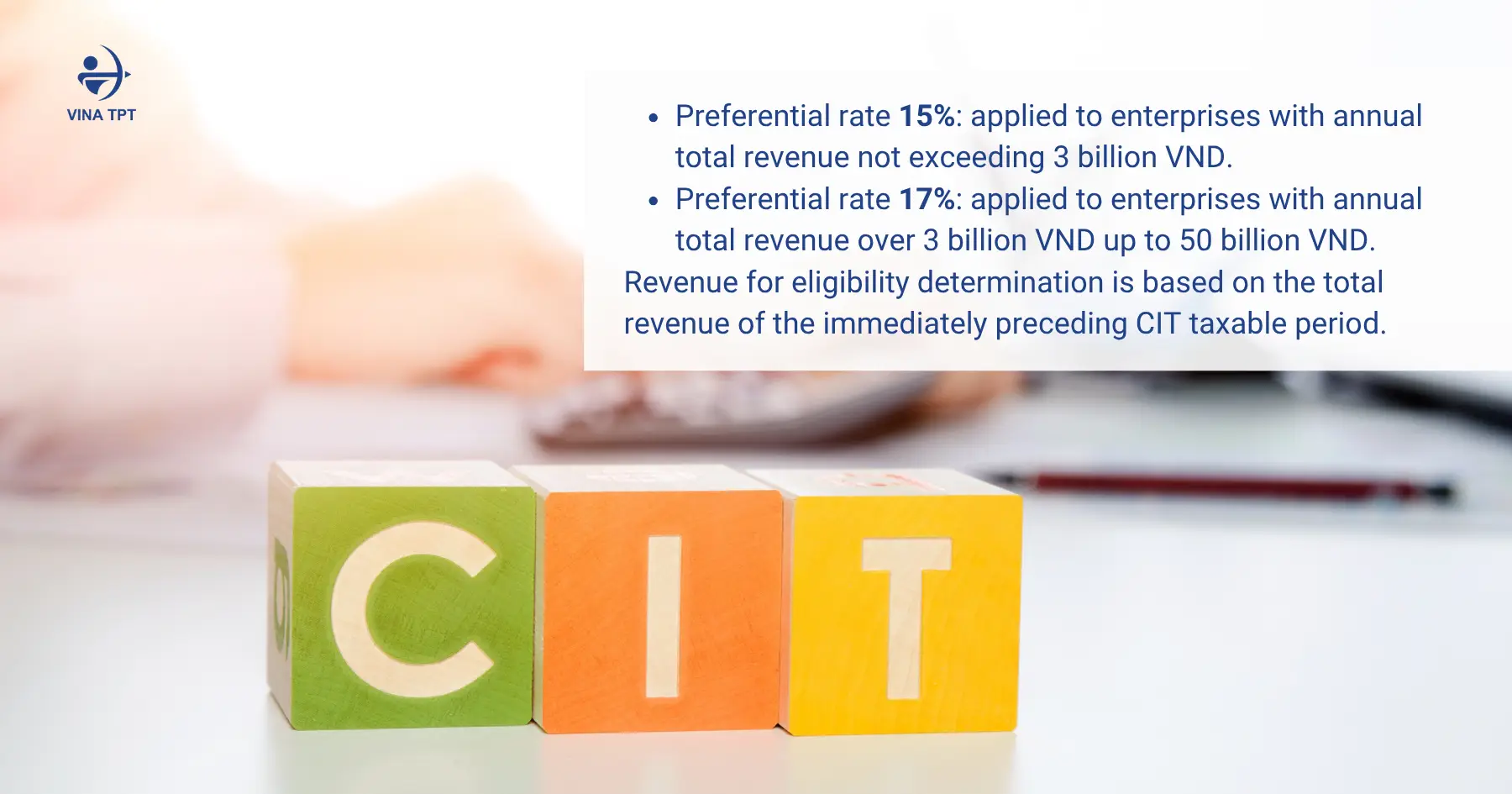
Corporate Income Tax (CIT) directly impacts FDI business profits. From October 1, 2025, the 2025 CIT Law (No. 67/2025/QH15) expands incentives to attract high-quality investments. FDI enterprises starting new projects in high-tech fields, disadvantaged areas, or economic zones qualify for CIT exemptions for 2-4 initial years and a 50% reduction for the next 4-9 years. Preferential rates can drop to 10% for specially prioritized projects, 15% for small and medium enterprises, or 17% for investments in favored locations.
Incentives are categorized by:
- Sector: High-tech, education, healthcare—exemption for 4 years, 50% reduction for 9 years.
- Location: Disadvantaged areas—10% rate for 15 years.
- Investment scale: Projects over EUR 750 million apply the 15% global minimum tax.
Summary table:
| Incentive Type | Conditions | Duration | Reduction Level |
| Exemption | High-tech projects | 4 years | 100% |
| Rate reduction | Favored locations | 15 years | 10-17% |
| 50% reduction | New investment projects | 4-9 years | 50% |
Impact on FDI businesses:
- Cost savings up to 20-30%, boosting net profits and reinvestment.
- Encourages production growth and local job creation.
Example: An FDI company investing USD 100 million in a high-tech zone could save tens of millions in taxes over the first 10 years.
FDI enterprises should consult tax experts early to ensure proper reporting, legal workforce use, and eligibility maintenance. Compliance from the start avoids audits, penalties, and maximizes legal tax breaks.
Maximize Your Tax Incentives Today
2.2 Value-Added Tax (VAT) Incentives Effective from July 1, 2025
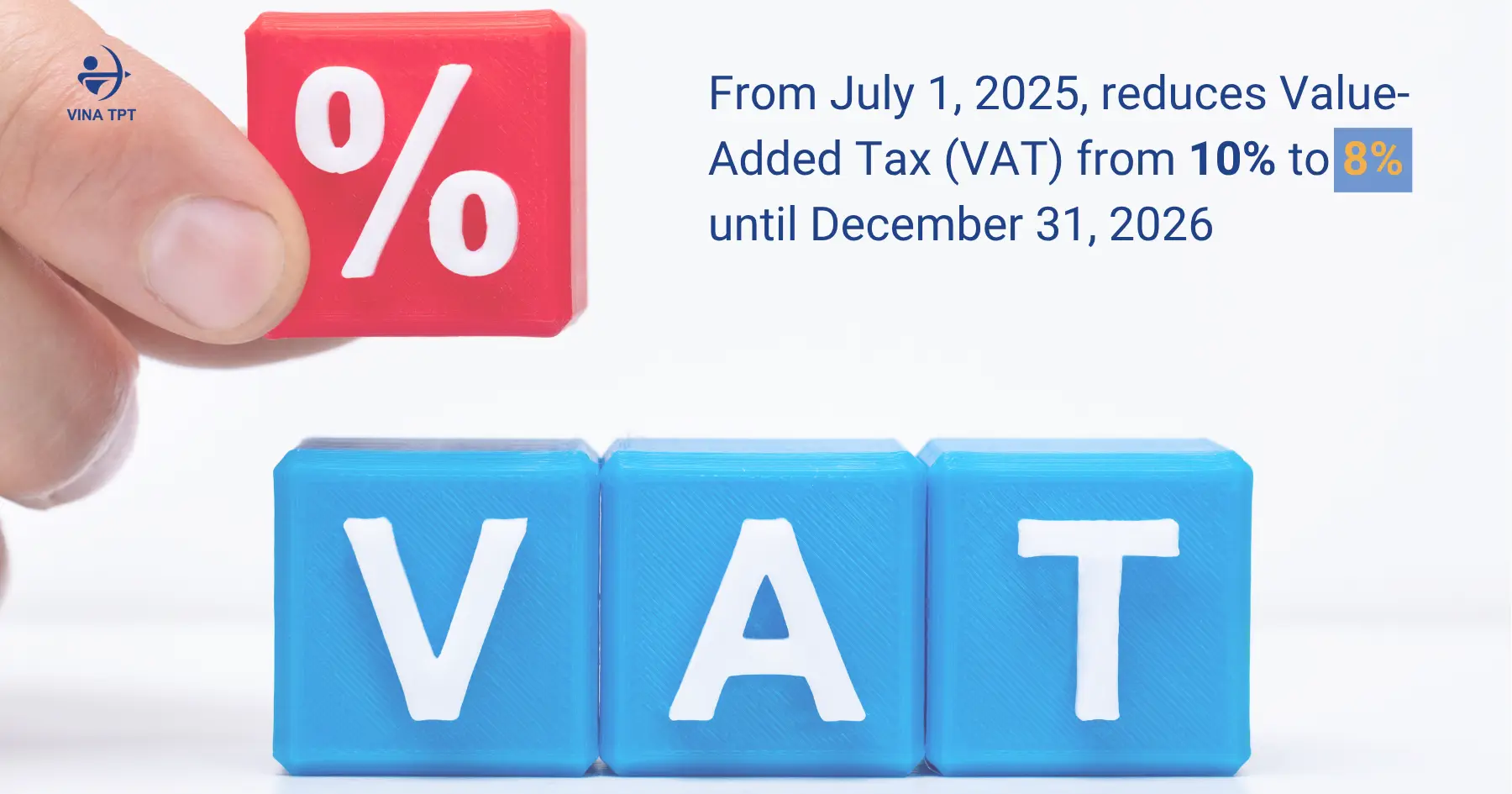
From July 1, 2025, Decree 174/2025/ND-CP reduces Value-Added Tax (VAT) from 10% to 8% until December 31, 2026, to stimulate consumption and support business recovery. This applies to most goods and services, excluding telecommunications, finance, and real estate. For FDI businesses, VAT tax breaks lower input costs, enhance cash flow, and strengthen export competitiveness.
Specific benefits:
- Lower production costs: Imported materials face reduced VAT.
- Export support: Exported goods at 0% VAT, plus 8% reduction on related services.
Example: An FDI firm exporting high-tech software enjoys full VAT exemption, saving 8-10% on costs.
Key procedures:
- Declare VAT using new forms and electronic invoices.
- Collect valid documents for deductions or refunds.
- Note: Does not apply to specially taxed imports.
2.3 Personal Income Tax (PIT) Incentives
PIT tax breaks for FDI businesses:
- Reduced taxes for foreign experts: Residents (present in Vietnam 183+ days/year) get deductions, cutting personnel costs.
- Exemptions for certain income: Stock transfers (if qualified) and foreign allowances.
Notes:
- Register dependents electronically with tax authorities.
- Update income regularly to prevent back taxes.
From 2026, updated policies will help FDI firms attract top global talent more easily.
Download Vietnam Tax Handbook For Investor
3/ Key Benefits: How Tax Breaks Help Save Costs and Expand Business
Tax breaks directly cut tax liabilities, increasing net profits and providing capital for FDI businesses to reinvest. Experts estimate savings of 10-20% on overall costs, enabling scale-up and global competition.
Analysis from three angles:
- Financial: CIT and VAT reductions improve cash flow and reduce quarterly tax debts.
- Strategic: Encourage investments in priority areas like green technology, enhancing brand value.
- Human resources: PIT incentives lower salary costs, aiding recruitment of international and local experts.
In summary, tax breaks not only save costs but also unlock business growth, allowing FDI enterprises to contribute sustainably to Vietnam’s economy.
4/ Leveraging Tax Breaks with Vina TPT Tax Services
To fully utilize tax breaks, FDI businesses need professional guidance from firms like Vina TPT—a Vietnam-based expert in tax and accounting. With experience supporting hundreds of FDI clients, Vina TPT identifies suitable incentives, prepares compliant files, and handles timely declarations to avoid audits.
Standout advantages:
- Expertise across industries, from manufacturing to technology.
- Team knowledgeable in Vietnamese and international tax laws, with multilingual support.
- Transparent reporting and competitive fees for cost optimization.
Support process:
- Assess your business and identify applicable incentives.
- Recommend tax plans and prepare registration documents.
- Implement declarations and monitor policy updates.
- Conduct regular reviews for ongoing compliance.
Tax breaks are essential for FDI businesses in Vietnam to optimize costs, boost profits, and expand investments—especially with 2025 updates like the 8% VAT reduction and CIT incentives for priority sectors. These changes support economic recovery and position Vietnam as an attractive destination for foreign investment.
Has your business maximized current tax incentives? Contact Vina TPT Tax Services today for a detailed analysis and tailored tax solutions—ensuring compliance and maximum savings!