How Finance and Accounting Outsourcing Helps Small Businesses in Vietnam scale efficiently

how-finance-and-accounting-outsourcing-helps-small-businesses-in-vietnam-grow-faster

During the process of establishing and operating a business, one of the most critical factors determining the stability of a small business in Vietnam is its ability to manage finances and cash flow. Ineffective cost control, errors in tax declarations, or a lack of financial direction can not only lead to losses but also slow down business growth.

However, not every business has sufficient resources to build a complete in-house finance and accounting team from the beginning. This is why finance and accounting outsourcing has become a preferred solution for many small businesses, helping optimize costs, ensure compliance, and more importantly, free up internal resources to focus on growth.

how-finance-and-accounting-outsourcing-helps-small-businesses-in-vietnam-grow-faster

1. Why finance and accounting outsourcing helps small businesses optimize resources and scale efficiently

To operate effectively, a small business typically requires multiple specialized roles such as tax accountants, accounts payable/receivable staff, or internal auditors. However, building a full finance function is not only costly but also requires time for management, training, and supervision.

For newly established businesses, this represents a significant investment with no guaranteed efficiency, especially when risks of tax declaration errors still exist if the team lacks experience.

In this context, many businesses turn to finance and accounting outsourcing as an effective alternative, with the following key benefits:

Access to experienced professionals

Businesses can work with accounting, tax, and finance experts who have practical experience, helping ensure compliance and reduce operational errors.

In practice, some providers (such as Vina TPT) even offer clear commitments regarding responsibility in case of tax-related errors. Therefore, businesses should prioritize partners with transparent commitments to protect their long-term interests.

Reduced risks and errors

Professional providers of accounting outsourcing services in Vietnam typically implement multi-layer control processes, continuously update legal regulations, and establish mechanisms to minimize accounting and tax risks.

However, since businesses must share internal financial data with third parties, choosing a provider with clear data security policies is especially important.

Flexibility across different growth stages

Outsourcing services can be adjusted based on business needs:

  • Increased support during peak periods (tax season, audits)
  • Cost optimization during slower business periods
  • Additional expertise when scaling operations

Overall, these benefits significantly reduce the time and resources spent on finance and accounting tasks, allowing businesses to focus on core activities such as product development, market expansion, and revenue growth.

In other words, finance and accounting outsourcing not only ensures stable operations but also acts as a growth accelerator for small businesses.

2. How accounting outsourcing services work

2.1. Finance and accounting outsourcing models for different business stages

Depending on business size and operational needs, companies can choose different finance and accounting outsourcing models. Selecting the right model helps optimize costs while ensuring effective financial management at each stage of growth.

Model

Scope of Work

Suitable For

Transactional Outsourcing – Data entry and accounting transaction recording

– Invoice processing and payments

– Bank and expense reconciliation

Businesses with high transaction volumes seeking operational efficiency
Full-Service Accounting – Bookkeeping and monthly financial reporting

– Management reports and cash flow monitoring

– Compliance advisory under VAS

Small businesses without an in-house accounting team
Controller Services – Internal process setup and controls

– Data review and audit preparation

– Supervision of accounting operations

Growing businesses requiring stronger financial control
Fractional CFO – Financial planning and cash flow forecasting

– Fundraising and M&A advisory

– KPI development and investor reporting

Businesses needing long-term financial direction
End-to-end Service (Vina TPT) – Monthly accounting (bookkeeping, financial statements, management reports)

– Tax declaration & finalization (VAT, CIT, PIT)

– Annual financial statements and audit support

– Compliance advisory and tax updates

Businesses looking to fully outsource accounting and tax while ensuring compliance

2.2. Workflow between businesses and service providers

To ensure transparency and efficiency, professional accounting outsourcing services in Vietnam typically follow a structured workflow:

Step 1: Information and document collection
The service provider collects business information, including accounting documents, previous reports, and specific requirements.

Step 2: Service agreement signing
Both parties agree on the scope of work, timeline, fees, and responsibilities.

Step 3: Execution and reporting
The provider performs bookkeeping, prepares financial and tax reports, and submits them for business review and approval.

Step 4: Record retention and ongoing support
Documents are stored in compliance with regulations, and the business receives support for explanations or additional information when needed.

EXPLORE OUR SERVICES

3. Four criteria for choosing a reliable service provider

Selecting an accounting outsourcing provider not only affects costs but also determines the level of compliance and financial risk of a business. Below are four important criteria to consider:

Experience and track record

Businesses should prioritize providers with many years of experience in accounting and tax services, especially those who have worked with companies in similar industries or business models. Practical experience enables faster problem-solving and reduces the likelihood of errors.

Team expertise

The accounting team should have strong professional knowledge, a solid understanding of legal regulations, and hands-on experience in handling real cases. For businesses with foreign elements, the ability to work in English or Japanese is a significant advantage.

Service quality and reputation

Service quality can be evaluated through client feedback, partner portfolios, or professional certifications. In addition, businesses should review the provider’s working process, level of transparency, and ability to provide support when issues arise.

Cost and pricing structure

The cost of accounting outsourcing services in Vietnam typically depends on transaction volume and business complexity.

For small business in Vietnam with limited transactions, basic accounting and tax services usually start from around VND 3 million per month for bookkeeping and periodic tax filings.

For businesses with more complex operations, such as inventory management, payroll, or advanced management reporting requirements, pricing is often customized based on the actual scope of work.

Therefore, businesses should choose a service provider with pricing that matches their needs, while ensuring that the scope of work, responsibilities, and commitments are clearly defined in the contract. Choosing the right finance and accounting outsourcing partner not only helps control costs but also ensures compliance and builds a stable financial foundation for long-term growth.

4. Finance and accounting outsourcing services at Vina TPT

Unlike many providers that focus solely on document processing and periodic reporting, Vina TPT aims to help businesses proactively manage financial control and compliance throughout their operations.

One of the key differentiators is the provision of monthly financial reports in three languages (English – Vietnamese – Japanese). This allows business owners and foreign investors to monitor their financial performance on an ongoing basis, rather than waiting until year-end.

In addition, Vina TPT places strong emphasis on responsiveness and client support. All client inquiries are handled within 24-48 hours, ensuring that businesses receive timely guidance when issues arise, particularly in areas related to tax compliance and accounting treatment. This level of responsiveness helps create a sense of reliability and continuity in day-to-day operations.

Furthermore, each client at Vina TPT is supported by a 3-level team structure (Assistant – Senior – Manager) rather than a single point of contact. All financial data and reports undergo three layers of independent review, ensuring accuracy, regulatory compliance, and minimizing potential risks. This structured approach is particularly important for businesses that require a high level of reliability in financial reporting and tax compliance.

how-finance-and-accounting-outsourcing-helps-small-businesses-in-vietnam-grow-faster

If you are looking for a reliable partner to manage your accounting and tax compliance in Vietnam, Vina TPT is ready to support. Contact Vina TPT today to receive tailored advice for your business model and ensure full compliance from day one.


BOOK A FREE CONSULTATION

Overview of Vietnam public holidays for Employees in 2026

Vietnam public holidays in 2026: updated holiday schedule, paid leave rules, and key labor law considerations for employers and employees

Starting from 2026, employees in Vietnam may be entitled to 12 Vietnam public holidays with paid leave each year, an increase of one day compared to previous regulations. These changes in Vietnam public holidays not only affect employees’ holiday plans but also directly impact human resource management and operational costs for businesses, particularly foreign-invested enterprises (FDIs).

The article below provides a comprehensive overview of Vietnam public holidays in 2026 and highlights important regulations that companies should consider when managing their workforce.

overview-of-vietnam-public-holidays-for-employees-in-2026

1. Latest regulations and updates on Vietnam public holidays

Under the Labor Code 2019, employees in Vietnam are entitled to days off with full salary during Vietnam public holidays as prescribed by the State. This is a mandatory benefit applicable to all employees working under labor contracts.

If a Vietnam public holiday coincides with a weekly day off, employees are entitled to a substitute day off on the following working day.

Previously, the system of Vietnam public holidays included 11 paid days off per year, including:

  • New Year’s Day: 1 day (January 1)
  • Lunar New Year (Tet): 5 days
  • Hung Kings’ Commemoration Day: 1 day (10th day of the 3rd lunar month)
  • Reunification Day: 1 day (April 30)
  • International Labor Day: 1 day (May 1)
  • National Day: 2 days (September 2 and one adjacent day)

However, on March 3, 2026, the Politburo approved Resolution No. 80-NQ/TW on the development of Vietnamese culture, officially designating November 24 each year as “Vietnam Culture Day.” This day is expected to become an official holiday to encourage cultural activities and improve the spiritual life of citizens.

For foreign employees working in Vietnam, in addition to the above Vietnam public holidays, they are entitled to two additional days off:

  • 1 traditional holiday of their home country
  • 1 national day of their home country

Both days are granted as paid leave under their labor contracts.

overview-of-vietnam-public-holidays-for-employees-in-2026

2. List of Vietnam public holidays in 2026

Based on the Labor Code and the tentative holiday schedule announced by the government, Vietnam public holidays in 2026 may include the following periods:

Holiday Date Total Days Off Notes
New Year Holiday From Jan 1 to Jan 4, 2026 4 days Including weekend days
Lunar New Year (Tet) From Feb 14 to Feb 22, 2026 9 days Including weekends
Hung Kings’ Commemoration Day Apr 26, 2026 1 day Substitute holiday on Apr 27, 2026
Reunification Day & Labor Day From Apr 30 to May 3, 2026 4 days Including weekend days
Vietnam National Day From Aug 29 to Sep 2, 2026 5 days Including weekend days
Vietnam Culture Day (new) Nov 24, 2026 1 day Official paid holiday

3. Other paid leave regimes besides Vietnam public holidays

In addition to Vietnam public holidays, employees are also entitled to other paid leave regimes under the Labor Code. These include annual leave, maternity leave, and several other special leave cases.

3.1 Annual paid leave in Vietnam

Under the Labor Code, employees who work for the same employer for 12 months are entitled to annual paid leave as follows:

  • 12 days for employees working under normal conditions
  • 14 days for minors, employees with disabilities, or those working in hazardous conditions
  • 16 days for employees performing extremely hazardous or dangerous work

Other important provisions include:

  • Employees who have not completed 12 months of service receive leave calculated proportionally based on months worked
  • Employees working for the same company for over 5 years receive one additional leave day per year
  • When terminating a labor contract, employers must compensate employees for unused annual leave days

3.2 Maternity leave and adoption leave

Under Vietnamese labor and social insurance regulations:

  • Female employees are entitled to 6 months of maternity leave
  • In the case of multiple births, an additional 30 days of leave is granted for each additional child starting from the second child
  • Female employees with children under 12 months old are entitled to 60 minutes of paid break per working day for childcare

3.3 Paternity leave

Male employees participating in social insurance are entitled to paternity leave within 30 days after childbirth, including:

  • 5 days for natural birth
  • 7 days for cesarean delivery
  • 10-14 days in cases of multiple births

EXPLORE OUR SERVICES

4. Recommendations for FDI enterprises regarding Vietnam Public Holidays

For foreign-invested enterprises, managing Vietnam public holidays is not merely about scheduling time off. It also directly affects payroll obligations, overtime costs, and compliance with Vietnamese labor regulations. Mistakes in calculating holiday pay or arranging substitute leave may lead to labor disputes or compliance risks during inspections.

Therefore, companies should standardize HR processes from the early stage of building their HR system, including:

  • Establishing mechanisms to calculate holiday pay and other paid leave in compliance with regulations
  • Controlling overtime costs during major holidays such as Tet
  • Managing additional holiday entitlements for foreign employees
  • Regularly updating regulatory changes related to Vietnam public holidays

For FDI enterprises operating in Vietnam, working with a knowledgeable HR consultant who understands local labor laws can help build a transparent payroll system, reduce compliance risks, and optimize long-term operational costs.

At Vina TPT, our team of HR and legal experts supports businesses in establishing structured systems for holiday management, payroll processing, and labor law compliance. Vina TPT currently provides HR and legal consulting services for many FDI companies operating in Vietnam. Standardizing HR processes from the beginning helps businesses minimize legal risks and focus on sustainable growth strategies in the Vietnamese market.

overview-of-vietnam-public-holidays-for-employees-in-2026

BOOK A FREE CONSULTATION

How to Calculate Personal Income Tax 2026 in Vietnam

how-to-calculate-personal-income-tax-2026-vinatpt

Vietnam’s Personal Income Tax 2026 law was amended Law No. 109/2025/QH15 and officially takes effect from July 1, 2026. Key rules for salary, wages, and business income, however, apply right from January 1, 2026. These updates significantly reduce the tax burden for employees and business owners amid rising living costs. 

This guide explains exactly how to calculate PIT in 2026, highlights the major changes (increased family deductions, simplified progressive rates, expanded exemptions), and provides clear, real-world examples so you can compute your tax accurately and stay fully compliant. 

1. Major Changes to Personal Income Tax from 2026 

2026 introduces the biggest PIT reforms since 2012, driven by the amended PIT Law 2025 and Resolution 110/2025/UBTVQH15. The goal is to ease pressure on middle-income earners, support digital businesses, and attract high-tech investment while keeping pace with economic growth and inflation. 

Change  Main Benefit 
Increased family deductions  Lower tax for individuals and families 
Simplified progressive brackets  Easier calculation, reduced tax for average incomes 
Expanded exemptions  Support for high-tech, agriculture, and green sectors 

These reforms make the tax system more modern, transparent, and easier to comply with. 

1.1 Increased Family Deductions Effective January 1, 2026 

From January 1, 2026, family circumstance deductions are raised to better match higher living costs, helping millions of taxpayers pay less personal income tax The personal deduction increases from VND 11 million to VND 15.5 million per month (VND 186 million per year), and the deduction per dependent rises from VND 4.4 million to VND 6.2 million per month. 

Type of Deduction  2025 Amount  2026 Amount 
Personal deduction  11 million/month  15.5 million/month 
Per dependent  4.4 million/month  6.2 million/month 

Who qualifies as a dependent? 

  • Children: Under 18; over 18 if disabled and unable to work; full-time students (university, college, vocational) under 22 with low or no income. 
  • Spouse: Unable to work or with very low/no income. 
  • Parents, grandparents, siblings: Elderly or disabled individuals with insufficient income, directly supported by the taxpayer. 

Key conditions 

  • Each dependent can be claimed by only one taxpayer. 
  • Proof is required (birth certificate, household registration, disability certificate, school enrollment, support commitment letter). 
  • Register with your employer or tax office (usually via Form 20-ĐK-TNCN) before tax is calculated. 

1.2 New Progressive Personal Income Tax 2026 Rates – Reduced from 7 to 5 Brackets 

Effective January 1, 2026, the progressive tax scale is simplified from 7 brackets to 5, with wider income ranges to reduce the effective tax rate for middle earners. The top rate remains 35%, now applying only to monthly taxable income over VND 100 million (previously VND 80 million). 

Bracket  Monthly Taxable Income (VND million)  Annual Taxable Income (VND million)  Tax Rate (%) 
1  Up to 10  Up to 120  5 
2  Over 10 to 30  Over 120 to 360  10 
3  Over 30 to 50  Over 360 to 600  20 
4  Over 50 to 100  Over 600 to 1,200  30 
5  Over 100  Over 1,200  35 

Old vs. new comparison The old 7-bracket system had narrower bands, pushing many middle-income earners into higher rates. The new structure is simpler and saves 5–15% in tax for most employees, while encouraging extra work without jumping brackets quickly. 

1.3 Expanded Exemptions, Reductions & Special Incentives 

The updated law adds 21 new exempt income categories starting in 2026, focusing on education, healthcare, green projects, and high-tech sectors. Additional benefits include a 50% reduction on certain investment income and a 5-year exemption for high-tech professionals. 

  • New exempt items: Certain overtime pay, scholarships, income from green bonds, organic agriculture, gifts under VND 10 million, disaster relief support. 
  • Special incentives: 5-year PIT exemption for experts in AI, semiconductors, and R&D; 50% reduction on income from investments in tech startups. 
Incentive Type  Condition  Duration 
Scholarship exemption  Full-time formal education  Indefinite 
5-year high-tech exemption  Experts in AI, semiconductors, R&D  5 years from 2026 
50% investment reduction  Green/technology startups  Applies to 2026+ income 

Proof (contracts, certificates) is required, often from the Ministry of Science and Technology. 

personal-incom-tax-2026-vina-tpt

2. How to Calculate Personal Income Tax in 2026 – Step-by-Step Guide 

Core formula Tax payable = Taxable income × Progressive tax rate Taxable income = Total income – Exempt items – Deductions (family + mandatory insurance + charity + eligible medical/education expenses) 

This applies to tax residents. Non-residents pay a flat 20% on Vietnam-sourced income. 

Step 1: Determine Your Tax Residency Status 

Start by confirming whether you are a tax resident or non-resident, as this determines what income is taxable. 

Under Vietnam’s PIT law: 

  • Tax resident: Present in Vietnam ≥183 days in the calendar year, or maintaining a permanent residence (owned home or long-term rental with registered address). 
  • Non-resident: Taxed only on income sourced from Vietnam. 

Tax implications 

  • Residents: Taxed on worldwide income using the 5-bracket progressive scale (5%–35%). 
  • Non-residents: Flat 20% on Vietnam-sourced salary and wages (other rates apply to specific types). 

Step 2: Calculate Taxable Income 

Basic formula: Taxable income = Total income – Exempt items – Deductions 

  1. Total income includes salary, bonuses, taxable allowances, business profits, investment returns, etc. 
  2. Exempt items include scholarships, certain overtime pay, small gifts, etc. 
  3. Deductions include: 
  • Family deduction (VND 15.5 million/month personal + VND 6.2 million/month per dependent) 
  • Mandatory social, health, unemployment insurance (BHXH, BHYT, BHTN) 
  • Charitable donations (with receipts) 
  • Medical & education expenses (new in 2026, up to VND 10 million/year – detailed guidance pending) 

Example In January 2026, Mr. A receives: 

  • Salary: VND 70,000,000 
  • Meal allowance (per company policy): VND 1,000,000 
  • Sales commission: VND 2,000,000 

No charitable contributions. Mr. A has one registered dependent (child under 18). 

Calculation: 

  • Total income: 70,000,000 + 1,000,000 + 2,000,000 = VND 73,000,000
  • Exempt: VND 1,000,000 (meal allowance) 
  • Deductions: 15,500,000 (personal) + 6,200,000 (dependent) + 4,200,000 (mandatory insurance) = VND 24,850,000
  • Taxable income = 73,000,000  – 1,000,000 – 24,850,000 = VND 47,150,000 per month 

Step 3: Apply the 2026 Progressive Rates

new-progressive-personal-income-tax-rates-vina-tpt

Apply the 5-bracket scale to taxable income, calculating tax portion by portion and adding them up. 

Continuing Mr. A’s example (monthly taxable income: VND 47,150,000): 

  • Bracket 1: VND 10,000,000 × 5% = VND 500,000 
  • Bracket 2: (30,000,000 – 10,000,000) × 10% = VND 2,000,000 
  • Bracket 3: (47,150,000 – 30,000,000) × 20% = VND 3,430,000 

Total PIT payable: 500,000 + 2,000,000 + 3,430,000 = VND 5,930,000 

Net take-home pay: 73M – 4.2M (insurance) – 5.93M (PIT) = VND 62,870,000 

3. Special Rules for Foreigners and Expatriates in Vietnam 

Foreign nationals (expats) and overseas workers follow specific PIT rules in 2026. 

  • Non-residents: Flat 20% on Vietnam-sourced income, withheld at source. 
  • Residents: Subject to the same progressive rates as Vietnamese citizens. 

Double Taxation Agreements (DTAs) Vietnam has over 80 DTAs (with the US, EU countries, Japan, Singapore, etc.). To claim relief: 

  • Submit Form NT5/TNCN 
  • Provide proof of tax residency in your home country 
  • Claim credit for taxes already paid abroad 

Example: A non-resident expat earning VND 50 million/month pays VND 10 million (20%) PIT. With a DTA, the rate may drop to 10–15%. 

These rules, plus the 5-year exemption for high-tech experts, make Vietnam attractive for skilled international professionals. 

4. Filing and Finalizing Personal Income Tax in Vietnam 

PIT filing and finalization are fully online via the General Department of Taxation portal (thuedientu.gdt.gov.vn) or eTax Mobile app. 

General deadlines (apply every year): 

  • Employer finalization (for authorized employees): By the last day of the 3rd month after year-end (usually March 31). 
  • Individual self-finalization: By the last day of the 4th month after year-end (usually April 30). → If the deadline falls on a holiday or weekend, it shifts to the next working day. 

Who must self-file? Individuals with income from two or more sources who do not meet authorization conditions, or those seeking refunds or adjustments. 

5. Vina TPT – Your 2026 PIT Solution for Expats & Businesses in Vietnam 

Vina TPT is a leading tax advisory firm in Vietnam specializing in Personal Income Tax services for expatriates and foreign-invested companies. Our experienced team provides full support, from 2026 PIT forecasting and calculation to DTA claims and maximum deduction optimization. 

Why choose Vina TPT? 

  • Free initial consultation with clear guidance 
  • Fast, accurate filing and deadline reminders 
  • Full compliance with 2026 regulations to minimize risks 

Key services 

  • PIT finalization for expats with multi-source income 
  • Assistance with high-tech and investment incentives 
  • HR training on payroll updates and withholding 

Need help with your 2026 Personal Income Tax in Vietnam? Contact Vina TPT today for expert, hassle-free support.

BOOK A FREE CONSULTATION

Best Accounting Firm in Da Nang: Outsourced Bookkeeping & Full-Service Accounting for SMEs

Best-Accounting-Firm-in-Da-Nang_-Outsourced-Bookkeeping-Full-Service-Accounting-for-SMEs-Vina-TPT

Best-Accounting-Firm-in-Da-Nang_-Outsourced-Bookkeeping-Full-Service-Accounting-for-SMEs-Vina-TPT

1. Why Da Nang Businesses Are Increasingly Outsourcing Accounting

Best outsourced accounting services are increasingly chosen by small and medium-sized enterprises (SMEs) in Da Nang, especially in the logistics, trade, and hospitality sectors, as a way to optimize human resources and internal management costs. Small and medium-sized enterprises (SMEs) in Da Nang, especially in the logistics, trade and hospitality sectors, increasingly choose to outsource accounting to optimize human resources and internal management costs. Hiring internal accountants is often costly due to the need to pay salaries, benefits, training and human resources management costs. Instead, outsourcing helps businesses transfer all accounting tasks to specialized units, saving costs and reducing the management burden.

Besides costs, the second reason is to increase efficiency and reduce legal compliance risks. Outsourcing businesses are supported by experts who understand tax laws, local regulations and Vietnamese accounting standards. This ensures that tax reports, financial reports and social insurance obligations are performed accurately and on time, while helping SMEs avoid errors that can lead to administrative fines or tax arrears. In addition, outsourcing also helps businesses focus on core business activities instead of wasting time on complex accounting operations.

2. Key Criteria to Identify the Best Accounting Firm in Da Nang

When choosing the best outsourced accounting services provider, businesses need to consider the following criteria:

  • Accuracy and information security: accounting records must be securely managed to avoid errors.
  • Tax expertise: in-depth knowledge of VAT, CIT, PIT, FCT, import taxes, and staying updated with the latest tax regulations.
  • Ability to handle periodic reports: monthly/quarterly and annual reports must be accurate and on time.
  • Understanding local regulations: especially important for SMEs in Da Nang to avoid legal risks.
  • Experience with diverse business models: from SMEs, FDI to logistics, trade and hospitality enterprises.

3. Monthly & Year-End Reporting Requirements in Da Nang

SMEs in Da Nang must comply with many monthly/quarterly and year-end accounting and tax requirements to ensure legal operations and avoid the risk of being fined. Hiring a local professional accounting firm helps businesses fulfill these obligations accurately and efficiently.

3.1 Monthly & Quarterly Reporting

  • Monthly bookkeeping: record all revenues and expenditures, invoices, and documents according to Vietnamese accounting standards (VAS).
  • VAT (Value Added Tax): declare and pay monthly or quarterly depending on revenue.
  • PIT (Personal Income Tax): deduct and pay taxes for employees, including foreign experts if any.
  • CIT (Provisional Corporate Income Tax): if the business is subject to provisional declaration and payment, it must be done quarterly.
  • Labor and Social Insurance Report: declare the number of employees, pay social insurance, health insurance, and unemployment insurance in full.

3.2 Year-End Reporting

  • Year-end financial report: prepare business results report, balance sheet, note to comply with Vietnamese accounting standards.
  • Personal Income Tax & CIT settlement: summarize all income, deduct tax paid and prepare settlement declaration.
  • Check and store documents: invoices, payroll, labor contracts, expense documents must be complete to serve audit or inspection.

4. Top Accounting Firms in Da Nang

Below are 6 reputable accounting companies in Da Nang that SMEs can refer to, in which Vina TPT stands out thanks to its full-package services and many years of experience:

  1. Vina TPT Accounting Service: full-package services from bookkeeping, tax declaration, financial reporting to tax consulting; specializing in serving SMEs and FDI enterprises; more than 10 years of experience, transparent costs, standard procedures and understanding of local regulations.
  2. Anpha Accounting Company: providing full-package accounting services, many years of experience, flexible fees.
  3. Quoc Viet Accounting Company: specializing in tax & accounting services for small and medium enterprises, clearly committed to costs.
  4. An Tin Law Company: combining accounting and legal services, supporting tax reporting and legal procedures.
  5. MAN Tax Consulting Management Company: accounting, auditing and tax consulting services, ensuring “doing it right the first time”.
  6. TAF Auditing Consulting Company: provides accounting, auditing and financial reporting services, suitable for SMEs.

Best-Accounting-Firm-in-Da-Nang_-Outsourced-Bookkeeping-Full-Service-Accounting-for-SMEs-Vina-TPT

CONTACT FOR PROFESSIONAL ACCOUNTING SERVICES

5. Why Vina TPT is One of the Best Outsourced Accounting Services in Da Nang

Vina TPT is trusted by many FDI enterprises in Da Nang thanks to more than 120 years of experience and full accounting services, from bookkeeping, tax declaration, financial reporting to strategic consulting. With the motto “accurate – transparent – effective”, Vina TPT helps businesses optimize operating costs, reduce legal risks and focus on business development.

Strengths that make Vina TPT stand out

  • Full-package service:

    • Manage all monthly accounting operations and annual reports.
    • Declaration of VAT, CIT, PIT, FCT, payment of social insurance for employees.
    • Consulting on tax strategies and optimizing legal costs.
  • Over 20 years of experience:

    • Serving a wide range of industries: logistics, trade, hospitality, SMEs and FDI. Solving complex tax and accounting issues, ensuring compliance with Vietnamese law.
  • Standardize processes & make costs transparent:

    • Transparent reporting and costs, avoiding unexpected costs.
    • Support businesses in building professional internal accounting processes.
  • Understand local laws and stay updated:

    • Mastering tax, social insurance and accounting regulations in Vietnam. 
    • Timely updating of legal changes so that businesses always comply with regulations.
  • Comprehensive support for businesses:

    • Reduces the workload of internal accounting operations, allowing businesses to focus on business development.
    • Represents businesses in dealing with tax and labor authorities when necessary.

Thanks to the above advantages, Vina TPT is not only a reputable accounting company but also a strategic partner, helping businesses in Da Nang effectively manage finances, optimize taxes, and maintain full legal compliance.

Contact Vina TPT now for full support in accounting, tax and financial reporting, helping operate effectively and comply with the law.

BOOK A FREE CONSULTATION

best-outsourced-accounting-services

Why Startups Need the Best Accounting Firms in Vietnam?

Why-Startups-Need-the-Best-Accounting-Firms-in-Vietnam_-VTPT

Why-Startups-Need-the-Best-Accounting-Firms-in-Vietnam_-VTPT

1. The Early Challenge: Why Accounting Is a Common Pain Point for Startups

Full-service accounting plays a crucial role in supporting the growth of foreign-invested enterprises. In recent years, Vietnam has not only attracted large corporations but also increasingly attracted startups from Japan, Korea, India, Singapore, the US, Taiwan and Australia. With the level of FDI capital continuously increasing, according to the report of the Foreign Investment Agency, in the first six months of 2025 alone, Vietnam attracted more than 21.5 billion USD of FDI capital, reaching a record in the past 15 years, it is clear that the FDI startup environment in Vietnam is more vibrant than ever.

However, foreign-invested startups face more challenges than domestic startups, especially in setting up accounting processes and tax compliance. FDI enterprises are subject to higher supervision in preparing financial reports according to Vietnamese standards, while still having to summarize data for their headquarters abroad. 

Therefore, choosing a reputable comprehensive accounting firm is an important strategy for FDI startups. A quality accounting unit not only keeps books but also supports tax compliance, prepares financial statements, manages cash flow and prepares for audits, helping founders focus on product development, market expansion and capital mobilization.

2. Full-Service Accounting: What It Really Means for Startups

Full-service accounting offers a complete suite of financial services, including:

  • Bookkeeping: Record and organize all financial transactions accurately, ensuring the company’s accounting data is up-to-date and reliable.
  • Financial Reporting: Prepare regular financial statements, enabling startups to track performance, assess cash flow, and support investor or management decisions.
  • Tax Filing: Handle all tax declarations (VAT, PIT, CIT, FCT) and submissions on time, ensuring compliance with local regulations and minimizing risk of penalties.
  • Payroll Management: Calculate and process employee salaries, social insurance, and personal income tax accurately, for both full-time and part-time staff.
  • Legal Compliance Consulting: Advise on accounting and financial regulations, helping startups follow laws, avoid errors, and standardize processes from the start.

Full-services also support startups to standardize internal processes, from invoice reconciliation, cost management, revenue tracking to management reporting. This helps businesses be ready to present accurate data to investors, prepare for audits, and build future expansion plans. Startups do not have to worry about reporting errors or violating the law while still controlling cash flow effectively.

Why-Startups-Need-the-Best-Accounting-Firms-in-Vietnam_-VTPT

3. Streamlining Accounting Procedures for Growth

One of the important factors for sustainable startup development is to establish a systematic accounting process. Professional accounting services help businesses build a system from recording transactions, managing costs, reconciling invoices, to preparing periodic financial reports.

The “lean accounting” method is applied to small startups to minimize accounting errors, save on personnel costs and increase transparency. Thanks to this process, startups can clearly understand the cash flow situation, forecast budgets, evaluate operational efficiency and prepare for fundraising rounds. The standardized process also helps businesses easily expand when growing in scale or developing new products.

BUILD A SYSTEMATIC ACCOUNTING PROCESS NOW

4. Outsourcing vs. In-house: What’s Smarter for a Startup Budget?

With limited budgets, many startups have difficulty recruiting, training, and managing internal accounting staff. Compared to building an in-house team, outsourcing accounting services offers many benefits:

  • Save on recruitment costs, salaries, and benefits for accounting staff.
  • Receive in-depth expertise from experienced experts handling complex and diverse business operations.
  • Flexibly expand or narrow services according to actual needs without long-term constraints.
  • Ensure accounting standards and tax compliance are maintained.

Many FDI startups in Vietnam choose to outsource right from the company’s establishment to focus resources on product and market development, instead of worrying about daily accounting operations.

Criteria In-house Outsourcing Accounting Services
Cost High (salaries, benefits, training, insurance, office) Lower, pay flexibly based on service package
Expertise Limited to staff capabilities Experienced specialists across multiple areas
Flexibility Hard to adjust team size Easy to scale services up or down
Legal Compliance Depends on staff, prone to errors Standardized, tax-compliant
Implementation Time Time-consuming recruitment & training Immediate, no waiting time

With limited budget and diverse business processing needs, outsourcing accounting is an effective solution to help startups save costs while ensuring accounting and tax standards.

5. How Vina TPT Supports Startups with Scalable Accounting Solutions

Vina TPT Accounting Service supports startups with a comprehensive accounting system:

  • Building a bookkeeping system, managing cash flow and preparing periodic tax reports.
  • Designing flexible processes for each stage of business development.
  • Ensuring all accounting data is transparent, accurate and easy to control.
  • Consulting on financial strategies: controlling costs, optimizing cash flow, preparing for fundraising.
  • Helping startups focus on products and expanding the market without worrying about accounting – tax – compliance issues.

Contact Vina TPT for free consultation and to build a professional accounting system, helping startups manage finances effectively and comply with the law right from the first steps.

BOOK A FREE CONSULTATION

full-service-accounting


Corporate Income Tax Finalization in Vietnam 2025: What Companies Should Prepare

Corporate Income Tax Finalization in Vietnam

Corporate Income Tax Finalization in Vietnam

1. 2025 Tax Policy Updates: What Foreign Investors Need to Know

In 2025, there will be many important updates to corporate income tax policies in Vietnam, especially affecting FDI enterprises. The General Department of Taxation will tighten post-audit regulations, strengthen document review and check the reasonableness of deductible expenses.

Foreign investors need to pay attention to cost classification, update tax incentives regulations, and ensure financial statements are in accordance with Vietnamese standards. Failure to comply with the new regulations may lead to administrative fines, tax arrears and affect the transfer of profits abroad.

2. Key Corporate Income Tax (CIT) Obligations for FDI Companies

.FDI enterprises in Vietnam are required to declare and pay corporate income tax both quarterly (provisional) and annually (finalization). Deductible expenses include production and business costs, salaries, insurance, and other legally supported expenses. Some enterprises may also benefit from sector-specific or local tax incentives.

2.1 Provisional Quarterly CIT Payment

  • Enterprises must estimate and pay CIT every quarter based on actual or expected revenue.
  • Deadline: within 30 days after the end of each quarter.
  • Proper documentation for deductible expenses and provisional calculations helps reduce errors and avoid fines.

2.2 Annual CIT Finalization

  • At the end of the fiscal year, enterprises must finalize CIT by reconciling provisional payments with actual taxable income.
  • Required documents: financial statements, accounting books, expense receipts, and relevant contracts.
  • Deadline: usually within 90 days after the fiscal year-end.
  • Preparing complete and accurate documents ensures compliance, minimizes risk of fines, and facilitates smooth interaction with tax authorities.

3. Common Mistakes in CIT Finalization

FDI enterprises in Vietnam often face issues in corporate income tax (CIT) reporting due to common mistakes that can lead to fines or tax adjustments. Key mistakes include:

3.1 Inaccurate Cost Accounting

  • Recording expenses that are not eligible for deduction or entering incorrect accounting items.
  • Leads to differences between accounting profit and taxable profit, affecting CIT calculation.
  • Impacts overall financial statements and auditing.
  • Enterprises should review all expenses, including personnel costs, office rentals, and fixed asset depreciation, to ensure reasonableness and legality.

3.2 Missing or Invalid Documents

  • Failing to provide valid invoices, international payment documents, or complete contracts.
  • Causes tax authorities to refuse deduction of expenses, increasing tax obligations and potential late payment penalties.
  • Proper scientific storage and management of documents is essential for smooth tax settlement.

3.3 Discrepancies Between Internal Accounting and Tax Declarations

  • Occurs when companies apply Vietnamese Accounting Standards (VAS) for tax reporting but maintain international or headquarters accounting standards.
  • Leads to discrepancies that require time-consuming adjustments.
  • Increases risk of inquiries, explanations, or administrative fines from tax authorities.

4. Steps to Ensure Smooth CIT Filing

Corporate Income Tax Finalization in Vietnam

To ensure a smooth corporate income tax (CIT) settlement and minimize risks of errors or penalties, FDI enterprises should follow a structured approach:

4.1 Step 1: Standardize Accounting Books

  • Check all accounts and review records of expenses and revenues.
  • Compare invoices and supporting documents.
  • Identify legally deductible items to minimize errors and create a reliable basis for financial statements.

4.2 Step 2: Review and Classify Valid Expense

  • Clearly identify which expenses are eligible for tax deductions.
  • Exclude invalid or non-deductible expenses.
  • Prepare detailed expense reports for each item to optimize tax obligations and reduce risk of post-submission adjustments by tax authorities.

4.3 Step 3: Collaborate with Auditors and Professional Tax Consultants

  • Auditors review data, detect potential errors, and ensure CIT reports comply with Vietnamese law.
  • Tax consultants assist with document preparation, timely report submission, and communication with tax authorities.
  • Helps minimize penalties and allows businesses to focus on growth and development.

5. How Vina TPT Tax Preparation Service Supports FDI Businesses

Vina TPT provides a complete tax preparation service for FDI enterprises, from consulting on corporate income tax settlement, preparing and declaring documents, to representing and working directly with tax authorities. A team of experienced experts helps to review books, standardize documents and ensure all expenses are valid, reducing the risk of errors and administrative fines.

In addition, Vina TPT supports the optimization of tax costs by properly applying legal incentives and exemptions, while helping enterprises comply with all the latest regulations of the General Department of Taxation. As a result, FDI enterprises can focus on operating and developing their businesses, while all tax-related issues are handled professionally and effectively.

Partner with Vina TPT to simplify CIT finalization, stay compliant, and focus on growing your business.

BOOK A FREE CONSULTATION

accounting service Vietnam for FDI company vtpt

Understanding Value Added Tax (VAT) in Vietnam: Registration, Invoicing, and Filing Procedures

VAT refund process for foreign investors in Vietnam

VAT-in-Vietnam

1. Understanding VAT in Vietnam

Value Added Tax (VAT) is an indirect tax applied to the added value of goods and services at each stage of production and distribution. In Vietnam, VAT is applied to most goods and services and is subject to the management of the tax authorities.

The common tax rate is 10% for most goods and services, while some essential or exported goods may apply 0% or 5%. Enterprises with revenue above the prescribed level or providing goods and services subject to VAT must register and declare VAT periodically. Understanding the tax calculation mechanism, taxable objects and how to prepare invoices is a basic step to ensure compliance and avoid the risk of penalties.

2. VAT Registration and Compliance Requirements

To operate legally in Vietnam, businesses need to register for VAT in Vietnam with the tax authorities. The registration dossier includes business information, business lines, tax codes and types of goods and services provided. After registration, businesses need to declare and pay taxes periodically on a monthly or quarterly basis, depending on revenue and business type.

Electronic invoices are mandatory for most businesses, helping to manage and control transparent invoice issuance, limiting the risk of errors. Businesses need to ensure that invoices record correct information, amounts, tax rates and are stored according to regulations. Full compliance with regulations on invoices and declarations helps businesses avoid administrative fines and increase transparency in business operations.

ENSURE ACCURATE VAT DECLARATIONS TODAY

3. VAT Refunds and Recovery for Foreign Investors

Foreign enterprises investing in Vietnam can request a VAT refund if the goods and services are exported or meet other tax refund conditions. The tax refund process includes preparing valid documents and invoices, declaring VAT in Vietnam and submitting a tax refund application to the tax authority.

Foreign investors in Vietnam can apply for VAT refunds, but understanding the requirements is crucial.

  • Tax refund conditions include valid VAT invoices, international payment documents, and proof that the goods or services were exported or used for the correct purpose.
  • Processing time usually takes several months.
  • Preparing complete and accurate documents is essential to help foreign investors receive refunds faster.

VAT-in-Vietnam

Read more about VAT refund conditions and eligible cases in our full guide: VAT Refund in Vietnam 2025: Updated Conditions and Eligible Cases Explained

4. Common VAT Challenges and How to Avoid Them

VAT management in Vietnam is often difficult for many businesses, especially foreign investors or FDI companies, due to constantly changing regulations and strict compliance requirements. Some common challenges include missing or incorrect data declarations, late tax payments, using incorrect invoice formats, and not keeping up to date with tax law changes.

4.1 Missing or Incorrect Data Declarations

  • Businesses may omit purchase or sale invoices or record incorrect tax rates or total values.
  • Leads to inaccurate VAT calculations, adjustments by tax authorities, recovery of paid tax amounts, and late payment penalties.

4.2 Late Tax Payments

  • New businesses or those without strict control processes can miss monthly or quarterly VAT in Vietnam deadlines.
  • Especially challenging when handling multiple taxes (e.g., corporate income tax, import/export tax).
  • Violations result in fines, interest charges, and can impact cash flow and business reputation.

4.3 Not Updating Tax Law Changes

  • Frequent amendments to VAT rates, document requirements, or policies make it easy to make declaration errors.
  • Businesses failing to track updates risk non-compliance and penalties.

How to Avoid VAT Risks

  • Build standardized processes for all VAT-related activities:
    • Manage input/output documents carefully
    • Reconcile invoices periodically
    • Store data completely and declare on time
  • Use professional invoice and accounting management software to automate steps, reduce errors, and improve transparency.
  • Partner with specialized units such as Vina TPT:
    • Advice on correct VAT declaration and electronic invoice creation
    • Review data and guide document submission
    • Monitor tax refund progress if applicable

VAT refund process for foreign investors in Vietnam

5. How Vina TPT Supports VAT Compliance and Advisory

Vina TPT offers comprehensive VAT in Vietnam services for foreign investors, including:

  • Consultancy for VAT registration
  • Electronic invoicing setup and management
  • Periodic VAT calculation and filing
  • Support for export tax refunds
  • Data review and standardization for smooth audits

Our services ensure timely declarations, minimize the risk of penalties, and guarantee full compliance with Vietnamese regulations. With expert guidance from day one, Vina TPT helps foreign enterprises save time, optimize cash flow, and operate confidently in Vietnam.

Contact Vina TPT to receive VAT in Vietnam advisory and implement an effective tax management system for foreign enterprises in Vietnam.

BOOK A FREE CONSULTATION

Vina TPT Accounting services


How Tax Preparation Services Ensure VAT Compliance

tax-preparation-services

1. VAT Compliance Challenges for Foreign Investors in Vietnam

Tax preparation services play an essential role in helping businesses stay compliant with Vietnam’s VAT regulations. Value added tax is one of the most frequently audited taxes in Vietnam and is also the area where FDI enterprises are most likely to make mistakes. Many foreign investors say they have difficulty tracking policy changes, applying e-invoice regulations, determining the correct tax rate of 0, 5 or 10 percent and how to deduct input VAT for each tax period.

The e-invoice system requires synchronization between accounting software, voucher data and tax authority regulations. Even a small discrepancy in invoice date, product code or customer information can lead to invalid VAT records. These errors not only waste time editing but also create risks when being inspected or fined.

2. High-Risk Areas in VAT Filing That Can Affect Businesses

During the VAT declaration process, some potentially high-risk areas often appear. Inconsistencies between invoices, accounting books and banks are common errors. If input invoices are not in the correct format or lack required information, businesses will lose their right to deduct or be subject to tax collection.

Failure to update new policies in a timely manner is also the reason why many FDI enterprises make errors in tax declarations. Regulations on electronic invoices and input deductions frequently change, requiring businesses to always closely monitor and adjust their records immediately. In addition, late VAT payments also cause businesses to incur late payment penalties and be classified by tax authorities as high-risk.

3. How Outsourced Tax Preparation Services Mitigate VAT Risks

Outsourcing tax preparation services is an effective solution to ensure VAT compliance. Professional units such as Vina TPT review all invoices and VAT records before making declarations, helping to eliminate data errors, duplicate invoices or invalid documents.

Vina TPT experts also promptly update new tax policies and apply them correctly according to each industry. This helps businesses avoid declaring incorrect tax rates, recording incorrect invoice timings or declaring incorrect tax periods. The service also supports VAT optimization by accurately classifying preferential transactions or applying a 0 percent rate for exports, an area where many self-employed businesses often make mistakes.

OPTIMIZE YOUR VAT FILING

4. Streamlining VAT Processes with Automation and Expertise

Vina TPT combines technology and expertise to help businesses process VAT quickly and accurately. Electronic invoice management tools and automatic reconciliation software ensure data is always synchronized between invoices, documents and books. Multi-layered checking processes help detect errors early and make timely adjustments.

Tax experts continuously monitor changes in VAT policies and notify businesses, ensuring all records are always updated and ready for inspection or audit. This makes the VAT process smoother and businesses don’t have to worry about errors or violations of the law.

5. Maximizing Compliance While Reducing Operational Burden

Using tax preparation services not only helps businesses comply with VAT but also significantly reduces operational burden. Businesses don’t have to worry about recruiting or training internal tax staff. The entire process, from checking invoices, making declarations, submitting documents to explaining to tax authorities, is handled professionally by experts.

When VAT records are standardized and maintained in an audit-ready state, businesses can focus resources on business operations, market development and optimizing cash flow without worrying about the risk of violating the law.

In addition, tax preparation services give businesses access to updated regulations and expert insights that internal teams often lack. Consultants constantly monitor changes in VAT policies, e-invoice requirements, and deduction rules, ensuring that every declaration is accurate and compliant. This proactive approach helps businesses avoid common errors such as incorrect tax rates, invalid invoices, late submissions, or mismatched data between books and tax filings. By having a dedicated team oversee compliance risks in advance, businesses gain greater peace of mind and maintain a stronger, more transparent financial reporting system.

Contact Vina TPT for free consultation and ensure VAT compliance accurately, quickly and effectively.

Contact Vina TPT now for consultation on opening a business bank account

accounting service Vietnam for FDI company vtpt


[Recap] Vina TPT Tax Consultant Enhances Accounting & Tax Expertise

Vina TPT Tax Consultant Enhances Accounting & Tax Expertise-VTPT

Continuous Training Builds Stronger Expertise

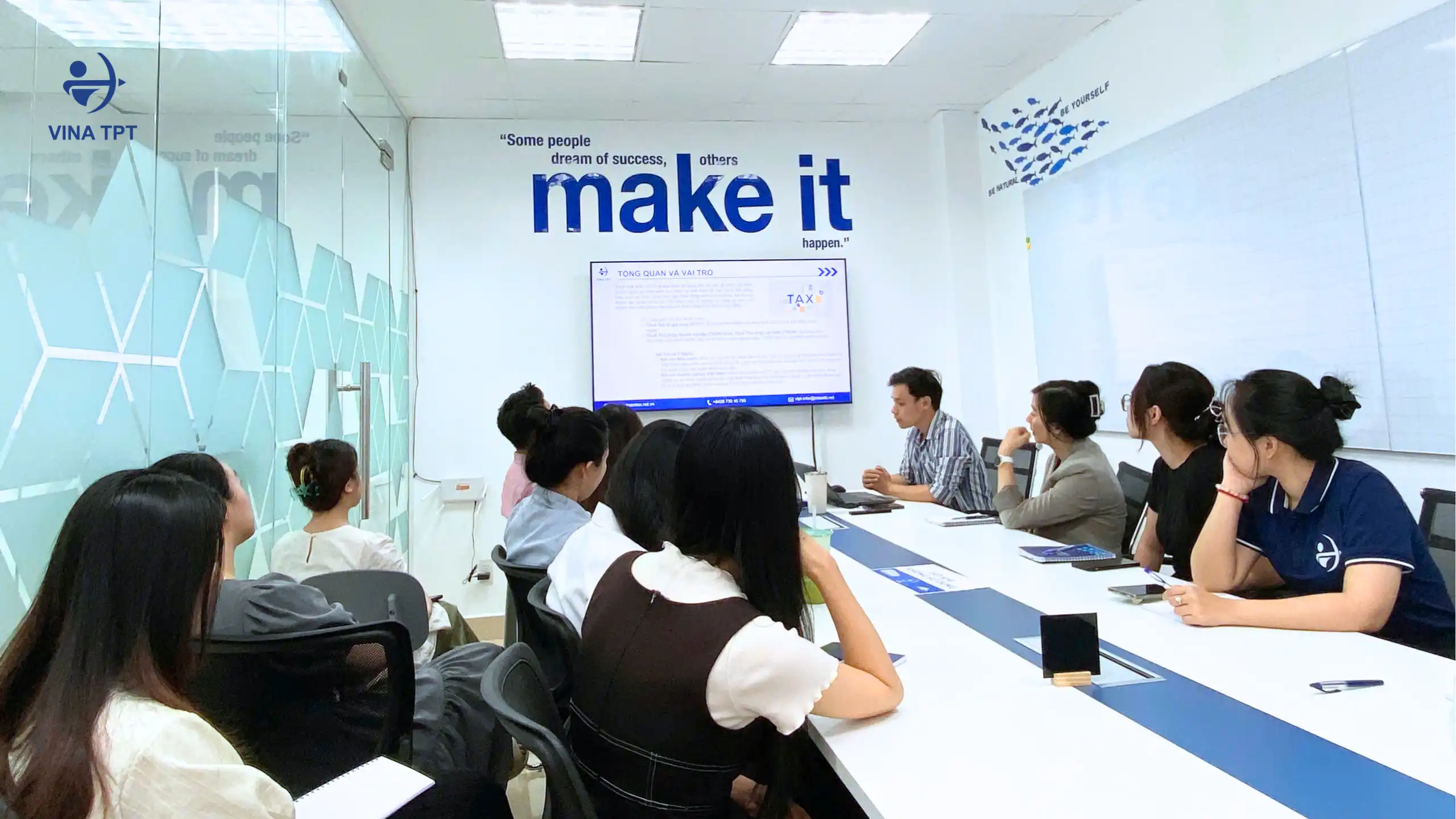
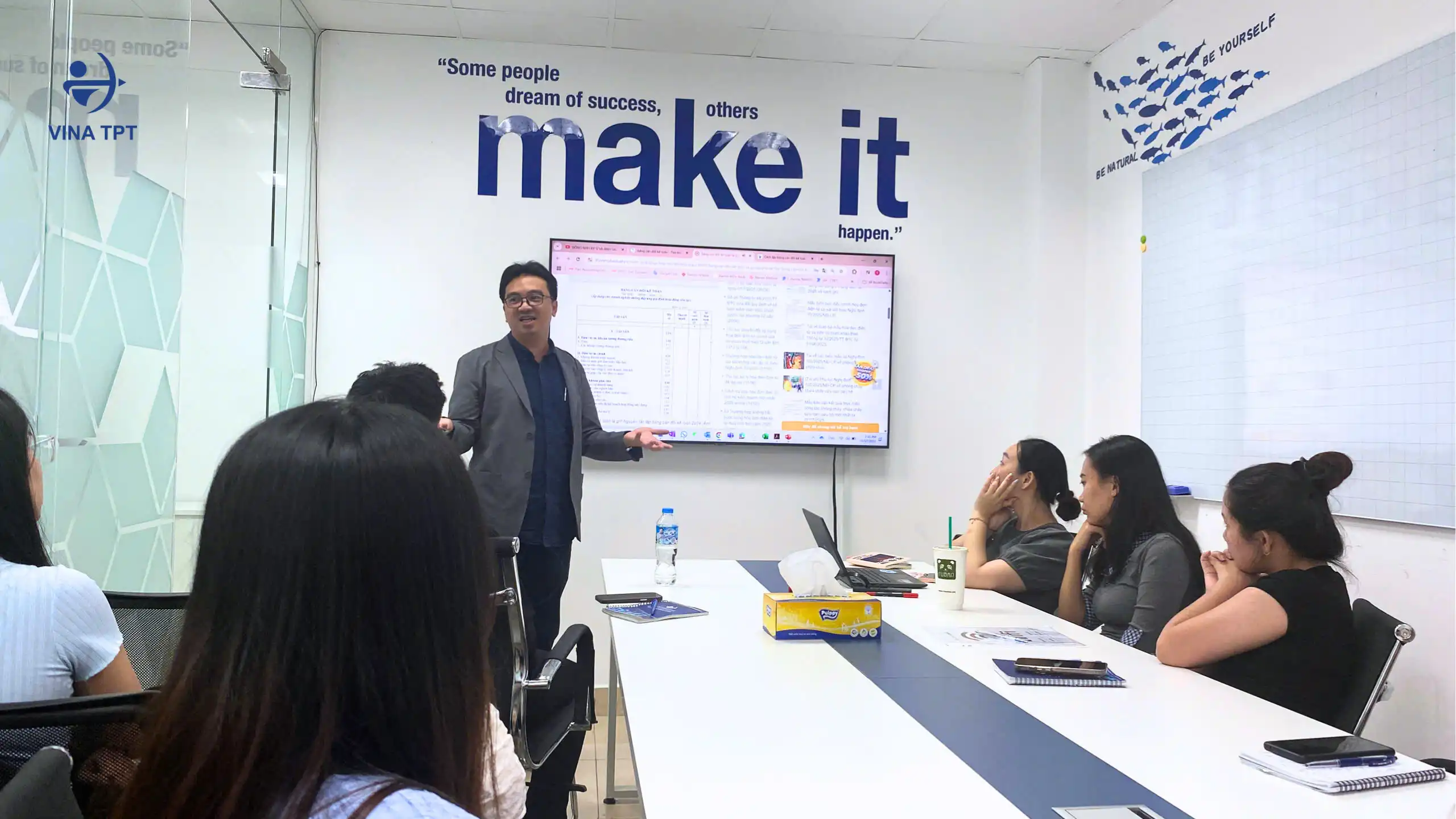
Enhancing the accounting–tax expertise of our specialists is not only a regular internal activity but also a long-term strategic investment. This ensures the quality of Vina TPT’s accounting, tax, and legal services for our corporate clients.

Vina TPT Tax Consultant Enhances Accounting & Tax Expertise-VTPT

Quality Services Begin with Quality People

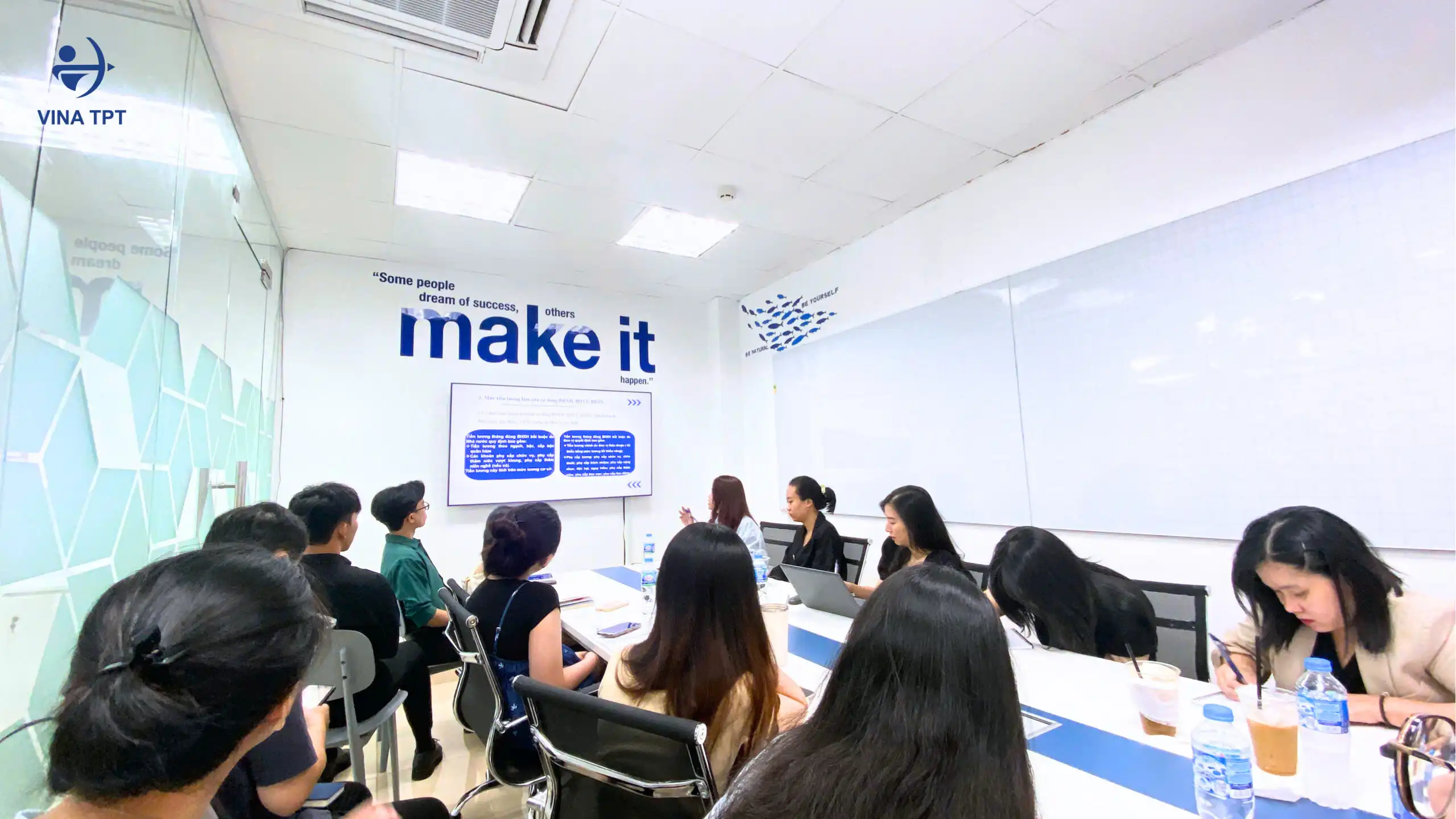
In the context of continuous changes in the legal, tax, and accounting landscape during 2025-2026, businesses need a partner who is not only knowledgeable but also constantly updated. Understanding this, Vina TPT Company organizes periodic internal training sessions to strengthen accounting expertise. These sessions help our staff master new regulations, improve real-life problem-solving skills, and proactively provide consulting to clients.

Vina TPT Tax Consultant Enhances Accounting & Tax Expertise-VTPT

Each month, Vina TPT tax consultant conducts at least two in-depth internal training sessions combining legal theory with practical case studies. Recent key topics include:

Vina TPT Tax Consultant Enhances Accounting & Tax Expertise-VTPT

Training Helps Our Team Stay Updated with the Latest Tax Regulations

  • Improves accounting expertise along with analytical and problem-solving skills

  • Enhances communication and consulting capabilities with clients

  • Strengthens cross-department collaboration between accounting, legal, and HR teams

  • Fosters a culture of learning and knowledge-sharing across the company

We believe continuous learning is the foundation for each team member to grow confidently in their professional role, while standing side by side with our clients on their journey toward sustainable growth.

Partner with a Reliable Tax & Accounting Expert

Our Vina TPT Tax Consultant,  accounting team is ready to accompany your business from setting up an initial accounting system to compliance monitoring, cost optimization, and tax inspection support.

CONTACT VINA TPT NOW FOR SUPPORT

Vina TPT Accounting services

Financial Statement Preparation in Vietnam for FDI: Key Differences Between Chinese and Vietnamese Accounting Standards

accounting service Vietnam for Chinese company vtpt

financial-statement-preparation-Vietnam

In recent years, Vietnam has emerged as a strategic destination for Chinese enterprises to invest in FDI, thanks to its advantages in labor costs, geographical proximity and open-door policies to attract foreign capital. However, besides the opportunities, Chinese companies face great challenges in familiarizing themselves with and complying with Vietnamese accounting standards (VAS), which are significantly different from PRC GAAP. This difference directly affects the process of financial statement preparation Vietnam, consolidated reports and tax obligations. To manage effectively and minimize risks, many enterprises choose the Vina TPT accounting system setup solution, which helps build a bilingual accounting system, ensuring transparency and compliance with both Vietnamese regulations and requirements from the parent company in China.

1. Why Chinese Investors Need to Understand Vietnamese Accounting Standards

When investing FDI in Vietnam, Chinese enterprises not only have to comply with the laws on investment and business, but also need to understand Vietnamese accounting standards (VAS). This is the basis for financial statement preparation Vietnam, declaring taxes, and demonstrating transparency to management agencies. Only applying PRC GAAP and ignoring financial statement preparation in Vietnam according to VAS can lead to audit risks, being subject to arrears or difficulties in distributing profits to the parent company. Therefore, understanding and correctly applying Vietnamese accounting standards is not only a matter of compliance, but also a foundation for enterprises to build trust with shareholders, partners and state agencies.

2. Overview of Chinese vs. Vietnamese Accounting Systems

PRC GAAP (Chinese Accounting Standards) and VAS (Vietnamese Accounting Standards) have the same goal of faithfully reflecting the financial situation, but their approaches are different:

  • PRC GAAP: Designed to serve internal management, strict supervision of the Chinese government, emphasizing capital control and compliance with domestic economic policies.
  • VAS: Built to suit the legal and tax environment of Vietnam, closely linked to tax declaration and reporting requirements to management agencies. However, VAS is in the process of integrating with IFRS to approach international standards.

For Chinese companies in Vietnam, this difference creates a gap that needs to be filled, especially when having to prepare reports for management agencies in Vietnam and meet the consolidated reporting requirements of the parent company in China.


TALK TO OUR CHINA–VIETNAM ADVISORS

3. Key Differences in Financial Statement Preparation Vietnam

When preparing financial statements in Vietnam, Chinese enterprises will encounter some major differences between PRC GAAP and VAS, specifically:

  • Revenue: Different ways of recording revenue, especially for long-term transactions or prepaid revenue.
  • Fixed assets: Different methods of asset valuation and depreciation, directly affecting profits and expenses.
  • Provisions and liabilities: VAS has its own provisions on provisioning, while PRC GAAP has a broader scope on estimating liabilities.
  • Presentation: VAS emphasizes compliance with the reporting format issued by the Ministry of Finance, while PRC GAAP is more flexible for enterprises in presentation.
  • International standards: FDI enterprises sometimes have to perform an additional step of converting from VAS to IFRS to serve global reporting.

Understanding these differences helps businesses limit errors and standardize financial data from the start.

4. Compliance Challenges for Chinese FDI Companies

In reality, many Chinese enterprises face difficulties in preparing financial statements in Vietnam. Standardizing bilingual financial statements, handling exchange rate differences, and converting from PRC GAAP to VAS or IFRS can create great pressure on the accounting department. Many enterprises face a lack of personnel who understand both systems, as well as the challenge of meeting the parent company’s expectations of transparency. This is the reason why hiring an accounting service in Vietnam for Chinese companies becomes important.

accounting service Vietnam for Chinese company vtpt

5. Setting Up a Reliable Accounting System in Vietnam

To overcome the above challenges, setting up a reliable accounting system in Vietnam is necessary. Chinese enterprises should choose software that is compatible with VAS and has the ability to export data according to PRC GAAP or IFRS. In addition, the accounting process needs to be standardized, have bilingual personnel, and have close coordination with the parent company.

Therefore, if a business wants to optimize its accounting system and ensure full compliance with Vietnamese regulations as well as requirements from the parent company, choosing a reputable partner like Vina TPT is a strategic step that cannot be ignored.

6. How Vina TPT Supports Chinese Companies Prepare Financial Statements Vietnam

We provides Vina TPT accounting system setup solutions for Chinese enterprises that want to establish business and operate accounting in Vietnam.

  • Comprehensive Accounting Service: Providing a full range of accounting services, from bookkeeping, financial reporting to tax management and bilingual reporting.
  • Dual-Language Expertise: Professional reporting, documentation and communication in both Vietnamese and Chinese, helping the parent company grasp information quickly and accurately.
  • Customized Accounting System Setup: Setting up an accounting system suitable for the scale and model of FDI, including software, processes and operational personnel.
  • Regulatory Compliance: Supporting businesses to fully comply with Vietnamese accounting standards (VAS) while meeting the reporting requirements of the parent company in China.
  • Strategic Financial Advisory: Providing financial strategy advice based on accurate data, helping businesses optimize cash flow, plan budgets and prepare for audits.

Please contact Vina TPT today for consultation on a complete accounting service solution in Vietnam, ensuring compliance and transparency for Chinese businesses in Vietnam.

BOOK A FREE CONSULTATION

financial-statement-preparation-Vietnam