How Singapore Investors Can Smoothly Establish Business in Vietnam

establish business in Vietnam with vtpt

establish business in Vietnam with vtpt

1. Why Singapore Investors Choose to Establish Business in Vietnam  

Vietnam is becoming an attractive investment destination for Singapore investors in Vietnam thanks to its strategic geographical location in Southeast Asia, competitive labor and operating costs, and free trade agreements (FTAs) that facilitate exports and trade.

For small and medium-sized enterprises from Singapore, establishing a business in Vietnam opens up opportunities to access a large consumer market, taking advantage of lower operating costs compared to other saturated markets. In addition, the preferential policies of the Vietnamese Government for a number of industries such as technology, manufacturing, education and renewable energy also increase the attractiveness, helping Singapore investors to expand their scale sustainably.

2. Key Legal Requirements for Singapore Companies

To ensure a smooth business establishment in Vietnam, Singapore investors need to understand the legal requirements. Choosing the type of business such as Limited Liability Company (LLC), Joint Stock Company (JSC) or Representative Office will determine the ownership structure, charter capital and management rights.

Investors need to determine the investment capital, business lines and licensing conditions. Some specific business lines may require additional licenses or pre-investment approval from state agencies. Basic legal documents include the company charter, list of shareholders/members, legal documents of the investor, legal head office address, and capital contribution plan.

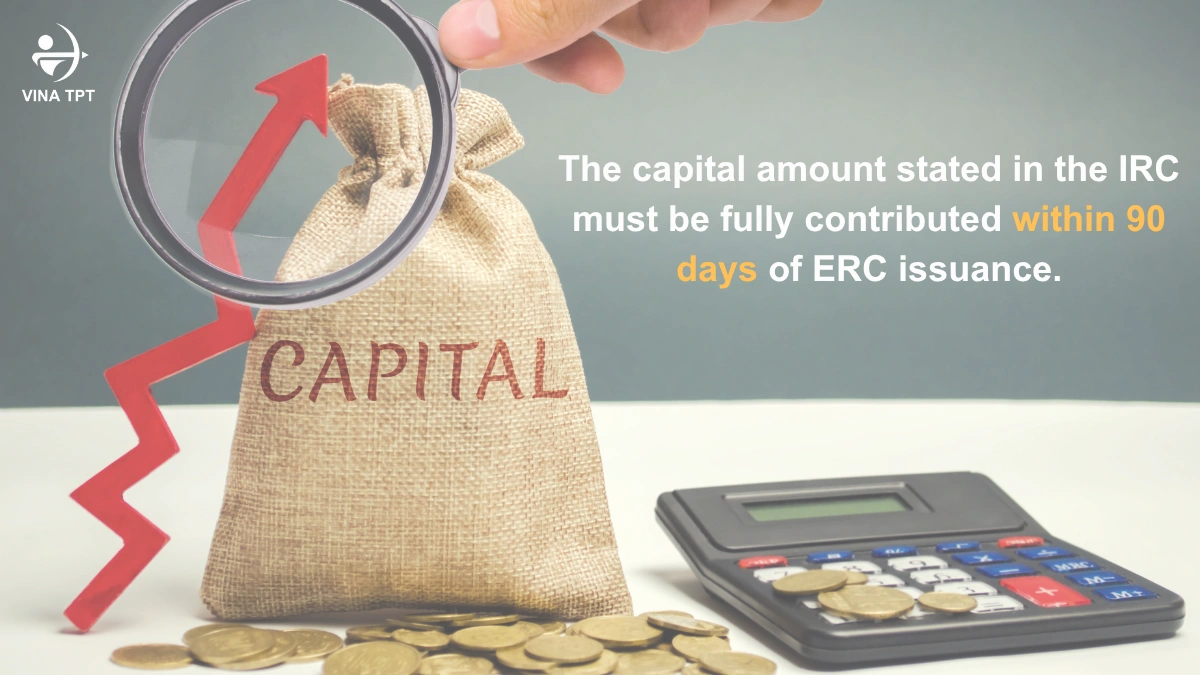
For FDI projects, Singapore investors need to apply for an Investment Registration Certificate (IRC) to get investment approval, then apply for an Enterprise Registration Certificate (ERC) – the official business license and tax code of the enterprise. Compliance with these legal requirements is a prerequisite for legal and effective business operations.

3. Prepare Documents and Apply for Business License (IRC & ERC)

For Singapore investors in Vietnam, establishing a business in Vietnam cannot be separated from the steps of preparing documents and applying for licenses. This is an important stage, especially for FDI projects, because complete and accurate documents determine the progress of granting Investment Registration Certificate (IRC) and Enterprise Registration Certificate (ERC) – two mandatory licenses for businesses to operate legally.

3.1 Investment Registration Certificate (IRC) – For FDI

For projects with foreign investment capital, IRC is the first license, allowing investors to implement projects in Vietnam. The documents usually include:

  • Application for implementing investment projects and Investment Plan, clearly stating the objectives, scale, location, capital and progress of the project.
  • Evidence of the investor’s financial capacity, such as bank statements, credit contracts or mortgaged assets.
  • Legal documents of the investor: individuals submit notarized and consularized passports; legal entities submit notarized and consularized business registration certificates.
  • Project location, including lease contract or land/office use right certificate.

3.2 Enterprise Registration Certificate (ERC) – Operating License

After the IRC is issued (or for 100% domestic-owned enterprises), the investor submits an application for an ERC – which is an official license for the enterprise to operate and also a tax code. The ERC dossier includes:

  • Business registration application.
  • Company Charter, which stipulates the organizational structure, member/shareholder rights, capital contribution ratio and management method.
  • List of shareholders/members and legal representatives, clearly stating information, ownership ratio and voting rights.
  • Appointment decision and authorization letter (if any).
  • Capital contribution plan & proof of financial capacity, especially important for large capital projects.

3.3 General requirements and important notes

  • Notarization, consular legalization & translation into Vietnamese: all documents of foreign investors must be completed before submission. This is a step that often causes delays if the dossier has many shareholders or is complicated.
  • Legal head office address: do not use apartments or collective houses.
  • Unified information: company name, address, capital, and business lines must be consistent on all dossiers.
  • Choosing the right business line: ensure that investment conditions are met to avoid multiple amendments.

3.4 Time to prepare and submit documents

  • Document preparation: 1-2 weeks, depending on the volume and complexity of legalization.
  • IRC appraisal: about 20-45 working days.
  • ERC issuance: 10-20 days after IRC approval.

Due to the complicated process of preparing documents and applying for ERC/IRC, Singapore investors should hire outsourcing with professional services such as Vina TPT start-up business license service. This not only saves time, limits legal errors but also ensures that the licensing process is quick, transparent and safe.


GET EXPERT HELP WITH IRC & ERC REGISTRATION

4. Common Challenges and How to Overcome Them

Singaporean investors often face difficulties due to differences in laws, taxes, and administrative procedures between Vietnam and Singapore. Language barriers and incomplete understanding of regulations also hinder the preparation of documents and communication with authorities.

Common problems include delays in IRC or ERC approval, inconsistent information in documents, and additional licensing requirements for specific industries. Working with a business setup consultant Vietnam helps to minimize these risks through legal advice, accurate document preparation, and direct dealing with government agencies, allowing investors to focus on business planning and strategic operations.

establish business in Vietnam with vtpt

5. Role of a Business Setup Consultant in Vietnam

Using a business setup consultant Vietnam is an important strategy for Singapore investors to optimize the company registration process. Consultants help identify the appropriate type of business, review and prepare all legal documents, and ensure compliance with Vietnamese regulations.

In addition, consultants also provide strategic advice on capital allocation, investment approval, and application for specific industry licenses, helping investors avoid legal errors and shorten the time to complete documents. As a result, Singaporean businesses save costs, time, and feel more secure in long-term development in Vietnam.

6. Vina TPT Company Registration Service for Singapore Investors

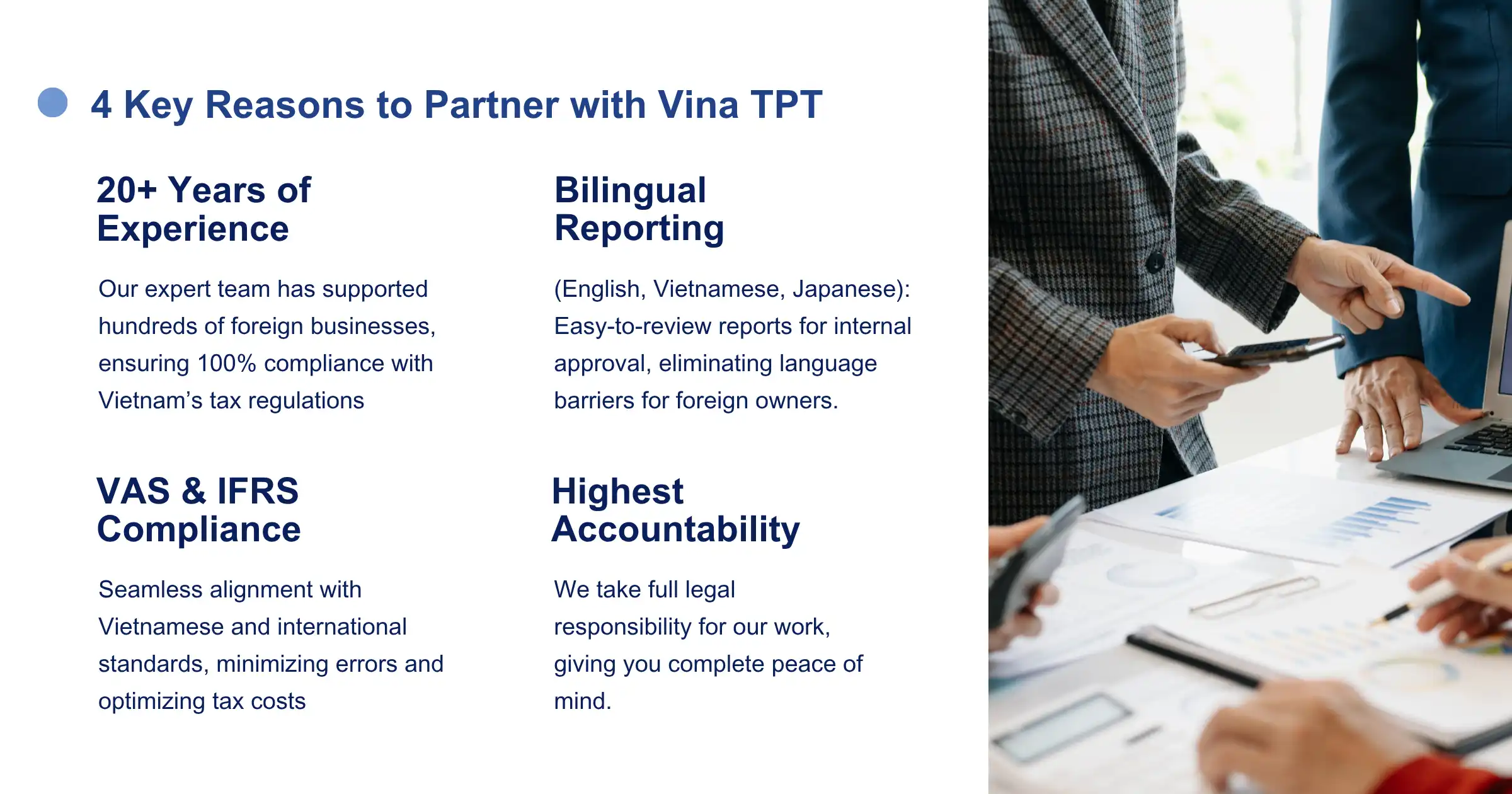
Vina TPT company registration offers a complete solution for Singapore investors in Vietnam, with outstanding advantages:

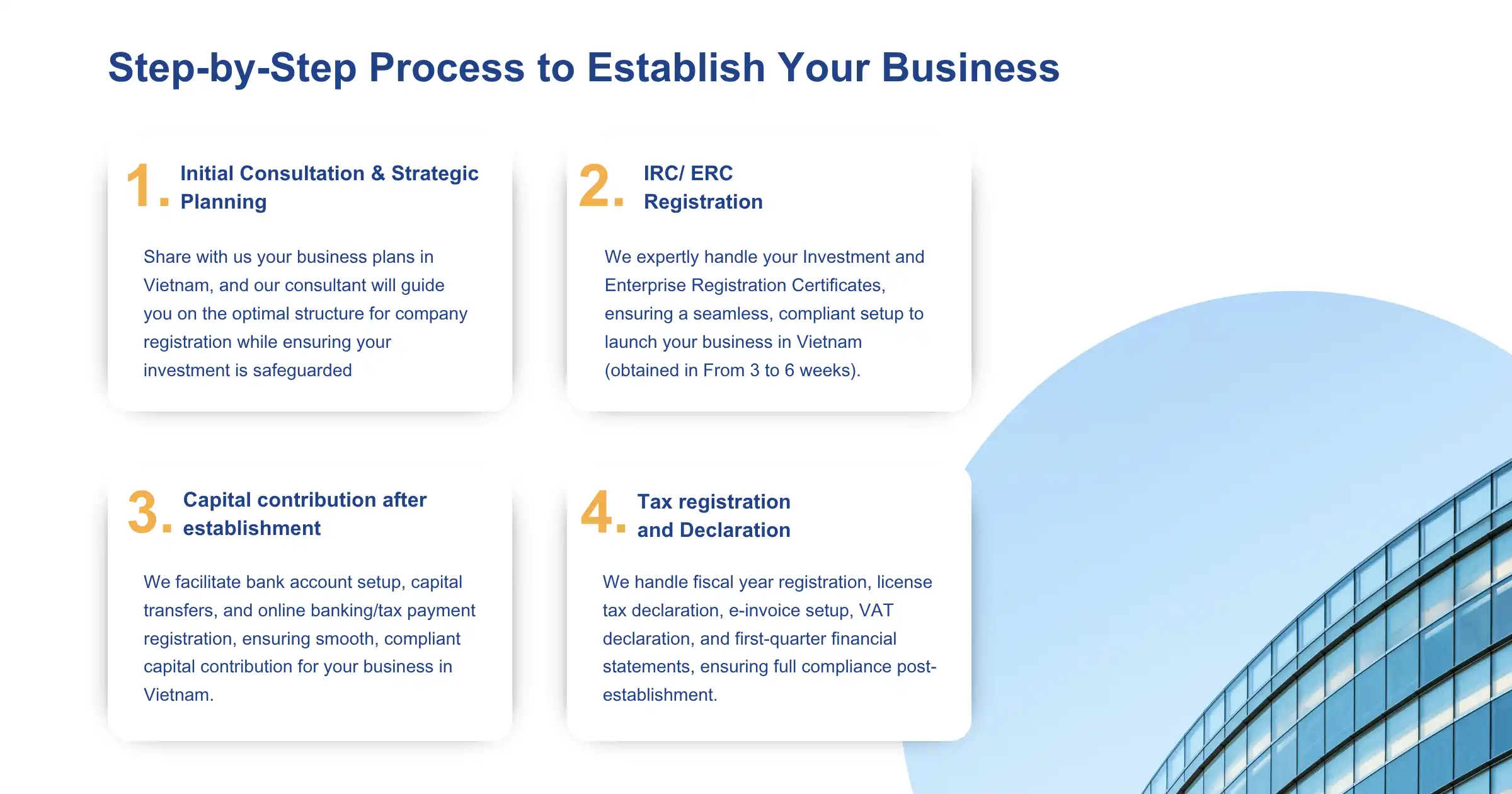
  • Comprehensive support: From initial consultation, document preparation, document submission, to post-registration support.
  • Legal compliance: Ensure documents are valid for both IRC and ERC.
  • Industry expertise: Guidance on applying for additional licenses for regulated fields such as education, fintech, manufacturing.
  • Multilingual service: Bilingual support in Vietnamese and English, ensuring accurate and easy-to-understand information for investors.
  • Save time and costs: Help shorten the registration process, limit errors and reduce operating costs.

Singapore investors can rest assured when choosing Vina TPT company registration to establish business in Vietnam quickly, legally and effectively.

Contact Vina TPT today for advice and quick implementation of business registration in Vietnam!

BOOK A FREE CONSULTATION

Laywer-Establish-business-Vietnam-VinaTPT

How to Establish Business in Vietnam: Step-by-Step Company Formation Guide with Vina TPT

establish-your-company-vietnam-vinatpt-guide

Vietnam is becoming one of the most attractive startup and investment destinations in Southeast Asia thanks to its stable economic growth rate, increasingly open business environment and young, dynamic workforce. However, to successfully establish business in Vietnam, businesses and investors need to prepare a clear roadmap — from choosing the type of company and building the charter, to completing legal documents and applying for an operating license. Many founders turn to a professional company registration service or company formation services to streamline paperwork, ensure compliance and speed up market entry. Using a trusted business license service can simplify obtaining the necessary permits, including the startup business license Vietnam, which is critical for early-stage ventures and foreign-invested enterprises. Each stage requires accuracy and strict compliance with regulations. The following article will guide you step-by-step, helping you visualize the entire process from the idea stage to when the business officially starts operating legally in Vietnam.

1.Step 1: Planning Your Venture to Establish Business in Vietnam

Choosing the right type of business is the foundation for startups or investors to establish a business in Vietnam successfully and develop sustainably. In Vietnam, the three most popular models are:

  • Limited Liability Company (LLC): suitable for small and medium enterprises, simple management structure, limited liability according to capital contribution.
  • Joint Stock Company (JSC): suitable for large projects or enterprises with plans to raise capital, list shares.
  • Representative Office: often used for foreign enterprises that want to survey the market but have not yet directly operated.

Each model carries different regulations on ownership structure, management rights, tax obligations and capital mobilization ability. To make the right decision, investors need to clarify the following factors:

  • Business lines: Check whether the field of operation is on the list of conditional business lines or not. Some sectors such as education, finance, e-commerce or healthcare may require specialized licenses or limit the percentage of foreign investment.
  • Charter capital: This is the company’s committed capital and is clearly stated in the business registration dossier. The minimum capital will vary depending on the industry, however, most fields in Vietnam do not require a minimum capital, except for some specific industries such as banking, insurance, securities investment or real estate. This also creates flexible opportunities for investors, especially startups or FDI who want to test the Vietnamese market without having to commit too much capital. The capital stated in the charter also affects the quota for granting work permits to foreigners and future tax obligations.
  • Target investors: Legal procedures will be clearly different between domestic investors and FDI (foreign direct investment). FDI projects must go through the additional step of applying for an Investment Registration Certificate (IRC) before registering a business.
  • Pre-investment approval: Some large-scale projects or projects in sensitive sectors (e.g. real estate, energy) may require pre-approval from the Provincial People’s Committee or the Ministry of Planning and Investment before submitting the dossier to the company registration service.

Carefully analyzing these factors from the beginning will help businesses choose the right model, prepare accurate documents and significantly shorten the time to obtain a license.

2. Step 2: Preparing Documents with a Reliable Company Registration Service

Preparing documents for the Investment Registration Certificate (IRC) and Enterprise Registration Certificate (ERC) is the most important step in the process of establishing a business in Vietnam, especially for projects with foreign investment capital. 

2.1 Investment Registration Certificate (IRC) 

If the project has FDI capital, IRC is the first license allowing the investor to implement the project in Vietnam.

The required documents usually include:

  • Application for investment project implementation and Project proposal: stating the objectives, scale, location, investment capital, progress.
  • Proof of the investor’s financial capacity: bank statement, credit contract or collateral.
  • Legal documents of the investor:
    • Individual: Notarized passport, consular legalization.
    • Organization: Business registration certificate or equivalent document, consular legalization.
  • Project location: lease contract or land/office use rights certificate.

2.2 Enterprise Registration Certificate (ERC) 

After the IRC is granted (or for 100% domestic-owned enterprises), the investor applies for an ERC – an official license for the enterprise to operate, and also the tax code of the company.

The ERC dossier usually includes:

  • Application for enterprise registration.
  • Company Charter: stipulates the organizational structure, powers of members/shareholders, capital ratio and management method.
  • List of members/shareholders and legal representatives: clearly state information, ownership ratio, voting rights.
  • Appointment decision and authorization letter (if any).
  • Capital contribution plan & financial evidence: bank statement or credit contract (especially important for large capital projects).

2.3 General Requirements and Important Notes

  • Consular legalization & translation: All documents of foreign investors must be notarized, consular legalized and translated into Vietnamese before submission. This is a factor that often prolongs the preparation time.
  • Valid head office address: Do not use apartment or collective house address.
  • Unified information: Company name, address, capital, industry… must be consistent on all documents.
  • Business line: Should choose a suitable industry and be qualified for investment to avoid being asked to make many changes.

2.4 Estimated time

Document preparation: 1-2 weeks, depending on the volume of documents and the level of complexity.

  • IRC appraisal: 20-45 working days.
  • ERC issuance: 10-20 working days after IRC (or similar if the enterprise is a domestic enterprise).

In fact, if the enterprise cooperates with a reputable company registration service, it will help the enterprise quickly handle the consular legalization, translation and submission of documents, shortening the time and increasing the possibility of being licensed the first time.

Establish-business-in-Vietnam

3. Step 3: Applying for an Enterprise Registration & Business License Service

For FDI projects, the licensing process usually consists of two main steps:

  1. Investment Registration Certificate (IRC): Required for projects with foreign investment capital. Processing time: about 15–30 working days depending on the industry and locality.
  2. Enterprise/Business Registration Certificate (ERC/BRC): Confirmation of business establishment. Processing time: about 10 working days after the application is approved.

The receiving agency is the local Department of Finance or through the National Business Registration Portal. From 2025, enterprises must register for corporate e-ID to submit documents and perform obligations online.

4. Step 4: Post-Registration Essentials for a Startup Business License in Vietnam

After receiving ERC/BRC, the enterprise needs to complete the following steps:

  • Engrave the legal seal and register the seal sample (if using a physical seal).
  • Open a bank account and complete capital contribution within the prescribed time limit.
  • Register for tax and get an electronic tax code.
  • Register for labor and social insurance.
  • Register to use electronic invoices for commercial transactions.

If not completed on time, the enterprise may be fined or have its license revoked.


AVOID PENALTIES – LET VINA TPT HANDLE YOUR SETUP

5. Maintaining Compliance with Ongoing Business License Service Support

Depending on the field of operation, enterprises may need to apply for additional specialized licenses after being granted an Investment Registration Certificate (IRC) and Enterprise Registration Certificate (ERC).

For example:

  • Food safety: Restaurants, cafes, food processing facilities must have a Food Safety Certificate.
  • Education/Training: Foreign language centers, private schools need an Education Operation License.
  • Fintech/Financial Services: Some activities such as payment intermediaries, peer-to-peer lending need a License from the State Bank.
  • Environment/Production: Manufacturing plants or projects with environmental impacts must prepare and obtain an Environmental Impact Assessment (EIA) Report.

In addition to additional licenses, enterprises must also maintain periodic compliance obligations, including:

  • Annual reporting: Submitting reports on operations and finances to the Department of Finance and tax authorities to ensure transparency.
  • Maintaining statutory capital: Some conditional industries (e.g. banking, insurance, real estate, logistics) require businesses to maintain a minimum statutory charter capital. If the actual contributed capital falls below the prescribed level, the business may be fined or have its license revoked.
  • Updating business information: Any changes related to capital structure, shareholders, legal representatives or head office address must be registered and notified to Department of Finance promptly. Delayed notification may result in administrative fines or invalidation of related transactions.

Applying for additional licenses or updating information usually has a specific time limit (usually 10–30 days depending on the type). Businesses should monitor closely to avoid being fined or having their business license revoked.

6. Why Choose Vina TPT Start-up Business License Service for End-to-End Setup

When establishing a business in Vietnam, especially for foreign investors or startups operating for the first time, handling the procedures to establish a business in Vietnam by yourself can be time-consuming, prone to legal errors and prolong the licensing time. This is when Vina TPT start-up business license service becomes the optimal solution, providing a full package of services from initial consultation to post-registration.

Outstanding advantages when cooperating with Vina TPT:

  • Consulting on international standard business structure: Legal experts analyze investment objectives, business lines and charter capital to propose suitable types (LLC, JSC, Representative Office).
  • Preparing documents & representing ERC/IRC submission professionally: Vina TPT prepares all documents in Vietnamese and English, ensuring compliance with regulations and increasing the rate of being licensed right the first time.
  • Support for consular legalization & multilingual translation: A team fluent in English, Japanese and Vietnamese helps shorten the time for legalizing documents for FDI investors.
  • Fast implementation – Cost savings: Shorten the time to apply for a business license service, limit errors leading to additional costs or administrative fines.
  • Post-registration & long-term compliance: Support for seal engraving, opening bank accounts, tax registration, labor declaration and guidance on applying for specialized licenses (food safety, education, fintech …).

With Vina TPT company registration service, businesses not only save time and costs but are also guaranteed that the entire process from startup business license Vietnam to actual operation is legal, transparent and safe.

Ready to start your business journey in Vietnam? Contact Vina TPT today to receive detailed advice and the most suitable business plan for your startup.

BOOK A FREE CONSULTATION

Establish-business-in-Vietnam

HR Outsourcing Vietnam: Payroll Compliance & Benefits for Businesses

HR outsourcing Vietnam and payroll services for businesses

HR outsourcing Vietnam and payroll services for businesses

1. Why HR & Payroll Management Is a Challenge in Vietnam

Managing HR outsourcing Vietnam and payroll services in Vietnam requires businesses to understand and comply with a series of complex regulations. From Labor Law, Social Insurance Law, to regulations on personal income tax (PIT) – all are constantly updated, making it difficult for many businesses to keep up. Just a small mistake such as late payment of social insurance or under-declaration of PIT can lead to arrears, administrative fines or being placed on the list of high-risk inspections.

For FDI companies, the pressure is even greater when having to both comply with Vietnamese regulations and standardize the process to report to the parent company according to international standards. SMEs are not easier, because maintaining a competent internal HR and payroll department is both costly and difficult to expand when the scale of human resources increases rapidly.

2. What HR Outsourcing Vietnam Really Offers Beyond Cost Savings

Many businesses turn to  with the initial goal of reducing costs, but the true value of this service goes far beyond financial benefits. When cooperating with a professional partner, businesses have access to a team of professional HR services that are familiar with Vietnamese law and international standards, and at the same time own a standardized and automated management system.

That means businesses not only reduce administrative tasks such as file management, timekeeping, and payroll, but also receive strategic advice on human resource structure, benefits, and tax optimization. In particular, FDI companies using Vina TPT’s services are also supported with bilingual reporting (Vietnamese-English) to meet strict requirements from the parent company – something that internal HR departments often find difficult to do perfectly.

3. Key Benefits of Payroll Outsourcing for SMEs and Larger Enterprises

Payroll services Vietnam brings many practical values, from cost savings, increased accuracy to ensuring compliance. For SMEs, payroll outsourcing helps free up resources, reduce the burden on HR and accounting departments. For large corporations, this service supports data synchronization, ensuring a transparent and secure payroll process.

A professional payroll outsourcing package usually includes:

  • Setting up human resources information & timekeeping: Collecting employee data (labor contracts, allowances, bank information), managing working hours, shifts, leave, overtime.
  • Calculating monthly salaries: Calculating basic salaries, allowances, bonuses, commissions; deducting social insurance, health insurance, unemployment insurance, personal income tax; processing advances and adjusting timekeeping.
  • Preparing and issuing payslips: Creating detailed payroll, sending secure payslips, supporting timely bank transfers.
  • Tax/Social Insurance declaration and payment: Prepare monthly/quarterly personal income tax filings, submit periodic social insurance reports and adjust the increase/decrease of employees.
  • Management reporting and data storage: Provide consolidated payroll reports, store secure records for audits or inspections.

Thanks to this professional process, businesses not only minimize errors but also ensure compliance with complex Vietnamese regulations, while creating transparency and trust for employees.


SEE HOW PAYROLL OUTSOURCING SAVES COSTS

4. Ensuring Compliance with Labor Laws and Tax Regulations in Vietnam

In Vietnam, labor laws and taxes related to human resources are constantly being updated. For example, the adjustment of minimum wages, social insurance contribution rates or labor contract regulations alone has changed many times in recent years. If businesses do not promptly grasp them, they can easily fall into a state of violation, even unintentionally.

HR outsourcing Vietnam and payroll services Vietnam help businesses completely minimize this risk. Professional service providers always monitor, update new regulations and automatically apply them to the process of calculating salaries, declaring taxes and paying insurance. In addition to submitting documents on time, they also support reviewing related transactions to ensure compliance with both tax and labor authorities, helping businesses avoid fines, arrears or being classified in high-risk groups during inspections.

5. How HR Outsourcing Improves Employee Satisfaction and Retention

A professional HR and payroll system not only serves the business, but also directly impacts employee satisfaction. Accurate and timely salary payment, transparent payslips, clear benefits – all create a trustworthy working environment, minimize disputes and increase work motivation.

In particular, professional HR service providers today often integrate technology such as employee self-service portals, allowing employees to look up their own payslips, leave schedules, insurance, etc. This not only saves time for the HR department but also helps employees feel proactive, transparent and respected. For FDI enterprises, maintaining a positive employee experience also contributes to strengthening the recruitment brand, attracting and retaining talent in a fiercely competitive environment.

6. Why Vina TPT Is the Trusted Partner for HR Outsourcing in Vietnam

Vina TPT has become a reputable choice for many FDI and SMEs thanks to its team of HR experts with more than 15 years of experience. Vina TPT provides full-service accounting combined with HR outsourcing solutions, helping businesses comply with labor laws and optimize financial management. Vina TPT’s services stand out with:

  • A team of experts updating the law: Understanding the latest regulations on labor, social insurance, taxes and international standards.
  • Bilingual Vietnamese – English – Japanese reports: Support FDI enterprises to report transparently to both parent companies and management agencies in Vietnam.
  • Integrated solutions: Closely connecting HR, payroll and accounting, helping to synchronize data, minimize errors and save time.

Thanks to Vina TPT HR outsourcing solutions, businesses can focus on core business activities, while the entire HR and payroll process is managed professionally, accurately and transparently. This is the key for businesses to not only ensure compliance, but also build a professional image in the eyes of employees and international investors.

Discover how Vina TPT HR outsourcing solutions and payroll services Vietnam can simplify compliance and boost efficiency for your business today.

BOOK A FREE CONSULTATION

HR Manager Vina TPT Accounting services in vietnam

Avoiding Accounting Errors in FDI Companies: A Practical Guide for Vietnam

accounting errors

accounting errors

1. Why Accounting Errors Are Risky for FDI Companies

Foreign Direct Investment (FDI) enterprises operating in Vietnam face a unique regulatory and business environment. While global companies may already be familiar with International Financial Reporting Standards (IFRS), compliance with Vietnamese Accounting Standards (VAS) introduces an additional layer of complexity. Small errors in accounting can escalate into serious consequences, such as tax penalties, reputational damage, and even restrictions on business activities.

For example, the Vietnam Ministry of Finance (MOF) has emphasized in its guidelines that misreporting revenue or late submission of tax returns can lead to administrative fines and limit access to future incentives. This is why proper accounting practices are not just about bookkeeping but are vital to protecting long-term business success in Vietnam.

2. Misclassifying Expenses and Revenues

2.1 Common misclassifications

A frequent error in FDI operations is the misclassification of expenses and revenues. Under VAS, certain costs such as staff training, marketing, or research may need to be classified differently compared to IFRS. Multinational managers often apply their global practices directly, only to discover later that these classifications conflict with local rules.

2.2 Consequences

Such mistakes can distort profit and loss statements, affect taxable income, and trigger audits by the General Department of Taxation (GDT). Incorrect expense recognition may either inflate profit – leading to higher taxes – or reduce profit – attracting suspicion from regulators.

2.3 Correction approach

Correcting these errors requires both retrospective adjustment and updated policies for future transactions. Companies must train their internal teams on VAS guidelines and, where needed, consult an expert like Vina TPT Accounting Service to review compliance.

3. Inaccurate Foreign Currency Conversions

3.1 Complexity of multi-currency

Many FDI enterprises in Vietnam transact in multiple currencies, especially USD, EUR, and JPY. VAS requires specific rules for translating foreign currency into VND. Failure to apply the correct exchange rate – spot, average, or official – can lead to serious inconsistencies in financial reports.

3.2 Risks and penalties

A World Bank report highlights that emerging markets face elevated risk of misreporting due to currency volatility. In Vietnam, regulators may impose penalties for discrepancies that result from inaccurate conversion, particularly if these errors understate taxable income.

3.3 Best practice

Companies must ensure that exchange rates are updated from official sources and applied consistently. Automated accounting systems can help, but human oversight remains crucial. External reviews by service providers such as Vina TPT guarantee that conversion practices remain compliant with both VAS and investor expectations.

accounting errors

4. Delayed or Missing Compliance Reports

4.1 Regulatory reporting challenges

FDI businesses in Vietnam are required to submit various reports: annual financial statements, quarterly tax declarations, and occasional disclosures for foreign investment registration. Delays or missing reports are among the most visible accounting errors.

4.2 Impact on business

Non-compliance does not only result in fines; it can also block access to tax incentives and financial support programs designed for FDI companies. In some cases, failure to report on time has led to suspension of investment licenses.

4.3 How to address

Creating an internal compliance calendar, supported by technology, is critical. Backed by more than 20 years of experience supporting FDI companies, we know that adopting automated compliance tools helps businesses cut reporting errors by as much as 40%. Partnering with local experts ensures that reports are not only timely but also accurate and aligned with both Vietnamese and international standards.

SCHEDULE A FINANCIAL HEALTH CHECK

5. Weak Internal Controls and Data Inconsistencies

5.1 Gaps in internal control

FDI firms often rely on global accounting systems that may not be fully adapted to Vietnam’s regulatory requirements. Weak internal controls, such as lack of segregation of duties or inadequate audit trails, increase the likelihood of data inconsistencies.

5.2 Risks of weak systems

Without strong internal audits, discrepancies may go unnoticed until an external review or tax inspection. These lapses not only create compliance risks but also undermine investor trust. The OECD stresses the importance of robust internal audit functions in supporting sustainable FDI operations.

5.3 Solutions

Strengthening internal controls requires training, technology upgrades, and independent reviews. Regular internal audits, aligned with VAS, help ensure that accounting data remains reliable. This is an area where Vina TPT’s professional services add measurable value.

6. How Vina TPT Accounting Service Helps FDI Companies Correct and Prevent Errors

Vina TPT Accounting Service offers comprehensive solutions tailored for FDI enterprises in Vietnam. The firm goes beyond bookkeeping by providing proactive troubleshooting, corrections, and preventive strategies.

By integrating knowledge of VAS with international best practices, Vina TPT helps companies:

  • Identify and correct misclassified expenses and revenues.
  • Implement accurate foreign currency conversion processes.
  • Establish compliance calendars to avoid reporting delays.
  • Strengthen internal audit and control systems.

Clients benefit from a smoother relationship with regulators, improved investor confidence, and reduced financial risk. For more details, explore Vina TPT Accounting Service.

Explore Vina TPT’s professional accounting and compliance services to keep your FDI company on the right track in Vietnam.

BOOK A FREE CONSULTATION

accounting skills

Driving Growth Through Effective Financial Management for FDI Businesses

international accounting standards

international accounting standards

1. Setting the Foundation: Understanding FDI Financial Structures

Establishing strong financial management practices is the cornerstone of success for foreign direct investment (FDI) companies in Vietnam. Every investment requires a clear financial structure that aligns with both the investor’s home country standards and the host country’s regulatory framework.

Foreign-capital businesses must carefully decide how to allocate capital, manage equity contributions, and set up local subsidiaries or joint ventures. For example, a manufacturing firm entering Vietnam may need to balance its initial equity with local bank loans to secure working capital. Without a strong foundation, misaligned structures can lead to tax inefficiencies and compliance risks.

The World Bank notes that transparent and well-structured financial systems directly impact the long-term stability of Foreign Direct Investment inflows in emerging markets like Vietnam.

Set Up Financial Structure

2. Building Strong Cash Flow Management for Long-Term Stability

One of the biggest challenges for Foreign Direct Investment enterprises is maintaining consistent cash flow management. In Vietnam, companies often face delays in payments due to differences in local business culture and long supply chain cycles.

By implementing robust forecasting tools, Foreign-capital businesses can predict cash inflows and outflows more accurately. For example, using rolling cash flow forecasts helps companies adjust their strategies for seasonal demand or currency fluctuations. Ensuring liquidity not only prevents short-term financial distress but also builds investor confidence for expansion.

On the Vina TPT homepage, businesses can explore consulting services designed to strengthen financial structures and ensure stability through effective cash flow solutions.

3. Profit Optimization Techniques Tailored for FDI Enterprises

For these enterprises, profit optimization is not just about increasing revenue – it is about aligning financial strategies with Vietnam’s unique market conditions. Adjusting pricing strategies for local demand, streamlining supply chain costs, and leveraging tax incentives can significantly boost margins.

Additionally, transfer pricing strategies must comply with Vietnamese regulations while ensuring profits are not eroded by double taxation. Many investors also overlook the benefits of reinvesting profits in Vietnam to take advantage of available financial support programs.

According to PwC Vietnam, businesses that regularly review their cost structures and adjust to local market dynamics outperform those that apply “one-size-fits-all” strategies.

4. Integrating Financial Management with Local Compliance in Vietnam

An essential element of managing FDI operations is aligning financial management with Vietnam’s compliance requirements. Unlike international standards such as IFRS, Vietnamese Accounting Standards (VAS) have specific rules that businesses must follow.

Areas like tax reporting, value-added tax (VAT), and labor-related expenses can create complications if not handled correctly. Non-compliance not only leads to financial penalties but also threatens business continuity.

Internal policies must ensure that accounting procedures, audit processes, and statutory filings are regularly updated to reflect local requirements. To see related strategies, check our article on Accounting Procedures for FDI Operations in Vietnam.

Ensure VAS Compliance

5. Leveraging Technology for Smarter Financial Management

Technology is reshaping how Foreign Direct Investment companies approach management in finance. Automated accounting software, cloud-based ERP systems, and AI-driven analytics help businesses optimize cash flow, track performance in real time, and improve accuracy in reporting.

In Vietnam, digital transformation is also supported by government initiatives that encourage businesses to adopt e-invoicing and digital tax reporting. These tools reduce administrative burdens and improve compliance, giving companies more time to focus on growth.

By investing in modern financial technology, Foreign Direct Investment enterprises can strengthen decision-making and stay competitive in a fast-evolving business landscape.

6. Partnering with Vina TPT for Sustainable Growth

Even with strong internal systems, navigating Vietnam’s financial landscape requires expert guidance. Vina TPT Financial Management provides tailored solutions that help Foreign-invested companies align financial structures, optimize cash flow, and ensure compliance with local laws.

From preparing accurate financial reports to advising on profit optimization and leveraging technology for smarter management, we acts as a long-term partner for sustainable growth.

With our deep expertise in both Vietnamese regulations and global standards, we empower businesses to not only survive but thrive in the competitive Vietnamese market.

Learn more about our Financial Management Services and discover how Vina TPT can help you maximize your investment potential in Vietnam.

Vina TPT Financial Management

Electronic Identification for FDI company in Vietnam

Electronic Identification for FDI company in Vietnam

Electronic Identification for FDI company in Vietnam

Electronic identification is mandatory for Foreign Direct Investment (FDI) companies in Vietnam, effective from July 1, 2025, when conducting administrative procedures through the Vietnam Public Service Portal.

Using an identification account on VNeID not only helps verify the legal status of the enterprise but also serves as a condition for submitting electronic documents, digital signing, and receiving online results.

In this article, VINA TPT will provide guidance on the process, precautions, and detailed answers for foreign enterprises operating in Vietnam.

1/ Are FDI Company with a Foreign Legal Representative Required to Register a VNeID Electronic Identification Account?

According to Article 2 of Decree 69/2024/ND-CP, the subjects subject to regulations on registering an electronic identification account include: “Vietnamese organizations and individuals, as well as foreign organizations and individuals residing and operating on Vietnamese territory, participating in or related to electronic identification, electronic authentication, and electronic identity activities.”

Therefore, FDI company with a foreign legal representative fall within the scope of this Decree and are required to register and use an electronic identification account (VNeID) in accordance with legal regulations.
2/ Why Do FDI Company in Vietnam Need Electronic Identification?

Electronic identification is not only a legal requirement but also provides practical benefits for FDI company in Vietnam:

Mandatory for Conducting Electronic Administrative Procedures

According to Clause 4, Article 40 of Decree 69/2024/ND-CP, accounts created by the National Public Service Portal and the administrative procedure information systems at the ministerial and provincial levels for agencies and organizations are valid until June 30, 2025.

Thus, from July 1, 2025, these accounts will no longer be valid. Generally, enterprises will need to use an electronic identification account on VNeID to access and connect with administrative information systems. Failure to register an identification account will cause difficulties in performing administrative procedures, significantly impacting business operations.
Support for Remote Business Management

For cases where the legal representative is frequently absent from Vietnam, an electronic identification account enables the fulfillment of legal obligations remotely, such as signing documents, submitting applications, and checking the status of procedure processing.

Enhanced Validity and Transparency

Identification information is directly authenticated by the Ministry of Public Security, ensuring reliability when connecting to the national public service portal and platforms for tax, customs, insurance, etc.

3/ Guidance on Electronic Identification FDI company in Vietnam

Guide to Registering an Electronic Identification Account for a Foreign Legal Representative

STEP 1: Foreign individuals must directly visit the Immigration Management Department under the Ministry of Public Security or the provincial police to submit an application for an account, including:

  • Passport/international travel document;
  • Application form for an electronic identification account (Form TK01 attached to Decree 69/2024/ND-CP) for the competent authority;
  • Email/phone number registered with subscriber information (if available);
  • Information that the foreign individual requests to integrate into the national identification application;

STEP 2: : The electronic identification and authentication management agency will notify the foreign individual of the Level 2 identification account registration result via: The VNeID application; Registered email; Verified phone number.

STEP 3: Proceed with registering electronic identification for the enterprise using the VNeID application on a mobile phone, with details available HERE. TẠI ĐÂY

Registering electronic identification for enterprises in general, and foreign enterprises in particular, is not only a mandatory requirement from July 1, 2025, but also a standardization step that enables FDI enterprises to easily perform administrative procedures, connect with public service systems, and manage operations remotely effectively.

VINA TPT provides support services for registering electronic identification for FDI company in Vietnam, including: consulting on conditions, preparing documents, representing dealings with competent authorities, and synchronizing information with the system.

Explore our additional services at Corporate Secretary Services and Back Office Support.

Contact VINA TPT for Support

📞 (+84) 984 980 069
📧infor@vinatpt.com
🌐 https://vinatpt.com
🏢 5th Floor, More Building, 83B Hoang Sa, Da Kao Ward, District 1, HCMC 

Leave a Reply

Your email address will not be published. Required fields are marked *


[VNeID] Electronic Identification for all business types

Electronic Identification for all business types vneid

What is Electronic Identification (VNeID) for Businesses?

What is Electronic Identification for Businesses, and why is it a mandatory requirement in the digital transformation era?

As businesses increasingly embrace digital transformation, understanding electronic identification becomes crucial. This method not only helps in establishing a secure identity online but also plays a vital role in ensuring that transactions are conducted safely and efficiently. For instance, when a business applies for permits or licenses, electronic identification helps streamline the process, reducing the time and paperwork involved.

This is a form of authentication and legal identification for businesses in the digital environment, facilitating quick, accurate, and transparent transactions and administrative procedures.

Moreover, electronic identification enhances the credibility of businesses. Customers and partners can verify the legitimacy of a business swiftly, fostering trust and encouraging collaboration. In industries such as finance or healthcare, where sensitive information is handled, the importance of electronic identification cannot be overstated.

Through the VNeID application, businesses can register, verify their identity, and directly connect with the public service system, ensuring compliance with legal regulations from July 1, 2025.

The VNeID application is designed with user experience in mind, allowing businesses to register and verify their identities quickly. This application not only meets legal requirements but also adopts advanced technologies like biometrics, making the process more secure. The seamless integration into public service systems aids businesses in complying with regulations, thus avoiding potential legal issues that could arise from non-compliance.

Why Must Businesses Register Electronic Identification on the VNeID Application Before July 1, 2025? 

According to Clause 4, Article 40 of Decree 69/2024/ND-CP, accounts issued by the National Public Service Portal and the administrative procedure resolution systems at the ministerial and provincial levels to agencies and organizations will expire on June 30, 2025.

This expiration signifies a significant shift in how businesses will need to operate moving forward. Organizations that fail to adapt to this change risk losing access to essential services, which could severely hinder their operations. For example, businesses that do not register for electronic identification may find themselves unable to submit tax documents or apply for regulatory approvals, leading to delays and potential penalties.

Therefore, from July 1, 2025, organizations and businesses must use VNeID accounts to access and perform administrative procedures.

If a new account is not registered, businesses will face difficulties in declaration, submission of documents, and system connectivity, directly impacting business operations.

Furthermore, the loss of connectivity due to the lack of an electronic identification account could result in missed opportunities for collaboration and growth. Businesses often rely on timely access to government services for permits, licenses, and other administrative tasks. Without a valid electronic identity, they may fall behind competitors who are fully compliant with the new regulations.

Guide to Registering Electronic Identification for Businesses on the VNeID Application

To register electronic identification for a business on VNeID, individuals should follow these steps:

Before starting the registration process, it’s essential for the legal representative or authorized individual to gather all necessary documentation. This may include business registration certificates, tax identification numbers, and any other relevant legal documents. Having these ready will facilitate a smoother registration process and help avoid delays.

STEP 1: : The legal representative, head of the agency or organization, or a person authorized by the legal representative or head logs into the Level 2 electronic identity account on the VNeID application => Select Organization Identification.

STEP 2: On the Account Change screen => Select Register Organization Identification.

STEP 3: Verify the passcode or authenticate using fingerprint/face recognition.

Verifying the passcode or using biometric authentication ensures that only authorized individuals have access to the organization’s electronic identification. This layer of security is critical in preventing unauthorized access and safeguarding sensitive business information. For example, with increasing cyber threats, businesses must prioritize secure methods of identity verification.

Step 4: Select the type of organization identification registration.

Choosing the correct type of organization identification is vital. Depending on the nature of the business, different types of electronic identifications may be required. For instance, a manufacturing company might need different documentation compared to a tech startup. Understanding these nuances can save time and resources during the registration process.

 Electronic Identification for Business

Step 5: Enter organization information.

When entering organization information, it’s crucial to ensure accuracy. Inaccurate entries could lead to complications in the verification process. Furthermore, maintaining accurate records is essential for compliance with regulatory requirements and for future audits.

Step 6:Verify the passcode or authenticate using fingerprint/face recognition.

 Electronic Identification for Business

Step 7: Create a successful registration request and review the request.

Once the registration request is created, it’s essential to review all details carefully. This review step not only ensures that the information is accurate but also provides an opportunity to catch any errors before submission, which could otherwise derail the process.

Electronic Identification for Business

Businesses need to proactively register an electronic identification account on the VNeID application to ensure continuous administrative procedures, avoid interruptions, and prevent impacts on business operations.

It’s essential for businesses to stay informed about the developments regarding electronic identification. Regular updates and training sessions can help staff understand the importance of maintaining compliance with these new regulations. Engaging in workshops or webinars could provide additional insights, making the transition smoother for everyone involved.

Contact VINA TPT for Support

📞 (+84) 984 980 069
📧 infor@vinatpt.com
🌐 https://vinatpt.com/
🏢 5th Floor, More Building, 83B Hoang Sa, Da Kao Ward, District 1, HCMC

Expert of Vina TPT Accounting services in vietnam